About this artwork
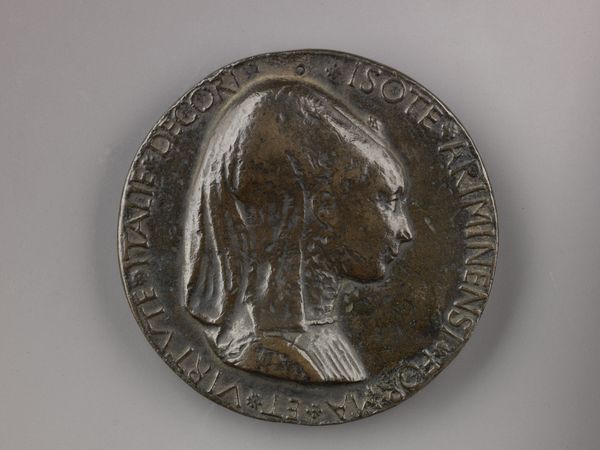
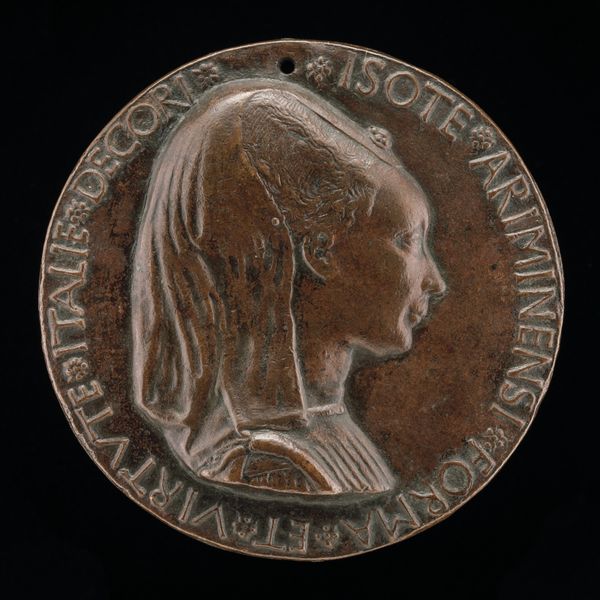
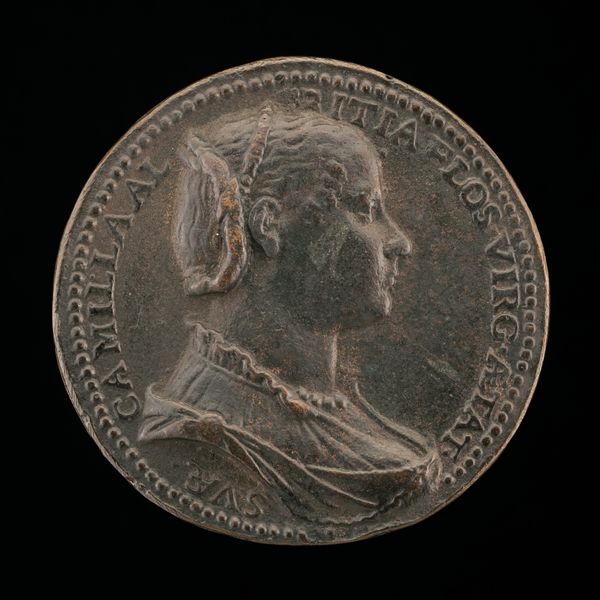
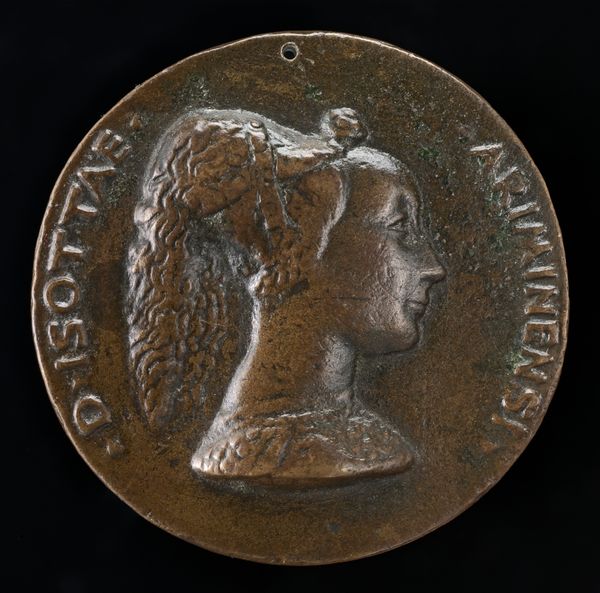
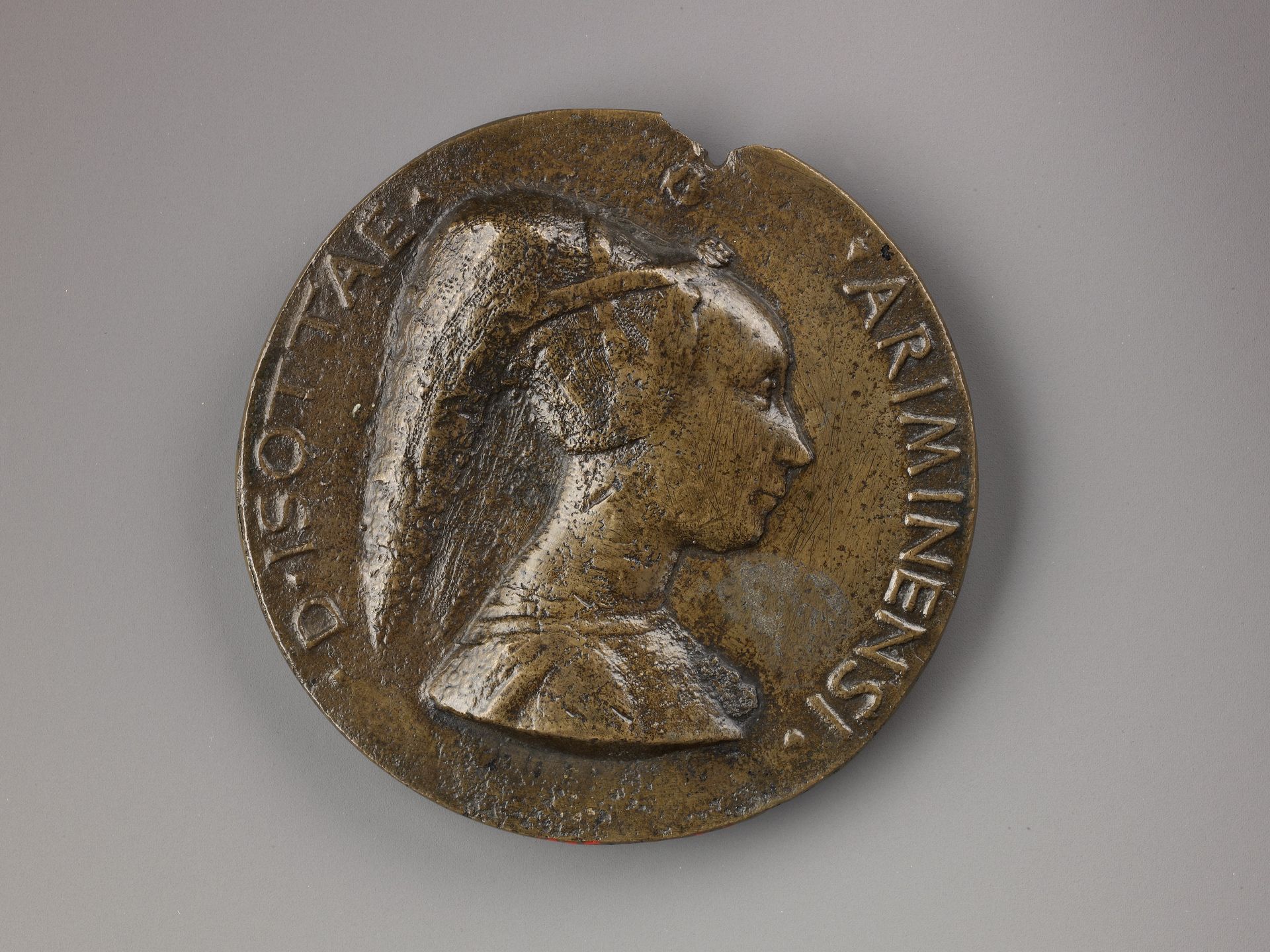
This bronze medal depicting Isotta Degli Atti was created by Matteo de' Pasti in the 15th century, during the Italian Renaissance, a period marked by a renewed interest in classical art and culture, along with shifting social structures. Isotta was not born into nobility, yet she became the wife of Sigismondo Pandolfo Malatesta, a condottiero and lord of Rimini, who had Matteo de' Pasti as his favorite medalist. These medals served as symbols of power and status, and Isotta’s image, carefully crafted, projects an idealized vision of feminine beauty and virtue. The medal challenges traditional representations by immortalizing a woman who rose above her social origins through marriage, a testament to her allure and the era's fluid social dynamics. It invites us to reflect on how women navigated and influenced the patriarchal structures of Renaissance society. It remains a personal yet political symbol, hinting at broader questions of identity and representation in historical portraiture.
Medal: Isotta Degli Atti 1450 - 1458


Artwork details
- Medium
- carving, metal, bronze, sculpture
- Dimensions
- Diam. 8.4 cm, wt. 226.8 g.
- Location
- Metropolitan Museum of Art, New York, NY
- Copyright
- Public Domain
Tags
portrait
medal
carving
metal
sculpture
bronze
sculpting
sculpture
italian-renaissance
profile
Comments
No comments
About this artwork
This bronze medal depicting Isotta Degli Atti was created by Matteo de' Pasti in the 15th century, during the Italian Renaissance, a period marked by a renewed interest in classical art and culture, along with shifting social structures. Isotta was not born into nobility, yet she became the wife of Sigismondo Pandolfo Malatesta, a condottiero and lord of Rimini, who had Matteo de' Pasti as his favorite medalist. These medals served as symbols of power and status, and Isotta’s image, carefully crafted, projects an idealized vision of feminine beauty and virtue. The medal challenges traditional representations by immortalizing a woman who rose above her social origins through marriage, a testament to her allure and the era's fluid social dynamics. It invites us to reflect on how women navigated and influenced the patriarchal structures of Renaissance society. It remains a personal yet political symbol, hinting at broader questions of identity and representation in historical portraiture.
Comments
No comments