About this artwork
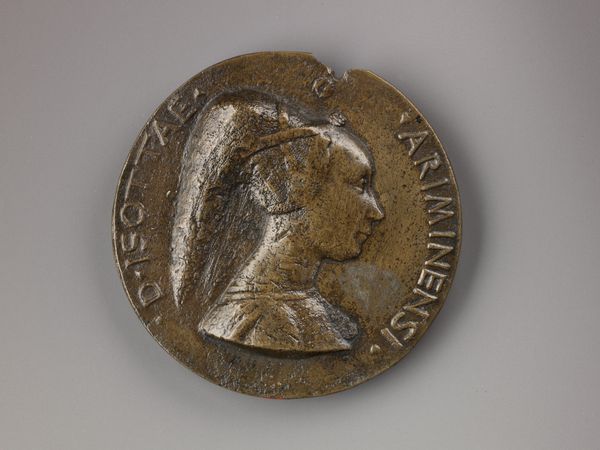
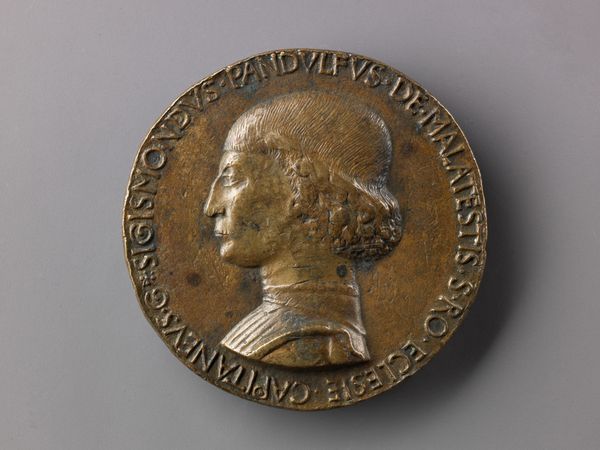
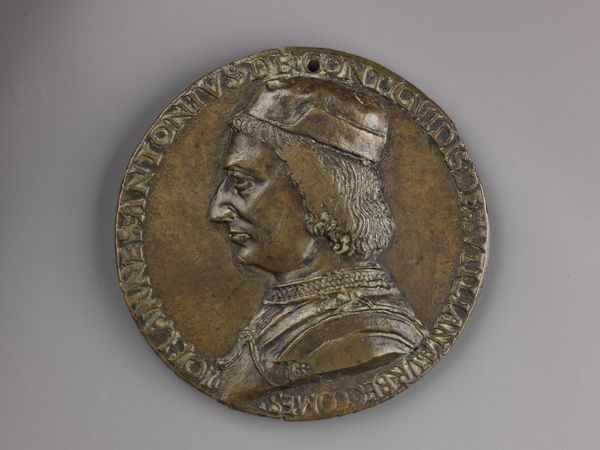
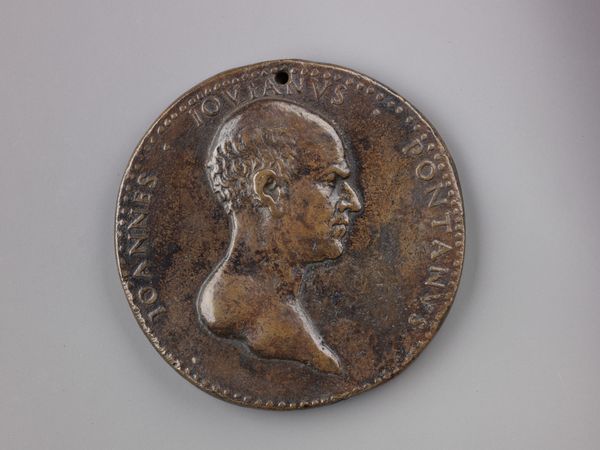
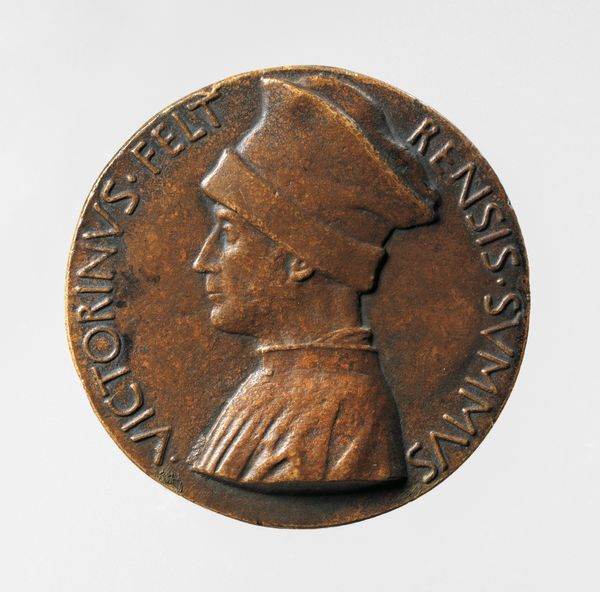
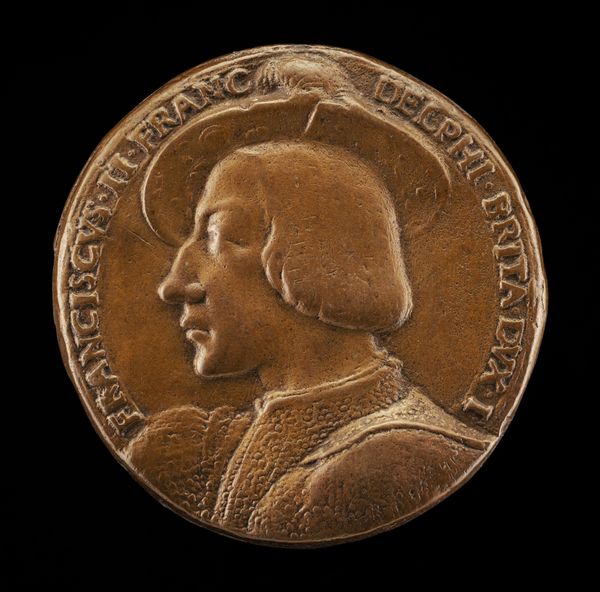
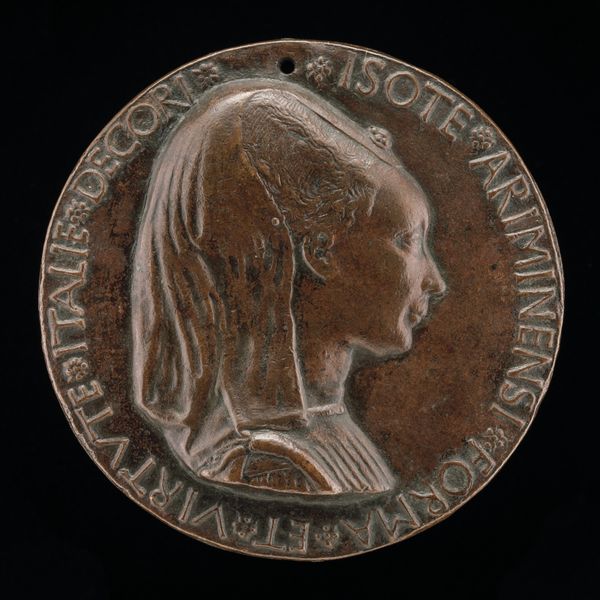
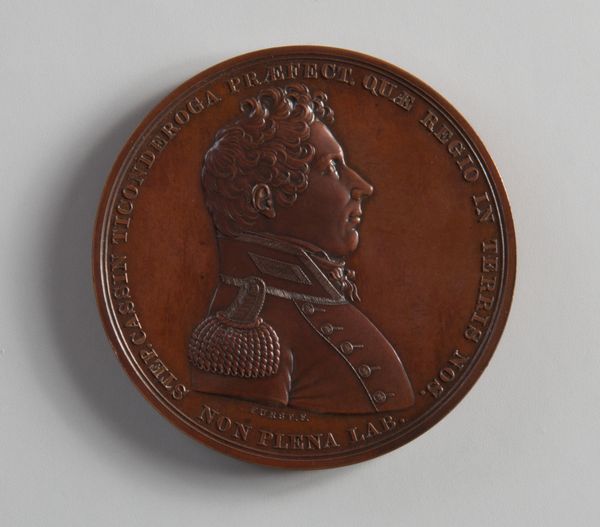
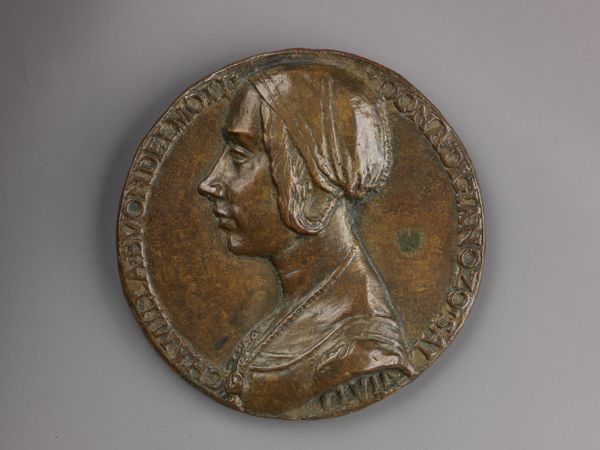
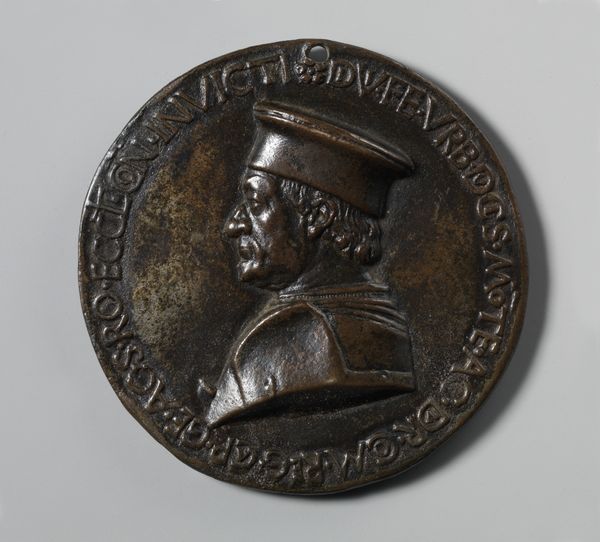
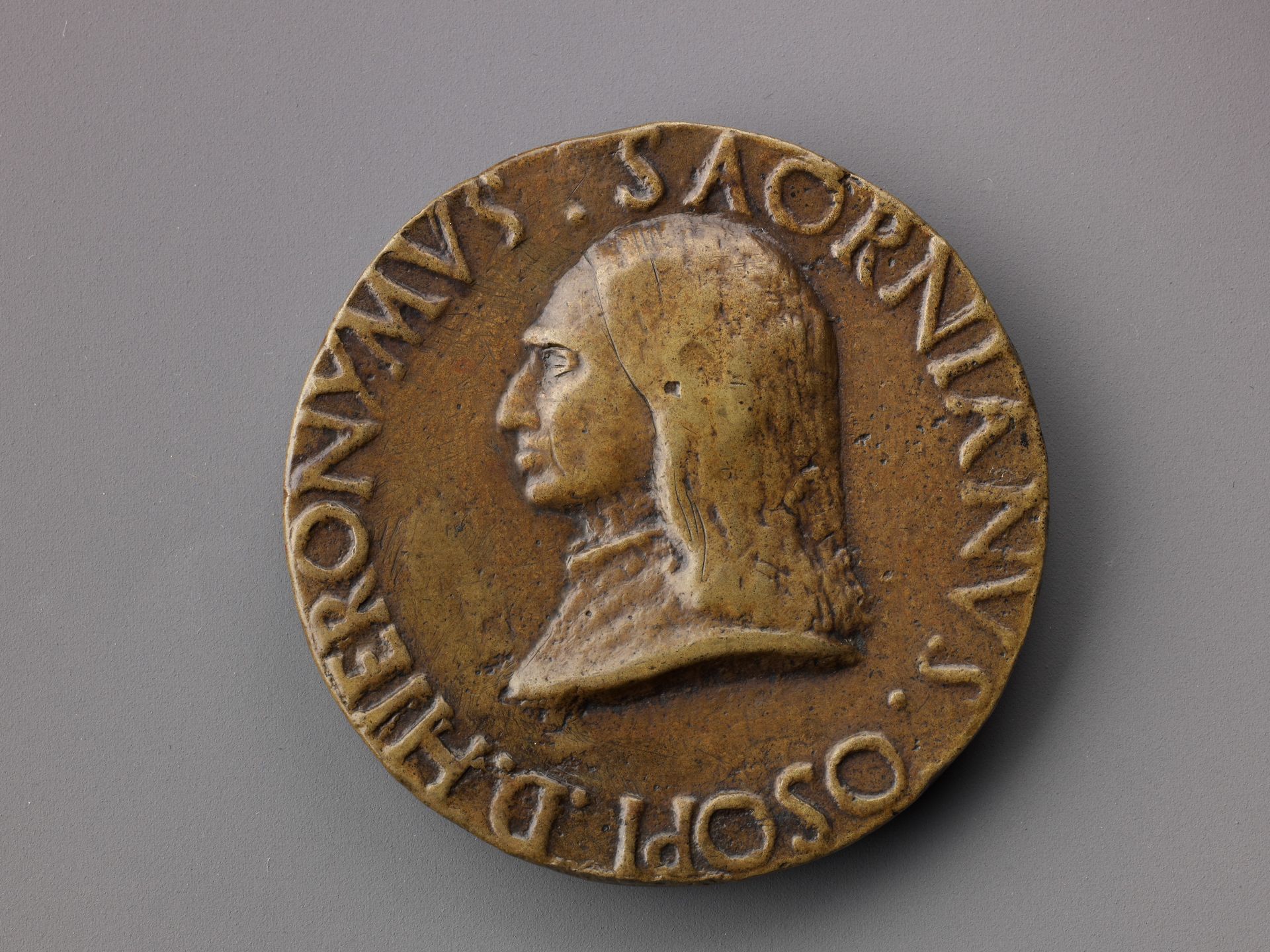
Fra Antonio da Brescia created this bronze medal of Girolamo Savorgnan around the early 16th century. The circular form, with its raised relief of a profile portrait, immediately evokes classical precedents. The artist’s formal treatment of the subject—the clean, precise lines defining the contours of Savorgnan’s face, the smooth, unblemished surface of the metal—conveys an air of Renaissance idealism. Consider the composition; the subject's gaze is directed to the left, framed by an inscription that curves along the medal's edge, creating a self-contained visual field. This design not only guides the viewer's eye but also reinforces the medal's function as a marker of identity and status. Brescia’s choice of bronze, a material prized for its durability and classical associations, further elevates the subject, aligning him with enduring virtues and values. The medal’s form and materiality work together to communicate a potent message, transforming a portrait into a statement about power, legacy, and the enduring nature of artistic representation.
Medal: Girolamo Savorgnan or Savorniano 1505 - 1514

Fra Antonio da Brescia
1480 - 1525
The Metropolitan Museum of Art
Metropolitan Museum of Art, New York, NYArtwork details
- Medium
- metal, relief, bronze, sculpture
- Dimensions
- Diam. 4.8 cm, wt. 47.72 g.
- Location
- Metropolitan Museum of Art, New York, NY
- Copyright
- Public Domain
Tags
portrait
medal
metal
sculpture
relief
bronze
sculpture
men
italian-renaissance
profile
Comments
No comments
About this artwork
Fra Antonio da Brescia created this bronze medal of Girolamo Savorgnan around the early 16th century. The circular form, with its raised relief of a profile portrait, immediately evokes classical precedents. The artist’s formal treatment of the subject—the clean, precise lines defining the contours of Savorgnan’s face, the smooth, unblemished surface of the metal—conveys an air of Renaissance idealism. Consider the composition; the subject's gaze is directed to the left, framed by an inscription that curves along the medal's edge, creating a self-contained visual field. This design not only guides the viewer's eye but also reinforces the medal's function as a marker of identity and status. Brescia’s choice of bronze, a material prized for its durability and classical associations, further elevates the subject, aligning him with enduring virtues and values. The medal’s form and materiality work together to communicate a potent message, transforming a portrait into a statement about power, legacy, and the enduring nature of artistic representation.
Comments
No comments