c. 1600 - 1625
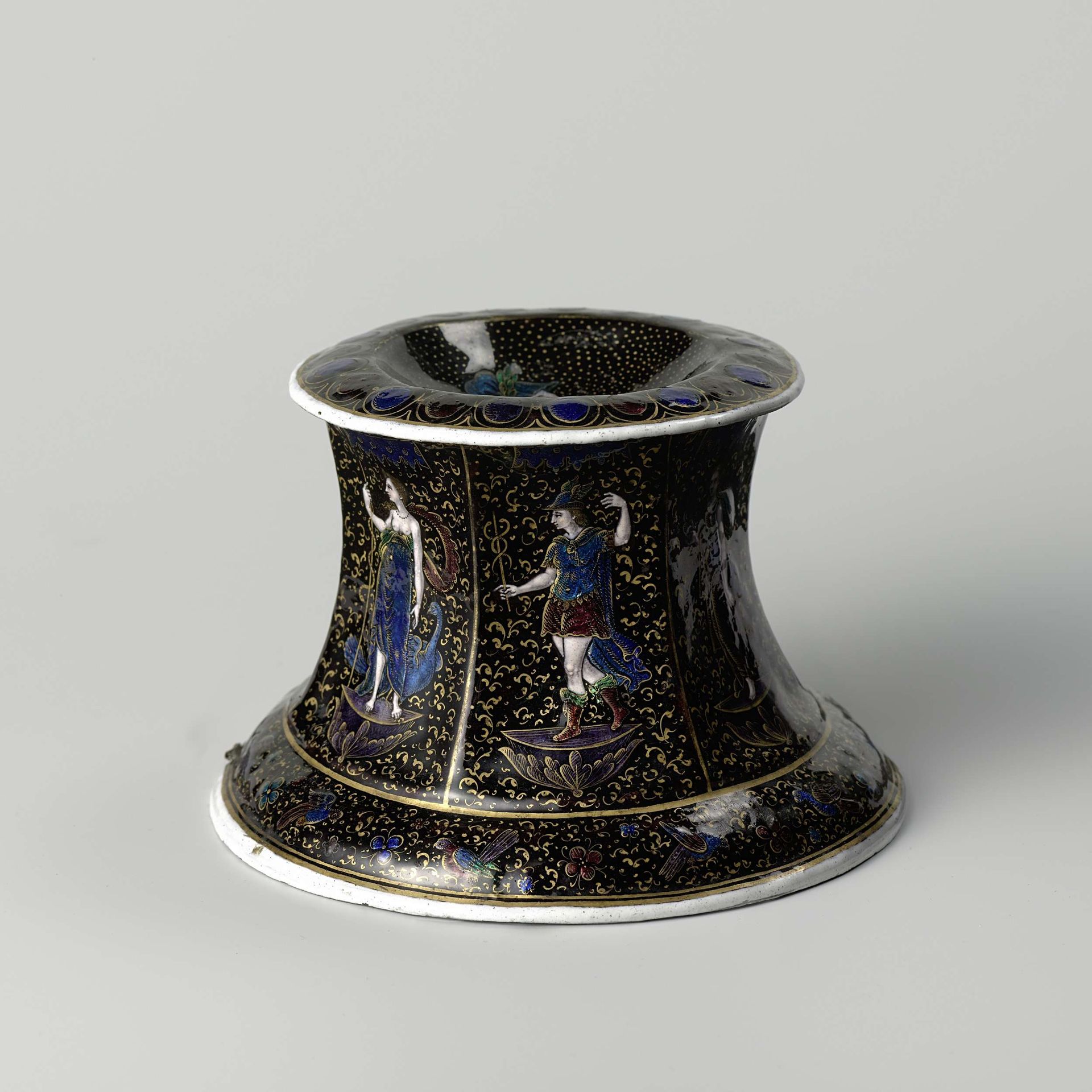
Salt cellar with figures of gods and goddesses

Listen to curator's interpretation
Curatorial notes
This salt cellar, standing at just 9 cm tall, was crafted in France by Jean Limosin sometime between 1615 and 1635. It is made of painted enamel. Salt cellars like this weren't just functional objects; they were symbols of wealth and status displayed prominently on dining tables. The depiction of gods and goddesses elevates a mundane object to a conversation piece, reflecting the cultural fascination with classical antiquity during the Renaissance. The detailed enamel work speaks to the skill and artistry valued by the French court and aristocracy. Limosin and other Limoges enamelers were patronized by the court and their works can be seen as a reflection of aristocratic taste. To understand this salt cellar fully, we need to look at period documents, such as inventories of aristocratic households and records of artistic patronage, to understand the social and cultural context in which it was created and consumed.