About this artwork
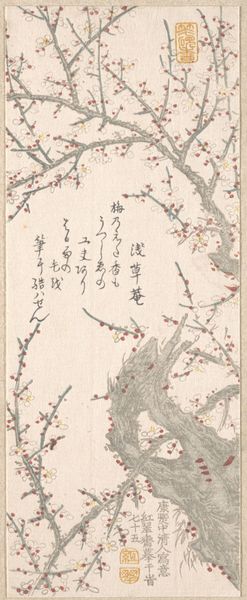
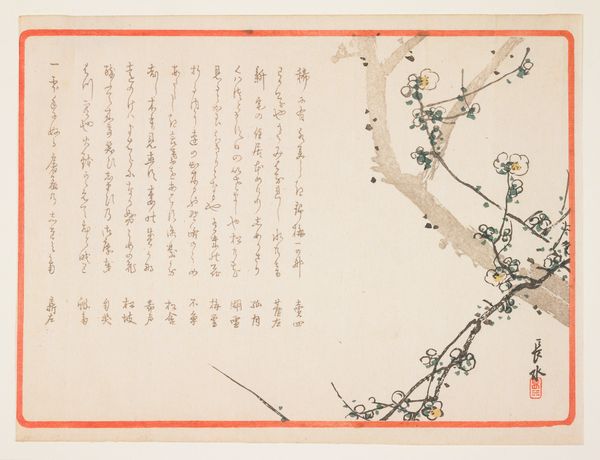
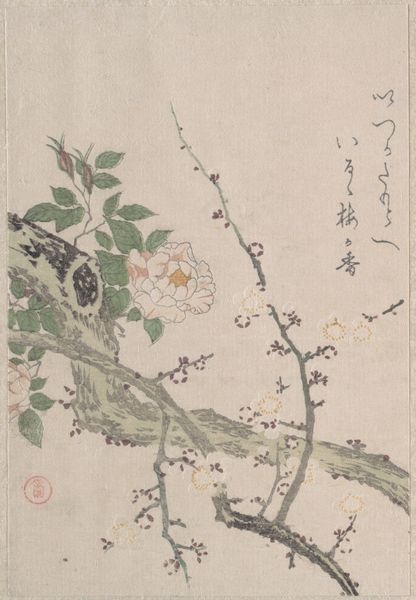
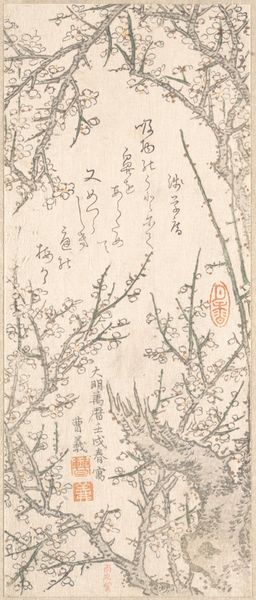
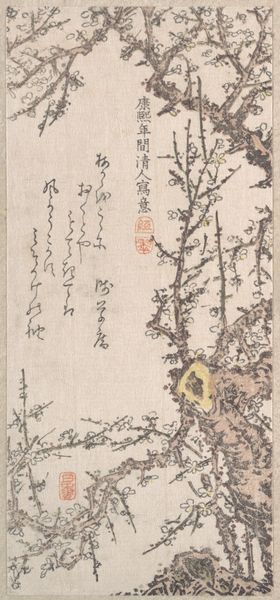
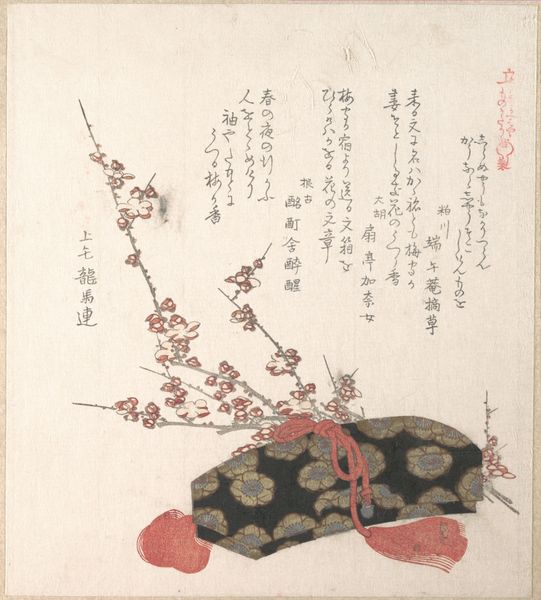
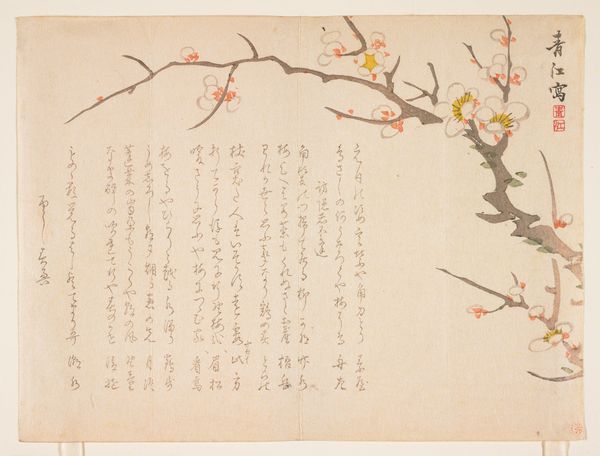
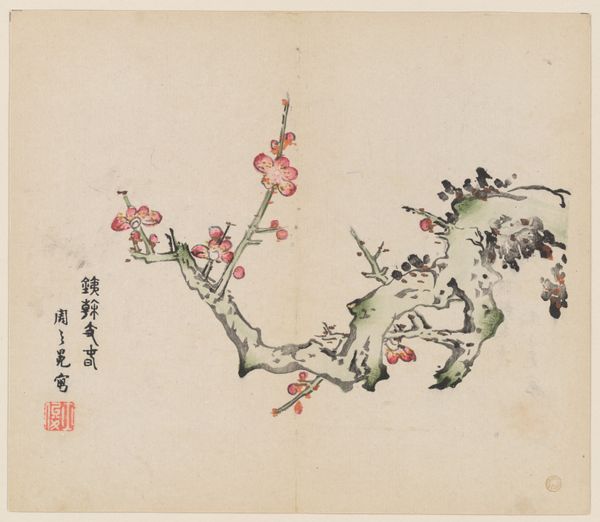
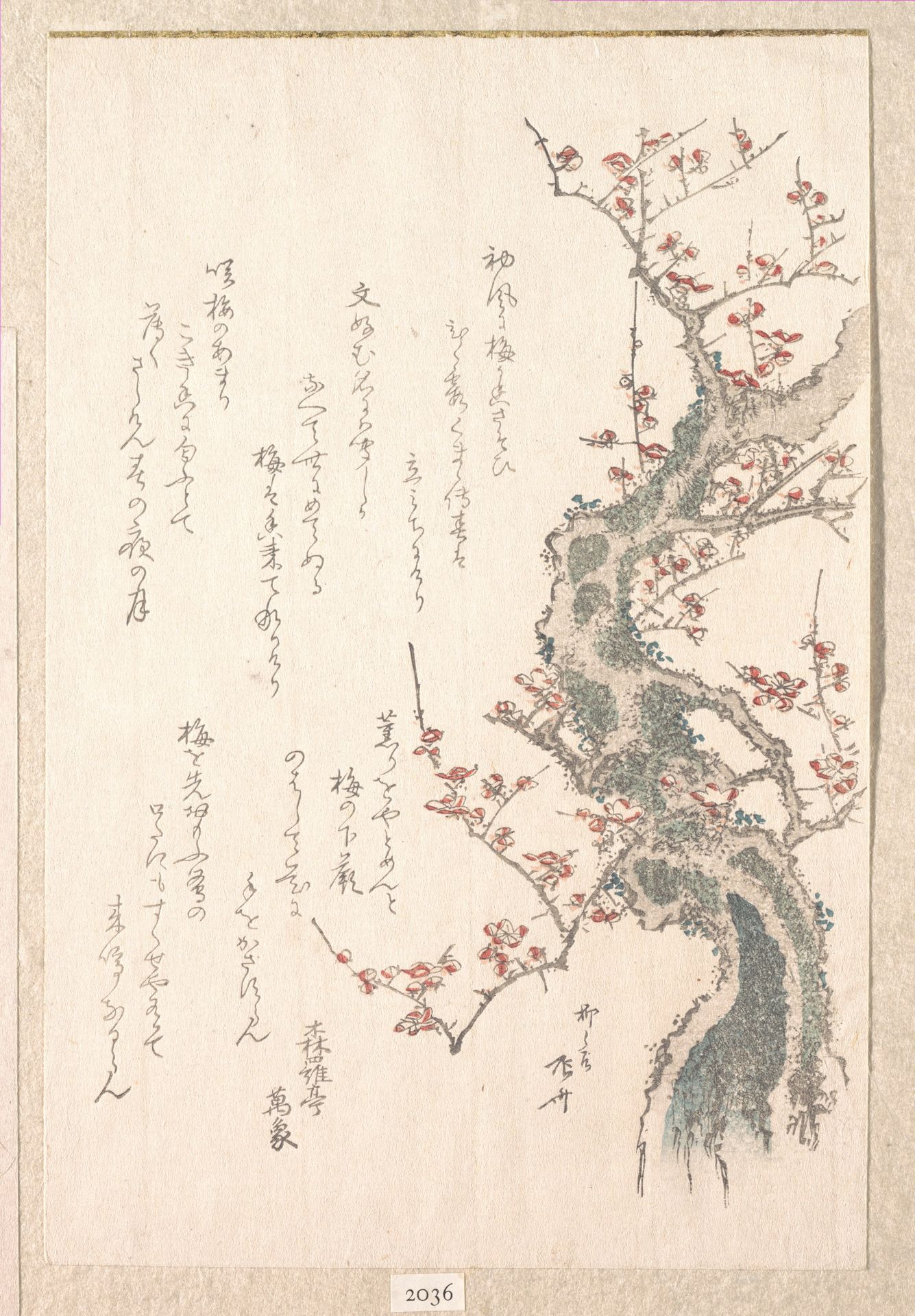
Ryūryūkyo Shinsai created this woodblock print titled "Plum Tree in Bloom" in Japan in the early 19th century. The "Spring Rain Collection," of which this print is a part, suggests a connection between natural imagery and the literary and artistic culture of the time. The plum tree, rendered with delicate lines and subtle colors, is not merely a botanical study but a cultural symbol. During the Edo period, when this print was made, Japan experienced a flourishing of the arts, with institutions such as painting schools and print workshops playing a significant role. The presence of calligraphy alongside the image is particularly noteworthy. Poetry and images were often paired, reflecting the high value placed on both in Japanese society. To fully understand this print, we might delve into the history of Japanese printmaking, explore the significance of plum blossoms in Japanese art and literature, and examine the social networks that supported artistic production. Each artwork is contingent on cultural and institutional context, revealing the intricate interplay between art and society.
Spring Rain Collection (Harusame shū), vol. 1: Plum Tree in Bloom
1805 - 1810


Artwork details
- Medium
- print, woodblock-print
- Dimensions
- 8 1/4 x 5 1/2 in. (21 x 14 cm)
- Location
- Metropolitan Museum of Art, New York, NY
- Copyright
- Public Domain
Tags
asian-art
ukiyo-e
woodblock-print
calligraphy
Comments
Be the first to share your thoughts about this work.
About this artwork
Ryūryūkyo Shinsai created this woodblock print titled "Plum Tree in Bloom" in Japan in the early 19th century. The "Spring Rain Collection," of which this print is a part, suggests a connection between natural imagery and the literary and artistic culture of the time. The plum tree, rendered with delicate lines and subtle colors, is not merely a botanical study but a cultural symbol. During the Edo period, when this print was made, Japan experienced a flourishing of the arts, with institutions such as painting schools and print workshops playing a significant role. The presence of calligraphy alongside the image is particularly noteworthy. Poetry and images were often paired, reflecting the high value placed on both in Japanese society. To fully understand this print, we might delve into the history of Japanese printmaking, explore the significance of plum blossoms in Japanese art and literature, and examine the social networks that supported artistic production. Each artwork is contingent on cultural and institutional context, revealing the intricate interplay between art and society.
Comments
Be the first to share your thoughts about this work.