About this artwork
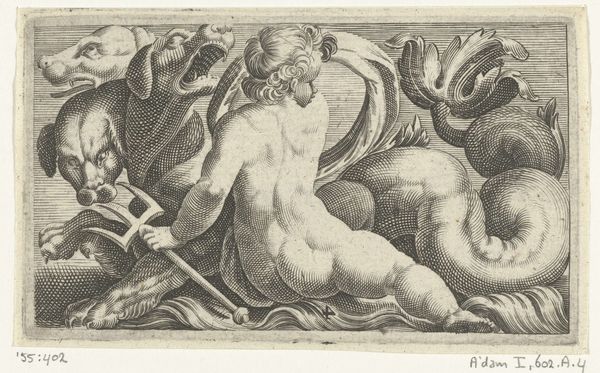
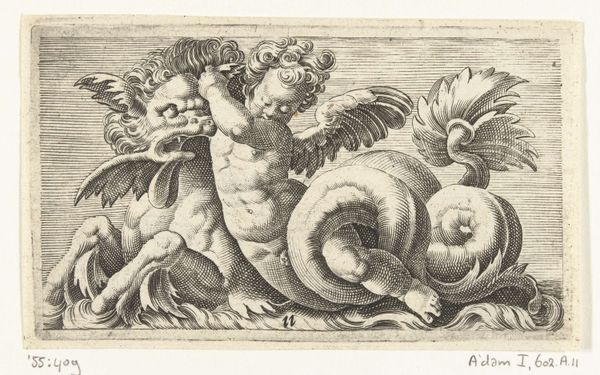
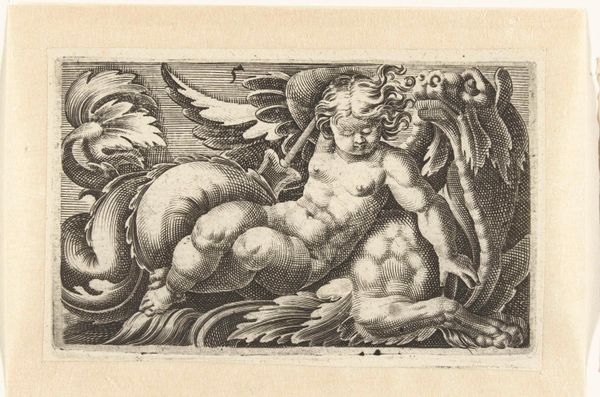
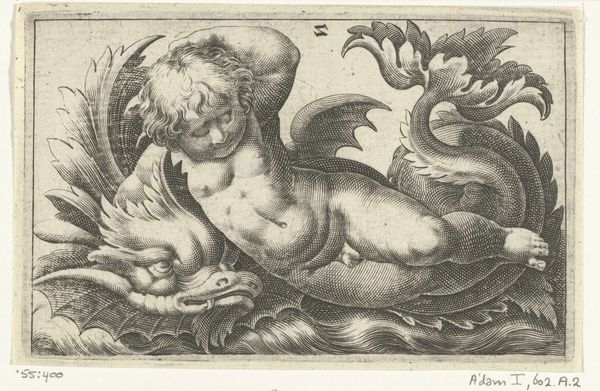
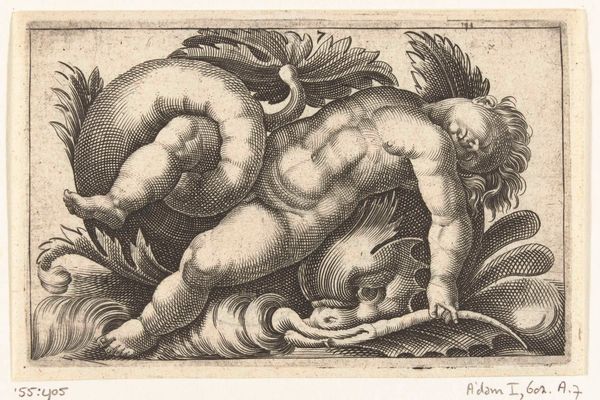
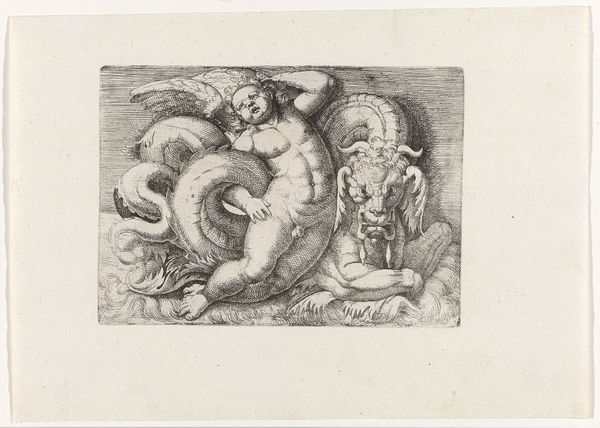
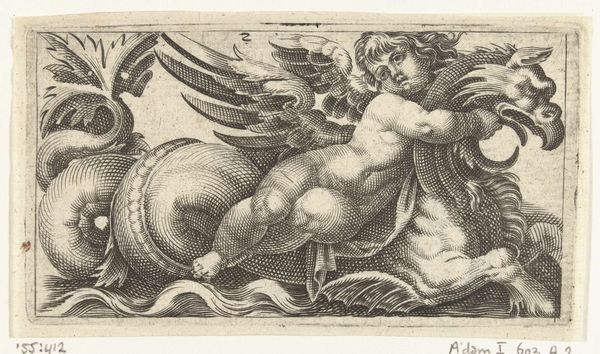
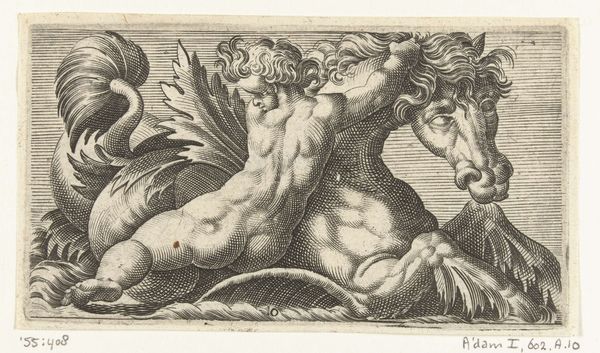
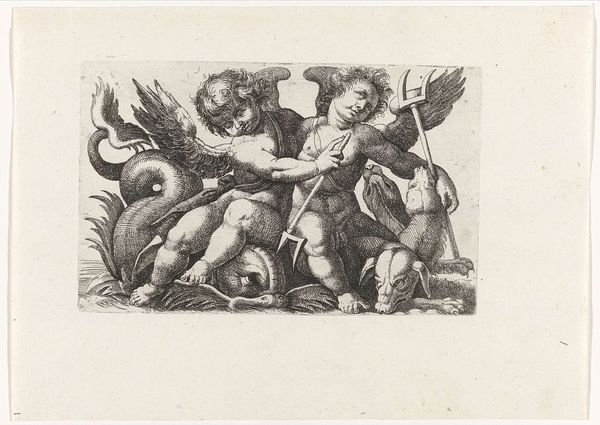
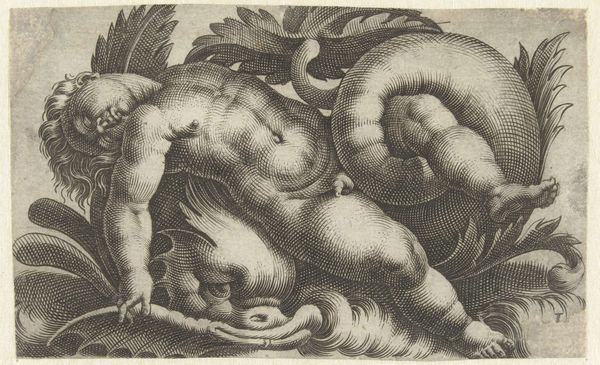
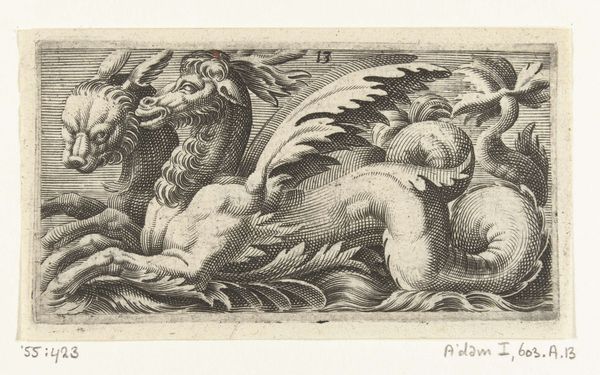
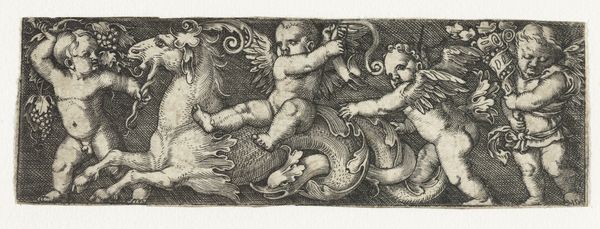
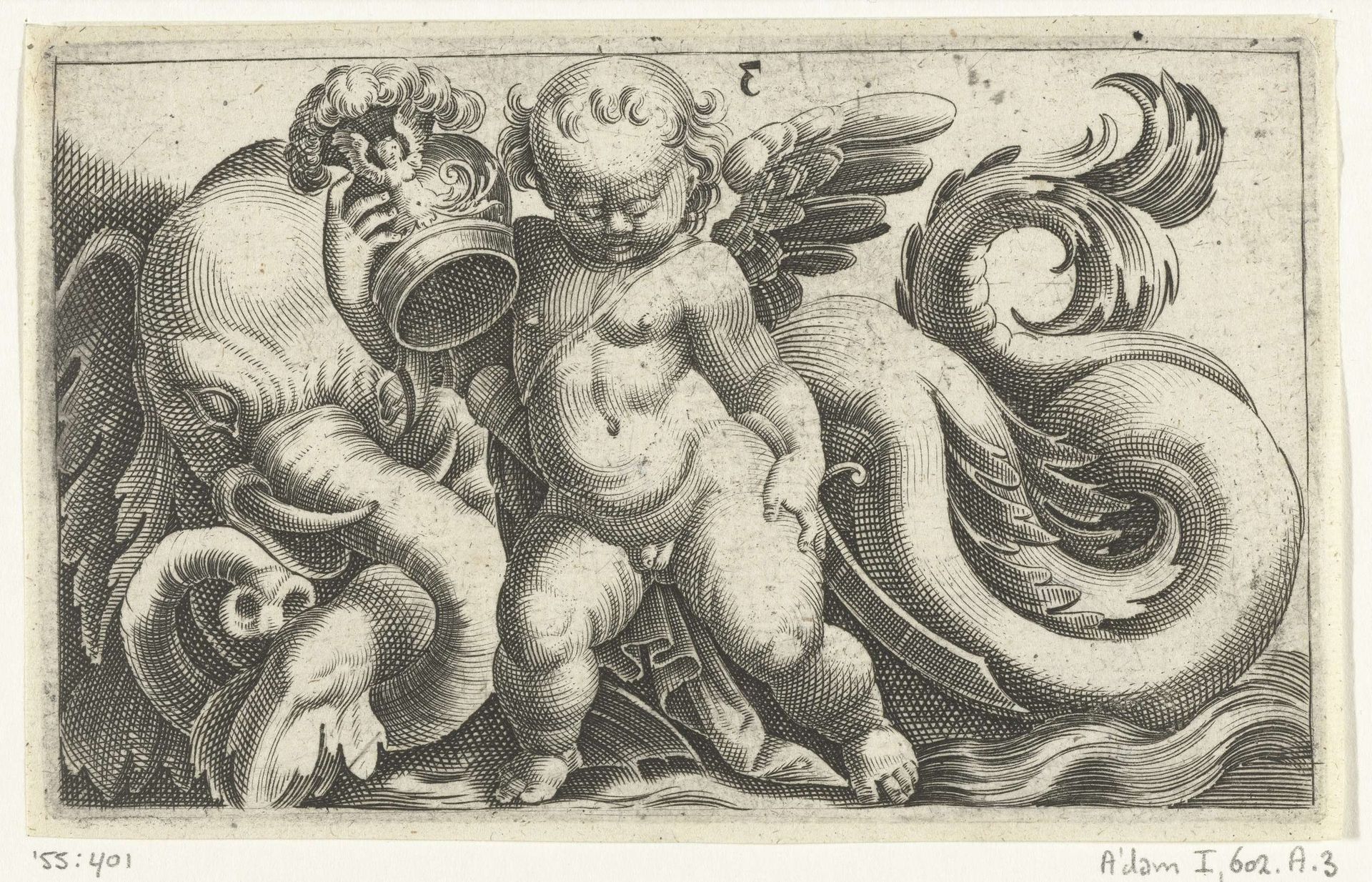
Adam Fuchs created this engraving of a putto with a helmet and sea elephant sometime before his death in 1606. During the late Renaissance, there was an increasing interest in classical antiquity which led to the rise of mythological subjects in art. Here, Fuchs seems to be playing with a set of symbols, referencing classical imagery, and likely intended to convey a moral message. A nude putto, representing innocence, stands between a sea elephant holding a helmet and a fantastical sea creature. Sea elephants were associated with strength. Helmets, of course, are associated with war and masculinity. The inclusion of these elements in the image reflects the era’s cultural norms around masculinity, power, and virtue. The image invites a dialogue between earthly power and divine innocence. We can understand this engraving as Fuchs' exploration of the complex relationship between the human and the divine, inviting viewers to contemplate the balance between power and innocence.
Putto met een helm in de arm bij een zee-olifant
c. 1526 - 1606

Adam Fuchs
1606Location
RijksmuseumArtwork details
- Medium
- print, engraving
- Dimensions
- height 84 mm, width 136 mm
- Location
- Rijksmuseum
- Copyright
- Rijks Museum: Open Domain
Tags
Comments
Share your thoughts
About this artwork
Adam Fuchs created this engraving of a putto with a helmet and sea elephant sometime before his death in 1606. During the late Renaissance, there was an increasing interest in classical antiquity which led to the rise of mythological subjects in art. Here, Fuchs seems to be playing with a set of symbols, referencing classical imagery, and likely intended to convey a moral message. A nude putto, representing innocence, stands between a sea elephant holding a helmet and a fantastical sea creature. Sea elephants were associated with strength. Helmets, of course, are associated with war and masculinity. The inclusion of these elements in the image reflects the era’s cultural norms around masculinity, power, and virtue. The image invites a dialogue between earthly power and divine innocence. We can understand this engraving as Fuchs' exploration of the complex relationship between the human and the divine, inviting viewers to contemplate the balance between power and innocence.
Comments
Share your thoughts