About this artwork
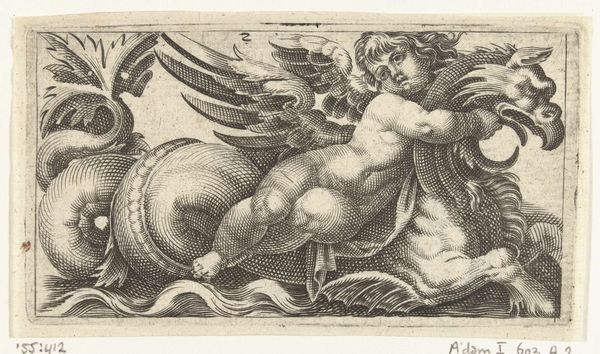
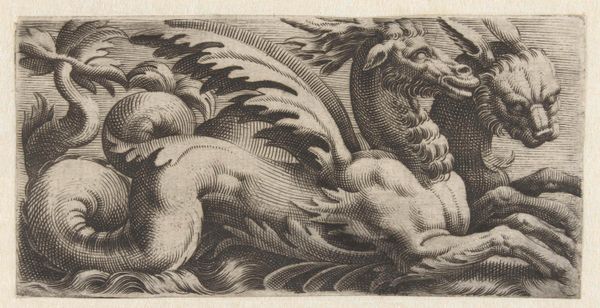
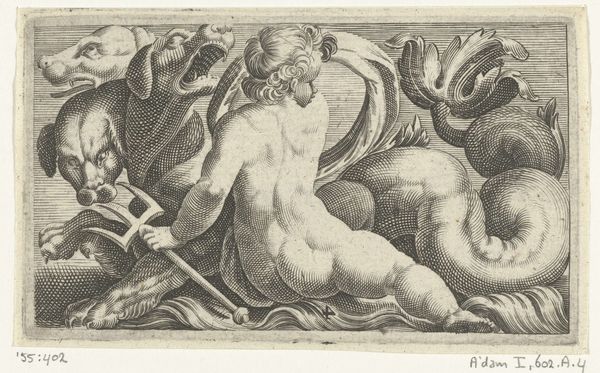
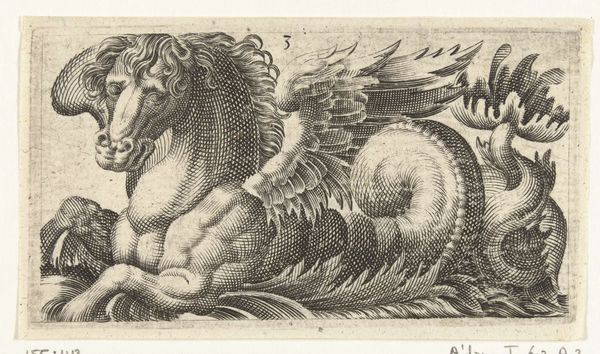
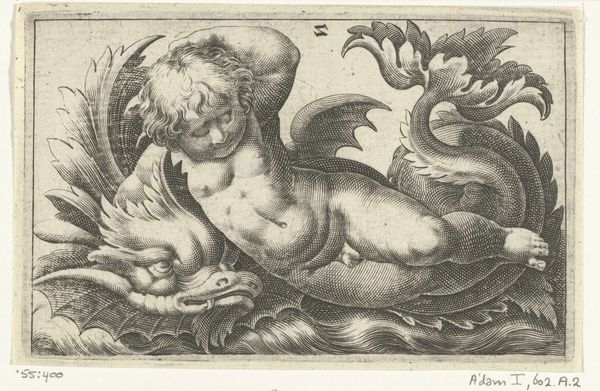
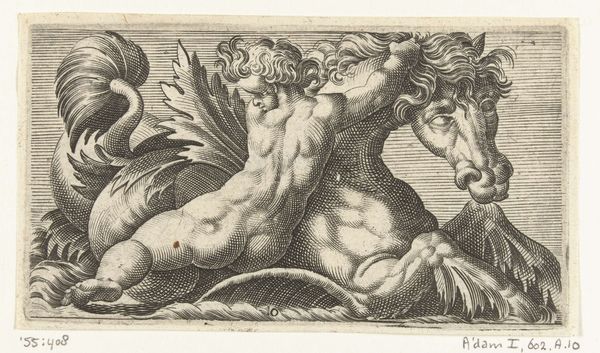
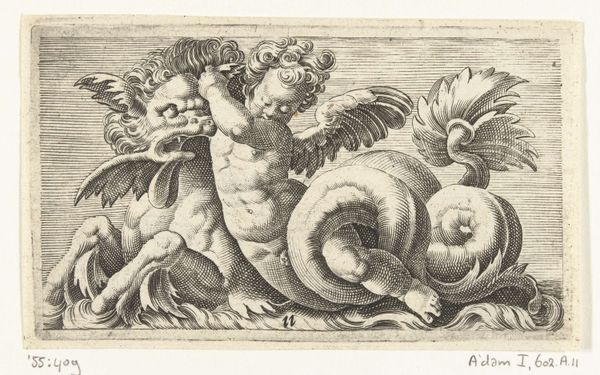
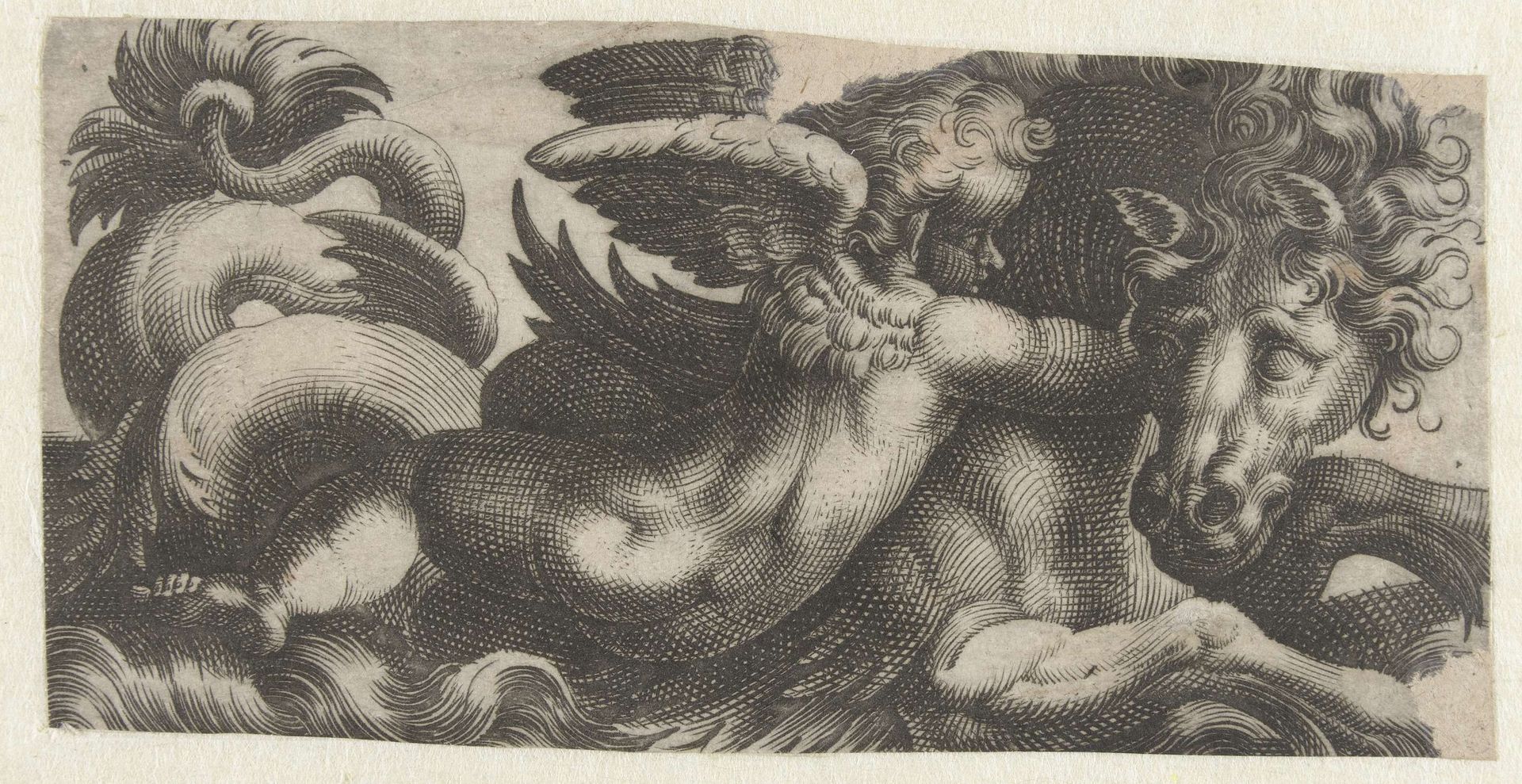
Giovanni Andrea Maglioli created this print of a seahorse with a putto around its neck. Although the exact date is unknown, during this time mythological and allegorical subjects were deployed to express complex ideas. The image presents a fascinating intertwining of classical mythology and Renaissance aesthetics. Here we have a winged putto, a cherubic figure often associated with love, entwined with a seahorse, a creature of the sea symbolizing power. The eroticism of their embrace challenges conventional boundaries and asks the viewer to rethink natural and social hierarchies. The image invites reflection on themes of desire and the navigation of power dynamics. The rippling water emphasizes the fluidity of identity and the blurring of boundaries. It is an invitation to ponder the complexities of relationships, power, and the fluidity of desire.
Zeepaard met een putto om zijn hals 1580 - 1610

Giovanni Andrea Maglioli
@giovanniandreamaglioliLocation
RijksmuseumArtwork details
- Medium
- print, engraving
- Dimensions
- height 52 mm, width 105 mm
- Location
- Rijksmuseum
- Copyright
- Rijks Museum: Open Domain
Tags
mannerism
figuration
mythology
engraving
Comments
No comments
About this artwork
Giovanni Andrea Maglioli created this print of a seahorse with a putto around its neck. Although the exact date is unknown, during this time mythological and allegorical subjects were deployed to express complex ideas. The image presents a fascinating intertwining of classical mythology and Renaissance aesthetics. Here we have a winged putto, a cherubic figure often associated with love, entwined with a seahorse, a creature of the sea symbolizing power. The eroticism of their embrace challenges conventional boundaries and asks the viewer to rethink natural and social hierarchies. The image invites reflection on themes of desire and the navigation of power dynamics. The rippling water emphasizes the fluidity of identity and the blurring of boundaries. It is an invitation to ponder the complexities of relationships, power, and the fluidity of desire.
Comments
No comments