About this artwork
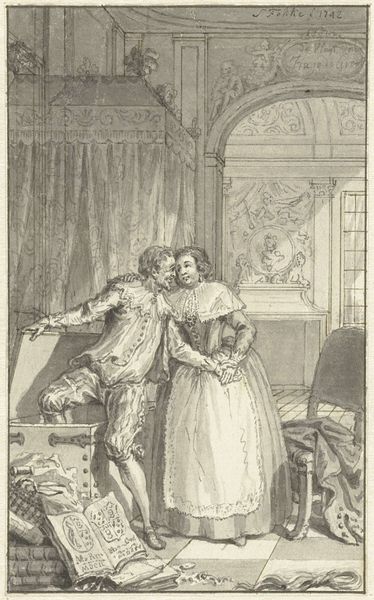
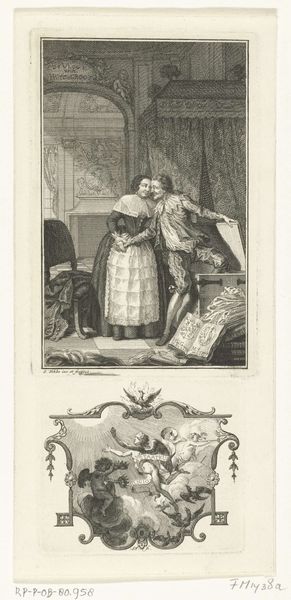
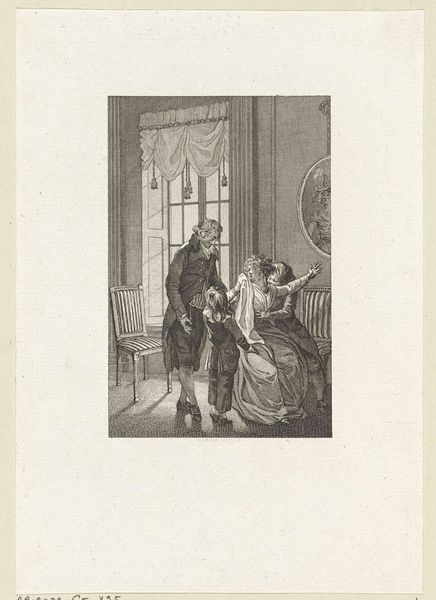
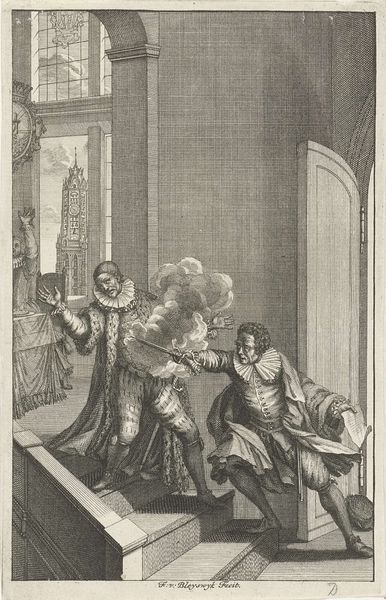
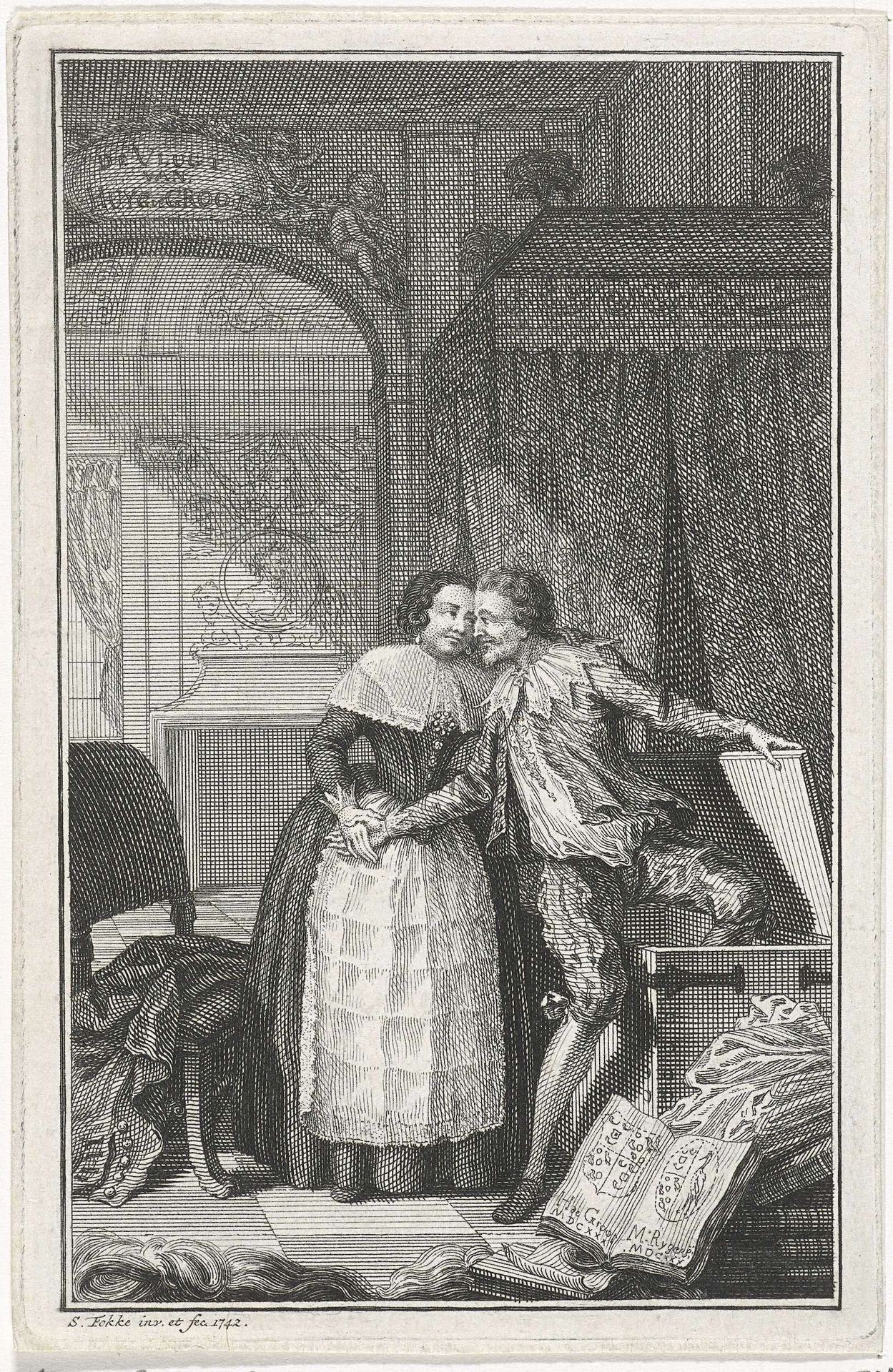
This print, made in 1742 by Simon Fokke, tells the story of Hugo de Groot’s escape from Loevestein Castle. It's a story rendered through the precise and demanding technique of engraving. Look closely at the image – you’ll see how the network of fine lines creates a range of tones and textures, from the opulent fabrics to the characters' facial expressions. This wasn't a quick process. Each line was incised into a metal plate, a testament to Fokke’s skill, and the labor-intensive processes that defined printmaking at this time. The final image, printed on paper, could then be widely distributed. It’s interesting to consider the social context here. Printmaking allowed stories to be shared and consumed across different social classes, enabling political discourse to reach a broader audience. The print becomes more than just an artwork; it's a vehicle for disseminating ideas, and shaping public opinion. By understanding the materials and the making, we can understand the full meaning of the artwork, which challenges traditional distinctions between fine art and craft.
De vlucht van Hugo de Groot uit slot Loevestein 1742

Simon Fokke
1712 - 1784Location
RijksmuseumArtwork details
- Medium
- print, engraving
- Dimensions
- height 125 mm, width 81 mm
- Location
- Rijksmuseum
- Copyright
- Rijks Museum: Open Domain
Tags
narrative-art
baroque
old engraving style
genre-painting
engraving
Comments
No comments
About this artwork
This print, made in 1742 by Simon Fokke, tells the story of Hugo de Groot’s escape from Loevestein Castle. It's a story rendered through the precise and demanding technique of engraving. Look closely at the image – you’ll see how the network of fine lines creates a range of tones and textures, from the opulent fabrics to the characters' facial expressions. This wasn't a quick process. Each line was incised into a metal plate, a testament to Fokke’s skill, and the labor-intensive processes that defined printmaking at this time. The final image, printed on paper, could then be widely distributed. It’s interesting to consider the social context here. Printmaking allowed stories to be shared and consumed across different social classes, enabling political discourse to reach a broader audience. The print becomes more than just an artwork; it's a vehicle for disseminating ideas, and shaping public opinion. By understanding the materials and the making, we can understand the full meaning of the artwork, which challenges traditional distinctions between fine art and craft.
Comments
No comments