About this artwork
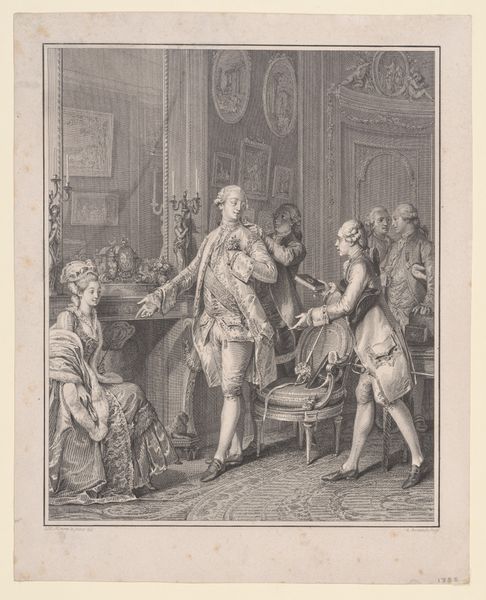
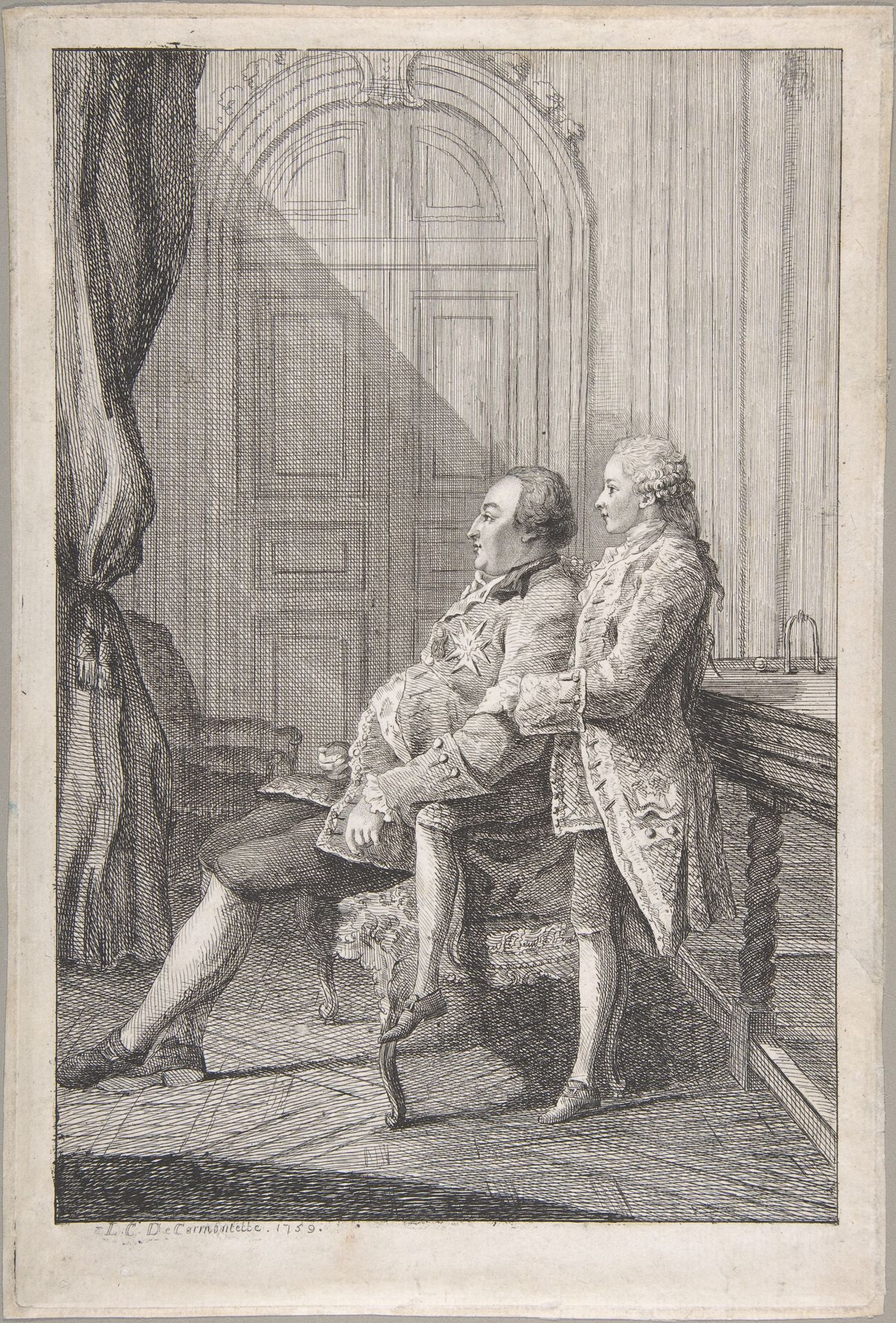
Louis de Carmontelle captured this intimate scene of Louis-Philippe, Duc d'Orleans and his son in a delicate etching. Note the father's relaxed posture, the son's supportive hand – these gestures, seemingly simple, speak volumes. The Duc d'Orleans wears the star of an aristocratic order, a symbol of status. Yet, observe how this emblem echoes across time. We see similar displays of rank in medieval tapestries and Byzantine mosaics. These symbols of authority persist. Each age adorns them with new meaning. The hand on the shoulder, though, carries a different weight. It evokes images of familial support found in Roman portraiture, where lineage and continuity were paramount. Think of the emotional weight of the pieta in Renaissance art – a hand offering solace, a connection that transcends time. The cyclical nature of symbols reminds us that history is never truly linear. These motifs re-emerge, transformed, yet still tethered to the deep well of human experience.
Portrait of Louis-Philippe, Duc d'Orleans and His Son Louis-Phillipe Joseph, Duc de Chartres
1759

Louis de Carmontelle
1717 - 1806
The Metropolitan Museum of Art
Metropolitan Museum of Art, New York, NYArtwork details
- Medium
- drawing, print, intaglio, engraving
- Dimensions
- Sheet: 11 11/16 × 7 7/8 in. (29.7 × 20 cm) Plate: 11 5/8 x 7 3/4in. (29.5 x 19.7cm)
- Location
- Metropolitan Museum of Art, New York, NY
- Copyright
- Public Domain
Tags
Comments
Share your thoughts
About this artwork
Louis de Carmontelle captured this intimate scene of Louis-Philippe, Duc d'Orleans and his son in a delicate etching. Note the father's relaxed posture, the son's supportive hand – these gestures, seemingly simple, speak volumes. The Duc d'Orleans wears the star of an aristocratic order, a symbol of status. Yet, observe how this emblem echoes across time. We see similar displays of rank in medieval tapestries and Byzantine mosaics. These symbols of authority persist. Each age adorns them with new meaning. The hand on the shoulder, though, carries a different weight. It evokes images of familial support found in Roman portraiture, where lineage and continuity were paramount. Think of the emotional weight of the pieta in Renaissance art – a hand offering solace, a connection that transcends time. The cyclical nature of symbols reminds us that history is never truly linear. These motifs re-emerge, transformed, yet still tethered to the deep well of human experience.
Comments
Share your thoughts