About this artwork
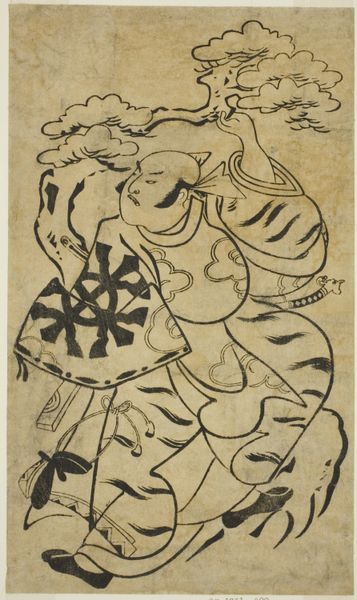
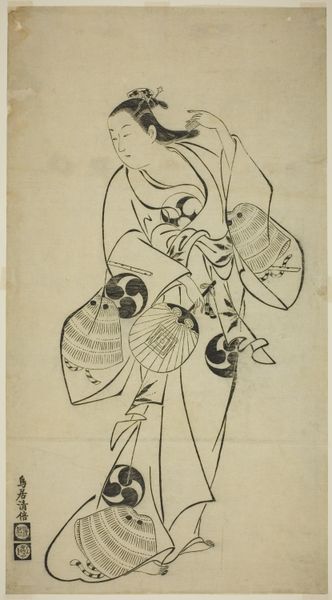
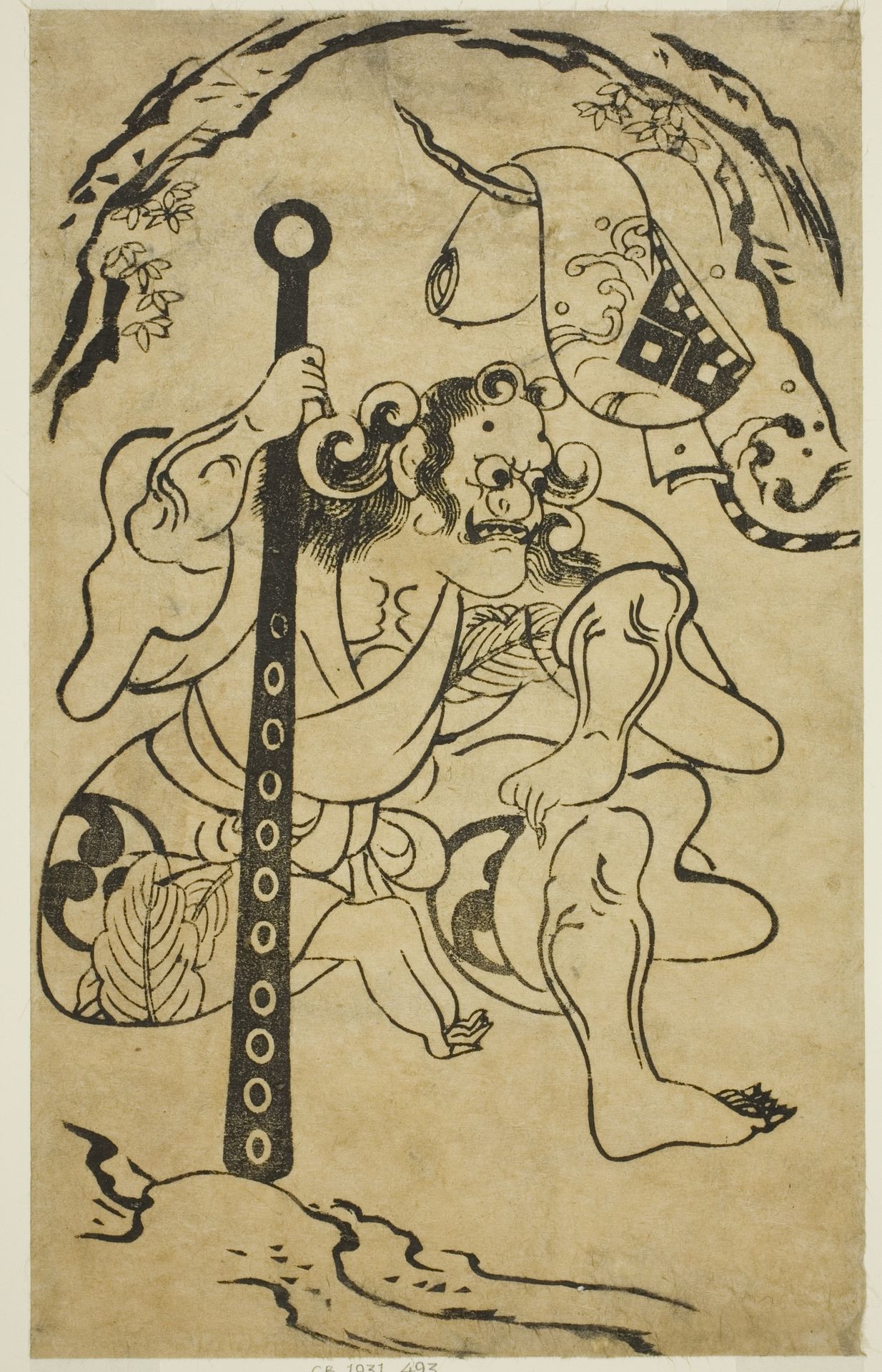
Torii Kiyonobu I created this woodblock print of the actor Yamanaka Heikuro I as a demon in Japan in the early 1700s. It's made using the Ukiyo-e technique, where a design is carved into wood, inked, and then pressed onto paper. The paper itself plays a crucial role; its absorbent quality allows for the ink to create crisp lines, but the print relies on the skills of the wood carvers and printers. The black lines define the demon’s features and the folds of his clothing. Notice the intricate details, achieved through precise carving, especially when depicting texture and pattern. These lines not only describe form but also contribute to the overall visual impact of the artwork, and reflect the amount of labor involved. Consider this print as a product of collaboration between the artist, carvers, and printers, each bringing their unique expertise to the process. It prompts us to expand our understanding of art history to include the histories of creative practices like woodblock printing, challenging traditional boundaries between art and craft.
The actor Yamanaka Heikuro I as a demon c. 1706


Artwork details
- Medium
- drawing, print, paper, ink
- Dimensions
- 26.4 × 16.3 cm (10 3/8 × 6 3/8 in.)
- Location
- The Art Institute of Chicago
- Copyright
- Public Domain
Tags
portrait
drawing
ink drawing
asian-art
ukiyo-e
figuration
paper
ink
Comments
No comments
About this artwork
Torii Kiyonobu I created this woodblock print of the actor Yamanaka Heikuro I as a demon in Japan in the early 1700s. It's made using the Ukiyo-e technique, where a design is carved into wood, inked, and then pressed onto paper. The paper itself plays a crucial role; its absorbent quality allows for the ink to create crisp lines, but the print relies on the skills of the wood carvers and printers. The black lines define the demon’s features and the folds of his clothing. Notice the intricate details, achieved through precise carving, especially when depicting texture and pattern. These lines not only describe form but also contribute to the overall visual impact of the artwork, and reflect the amount of labor involved. Consider this print as a product of collaboration between the artist, carvers, and printers, each bringing their unique expertise to the process. It prompts us to expand our understanding of art history to include the histories of creative practices like woodblock printing, challenging traditional boundaries between art and craft.
Comments
No comments