About this artwork
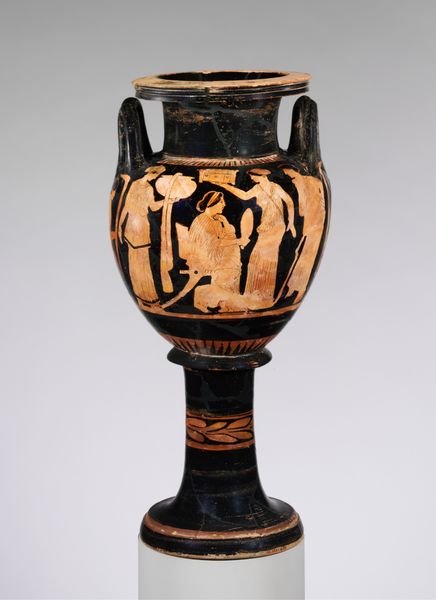
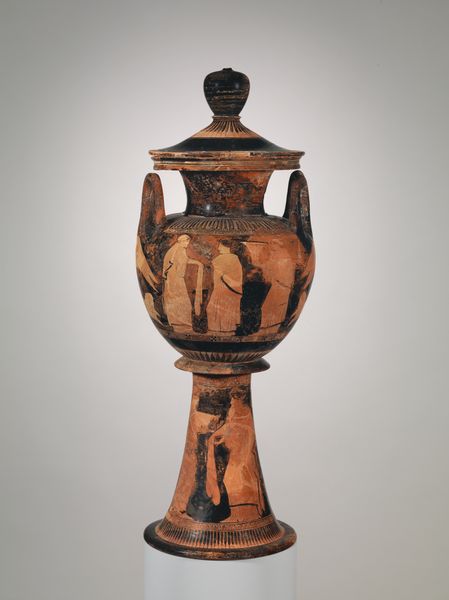
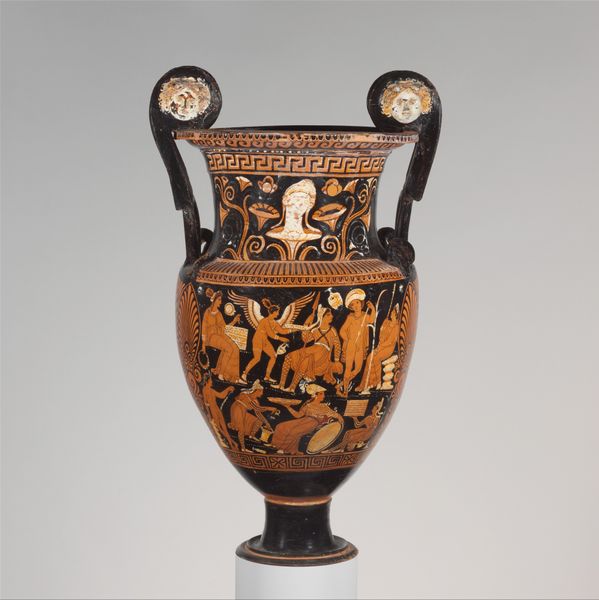
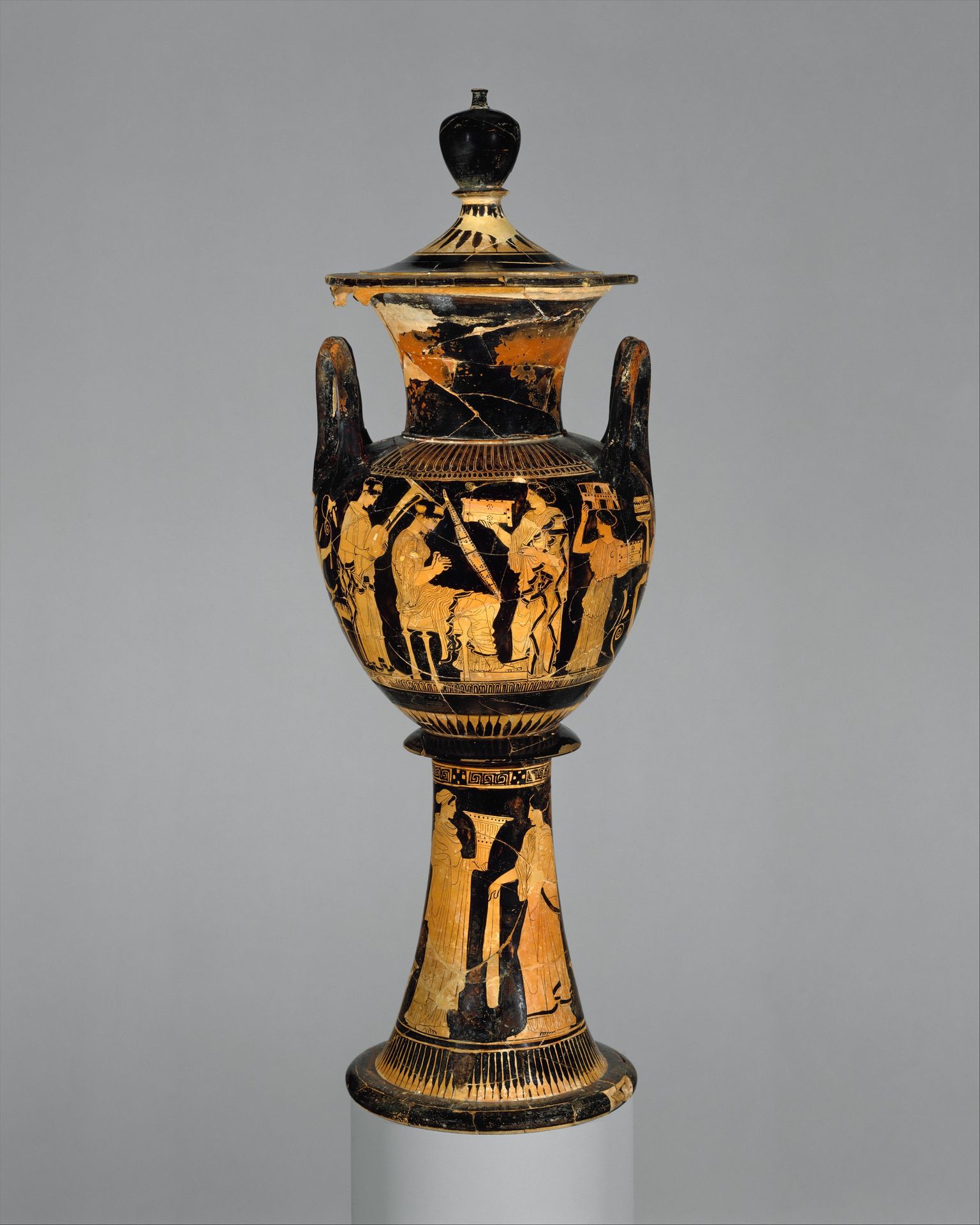
This terracotta lebes gamikos, a wedding vase, stands as a potent symbol of ancient Greek marital rituals. Painted in black-figure style, processions of figures dance around the vessel, likely depicting scenes of a wedding procession, where gestures of offering and embrace are frozen in time. The vase form itself is an ancient emblem, seen in various cultures as a vessel of life, rebirth, and potential, holding symbolic power far beyond its practical function. Think of the amphora in the Dionysian mysteries, reborn again in Keats’ Grecian urn. Here, it speaks to the hopes and anxieties surrounding marriage. Consider the image of a procession: the movement of figures, the carrying of gifts, the formalized dance, all point to a structured, ritualistic transition, a moment charged with social and emotional weight. This echoes through time, from ancient fertility rites to modern wedding ceremonies. The lebes gamikos is a reminder that the past is never truly gone. Its forms and rituals reappear, transformed but still resonant.
Terracotta lebes gamikos (round-bottomed bowl with handles and stand used in weddings)
430 BC


Artwork details
- Medium
- ceramic
- Dimensions
- H. 20 1/8 in. (51.1 cm) diameter 8 3/4 in. (22.2 cm)
- Location
- Metropolitan Museum of Art, New York, NY
- Copyright
- Public Domain
Tags
Comments
Share your thoughts
About this artwork
This terracotta lebes gamikos, a wedding vase, stands as a potent symbol of ancient Greek marital rituals. Painted in black-figure style, processions of figures dance around the vessel, likely depicting scenes of a wedding procession, where gestures of offering and embrace are frozen in time. The vase form itself is an ancient emblem, seen in various cultures as a vessel of life, rebirth, and potential, holding symbolic power far beyond its practical function. Think of the amphora in the Dionysian mysteries, reborn again in Keats’ Grecian urn. Here, it speaks to the hopes and anxieties surrounding marriage. Consider the image of a procession: the movement of figures, the carrying of gifts, the formalized dance, all point to a structured, ritualistic transition, a moment charged with social and emotional weight. This echoes through time, from ancient fertility rites to modern wedding ceremonies. The lebes gamikos is a reminder that the past is never truly gone. Its forms and rituals reappear, transformed but still resonant.
Comments
Share your thoughts