About this artwork
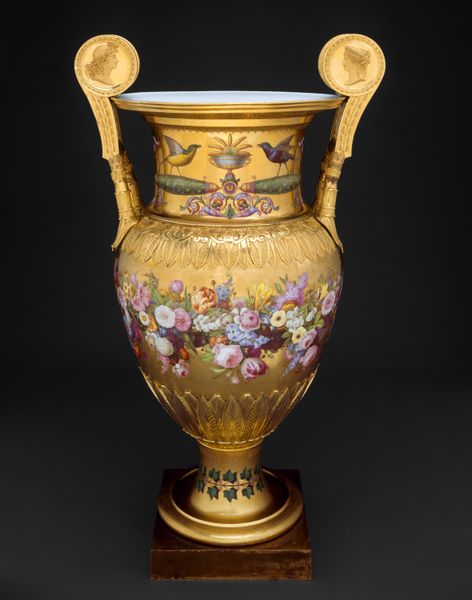
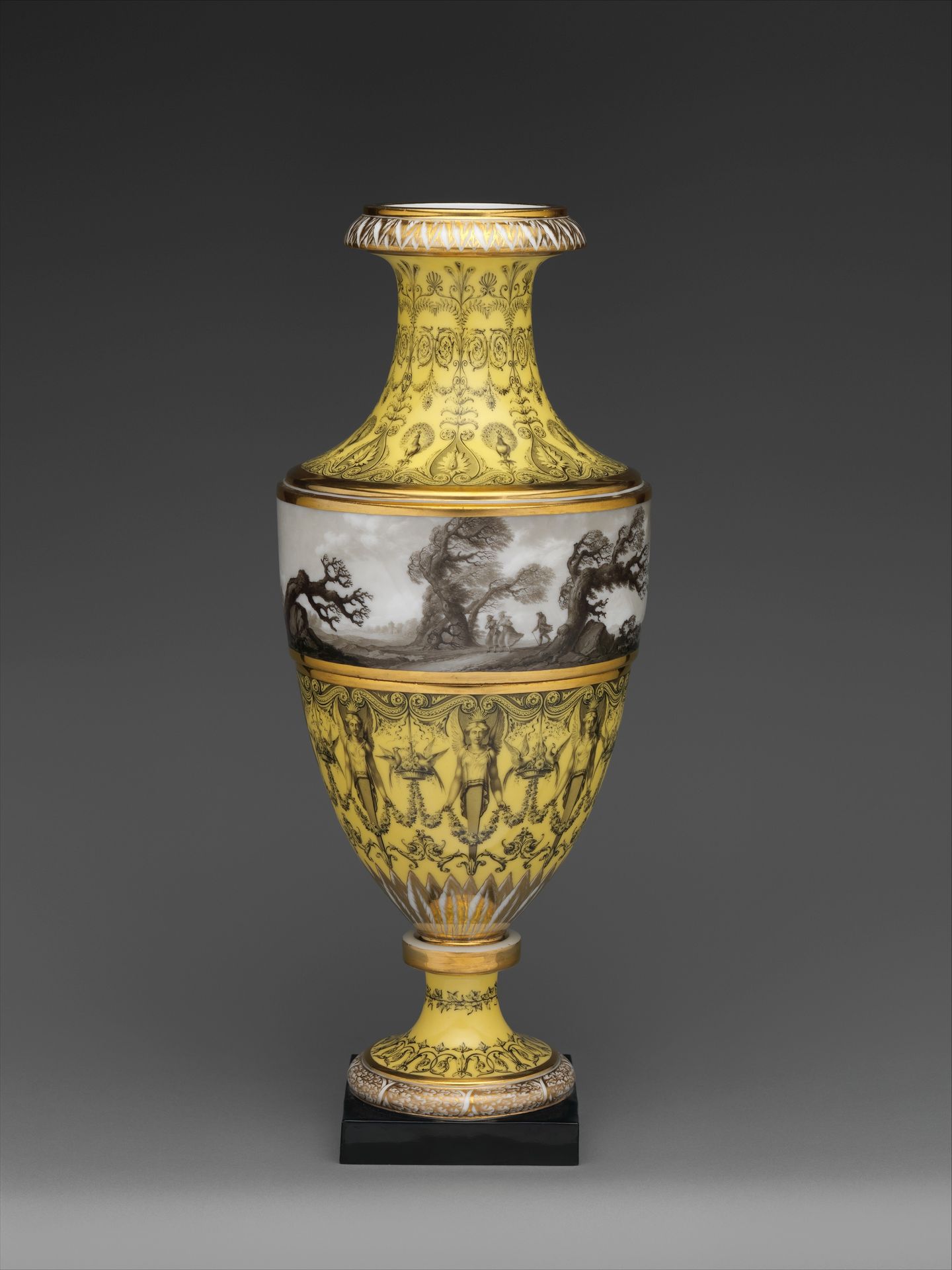
This porcelain vase with scenes of storm on land was made by Dihl et Guérhard, in France. The vase is made of hard-paste porcelain, a material first developed in Europe in the 18th century to imitate Chinese porcelain. The body of the vase is slip-cast, meaning liquid clay was poured into a mold, allowed to harden, and then removed. This allowed for the efficient production of complex shapes. The decoration, however, is painstakingly hand-painted. Notice the contrast between the delicate brushwork of the stormy landscape and the repetitive patterns of the yellow ground. This division of labor—casting for the body, painting for the décor—speaks to the industrializing context in which it was made. It reflects a tension between mechanized production and the desire for handcrafted uniqueness. Ultimately, the vase reminds us that even seemingly decorative objects can be understood as products of complex social and economic forces. It prompts us to consider how materials, making, and context shape our understanding of art.
Vase with scenes of storm on land
1792 - 1802


Artwork details
- Medium
- ceramic, porcelain, sculpture
- Dimensions
- Overall (confirmed): 18 5/16 × 7 1/4 × 7 1/4 in. (46.5 × 18.4 × 18.4 cm)
- Location
- Metropolitan Museum of Art, New York, NY
- Copyright
- Public Domain
Tags
neoclassicism
landscape
ceramic
porcelain
stoneware
sculpture
ceramic
decorative-art
Comments
Be the first to share your thoughts about this work.
About this artwork
This porcelain vase with scenes of storm on land was made by Dihl et Guérhard, in France. The vase is made of hard-paste porcelain, a material first developed in Europe in the 18th century to imitate Chinese porcelain. The body of the vase is slip-cast, meaning liquid clay was poured into a mold, allowed to harden, and then removed. This allowed for the efficient production of complex shapes. The decoration, however, is painstakingly hand-painted. Notice the contrast between the delicate brushwork of the stormy landscape and the repetitive patterns of the yellow ground. This division of labor—casting for the body, painting for the décor—speaks to the industrializing context in which it was made. It reflects a tension between mechanized production and the desire for handcrafted uniqueness. Ultimately, the vase reminds us that even seemingly decorative objects can be understood as products of complex social and economic forces. It prompts us to consider how materials, making, and context shape our understanding of art.
Comments
Be the first to share your thoughts about this work.