About this artwork
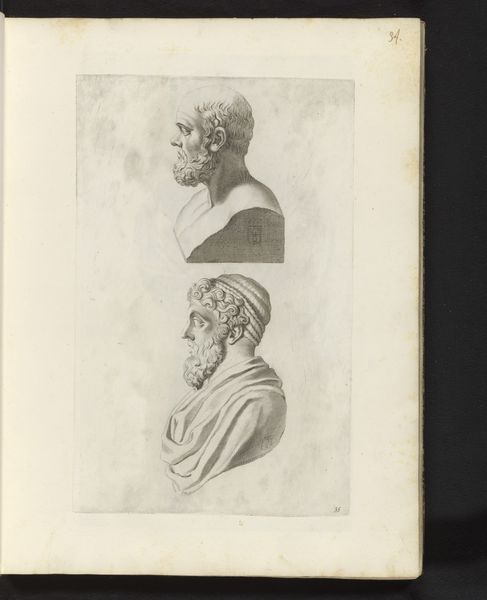
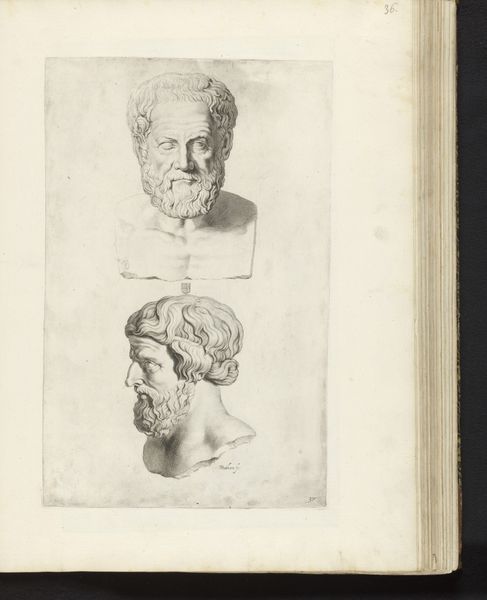
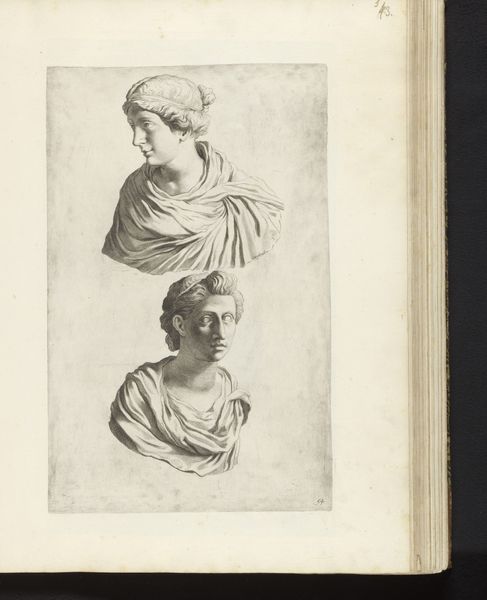
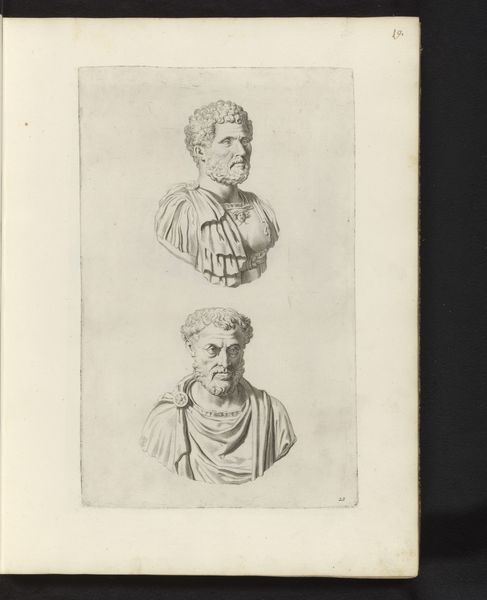
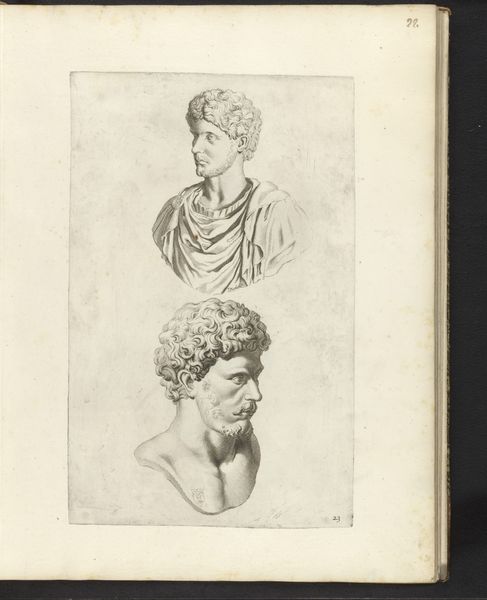
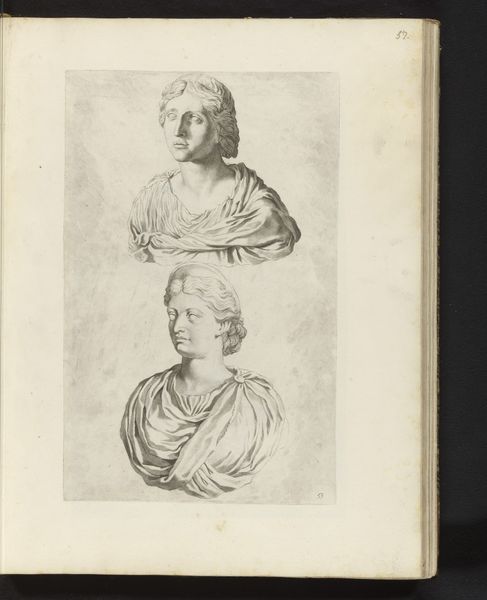
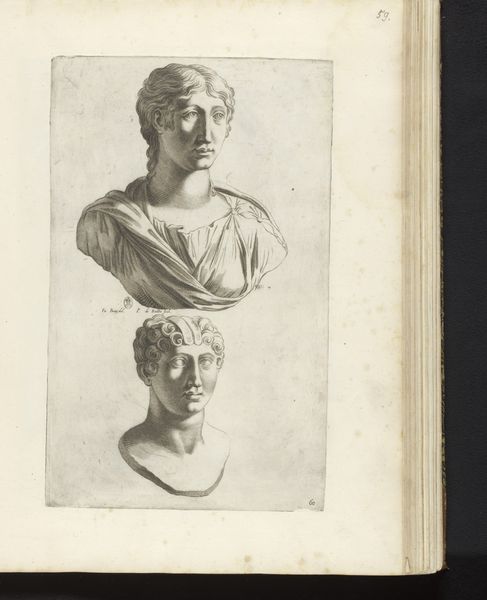
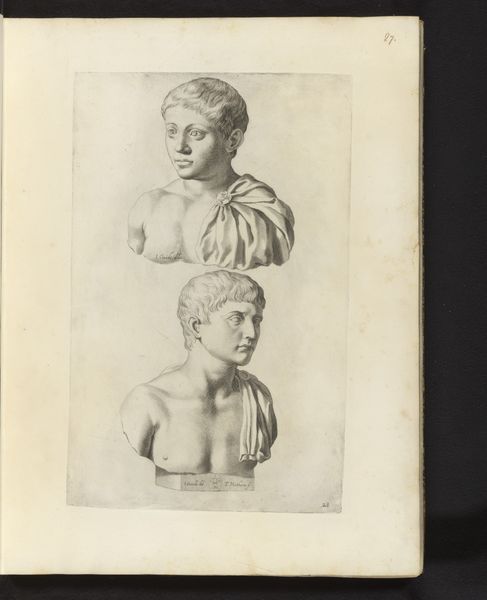
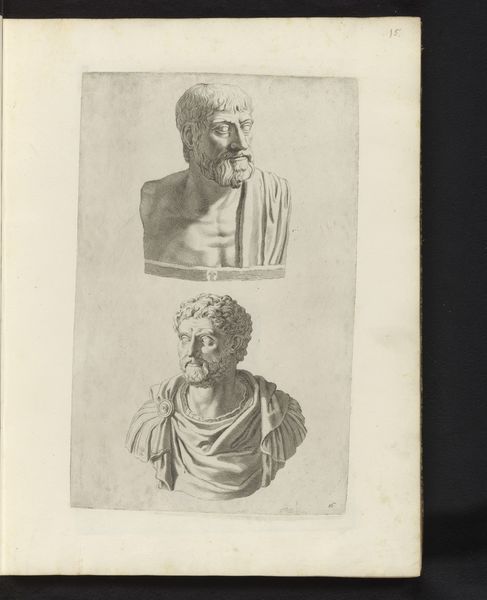
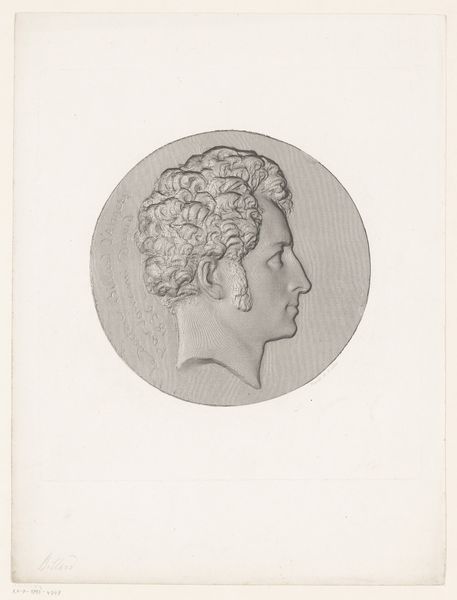
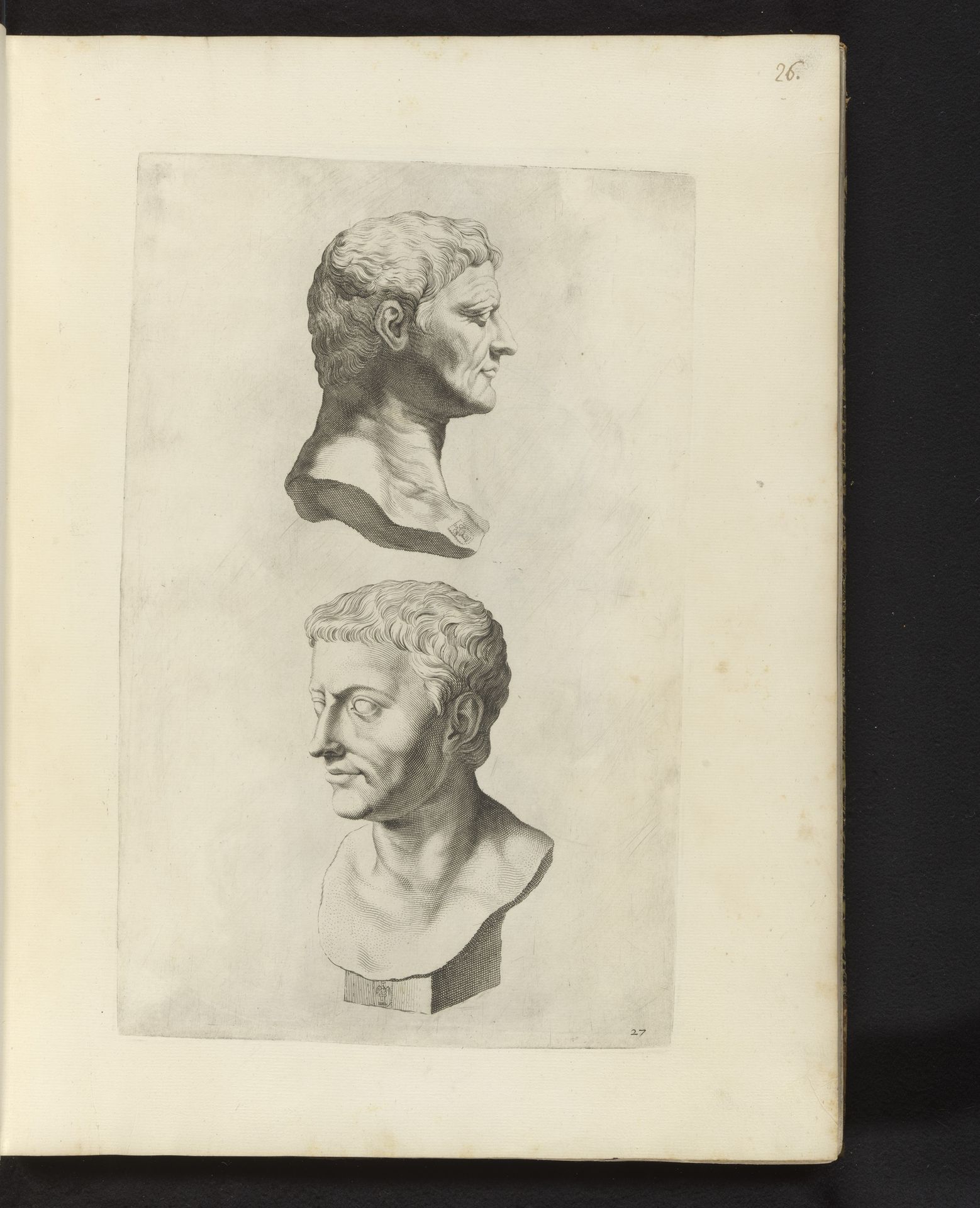
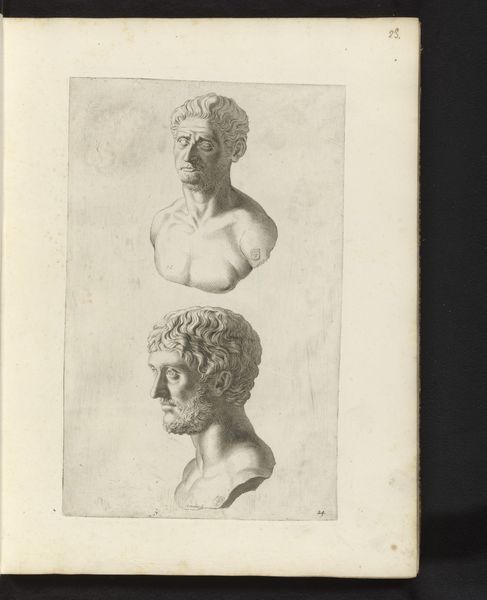
Theodor Matham created these two portrait busts of Roman emperors in ink on paper. The composition divides the page into distinct zones, one for each bust, creating a dialogue between the two figures. Matham skillfully uses light and shadow to model the forms, giving them a sculptural presence. The precise, controlled lines delineate the profiles and capture the texture of the hair, suggesting a concern with verisimilitude. The artist employs a semiotic system of visual codes related to classical sculpture to enhance their status and authority. The emperors are presented in profile, a stylistic choice that alludes to ancient coins and cameos, reinforcing their connection to the Roman past. These features encourage us to ponder the interplay between art and power, and the ways in which images construct and convey meaning through form. This formal quality serves not just an aesthetic purpose but also contributes to a larger cultural and philosophical discourse.
Twee portretbustes van Romeinse keizers
1636 - 1647
Theodor Matham
1605 - 1676Location
RijksmuseumArtwork details
- Medium
- drawing, pencil
- Dimensions
- height 375 mm, width 237 mm
- Location
- Rijksmuseum
- Copyright
- Rijks Museum: Open Domain
Tags
Comments
Share your thoughts
About this artwork
Theodor Matham created these two portrait busts of Roman emperors in ink on paper. The composition divides the page into distinct zones, one for each bust, creating a dialogue between the two figures. Matham skillfully uses light and shadow to model the forms, giving them a sculptural presence. The precise, controlled lines delineate the profiles and capture the texture of the hair, suggesting a concern with verisimilitude. The artist employs a semiotic system of visual codes related to classical sculpture to enhance their status and authority. The emperors are presented in profile, a stylistic choice that alludes to ancient coins and cameos, reinforcing their connection to the Roman past. These features encourage us to ponder the interplay between art and power, and the ways in which images construct and convey meaning through form. This formal quality serves not just an aesthetic purpose but also contributes to a larger cultural and philosophical discourse.
Comments
Share your thoughts