1885 - 1891
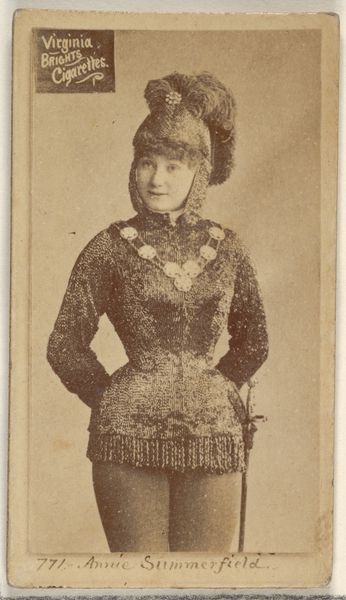
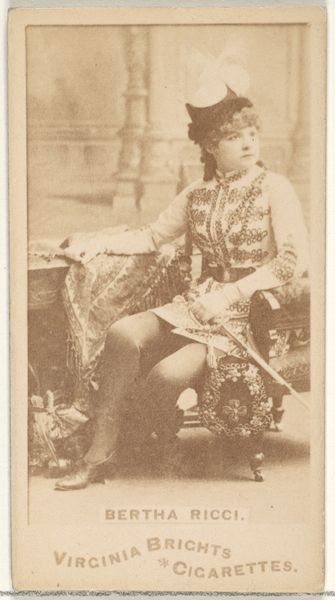
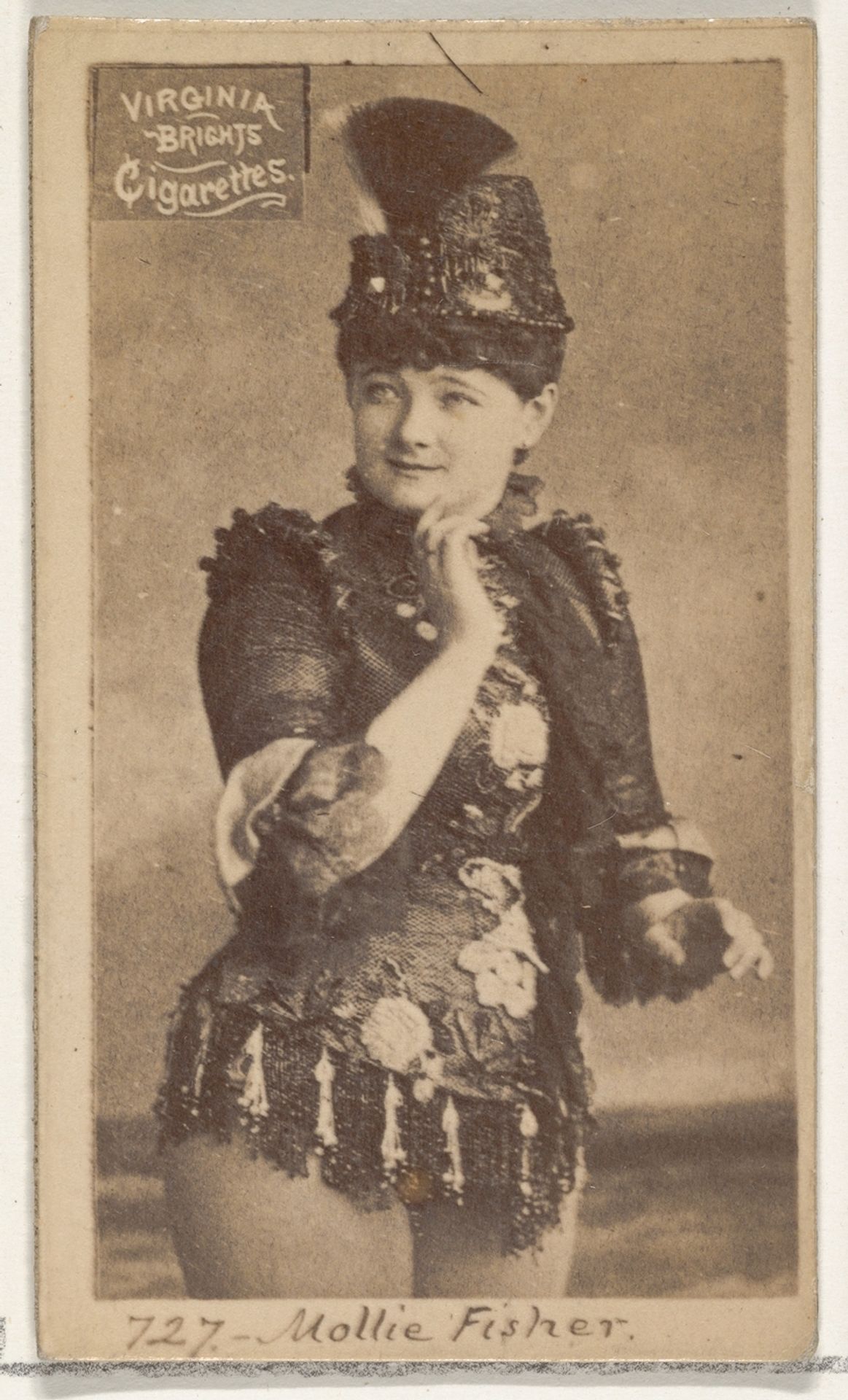
Card 727, Mollie Fisher, from the Actors and Actresses series (N45, Type 2) for Virginia Brights Cigarettes


Listen to curator's interpretation
Curatorial notes
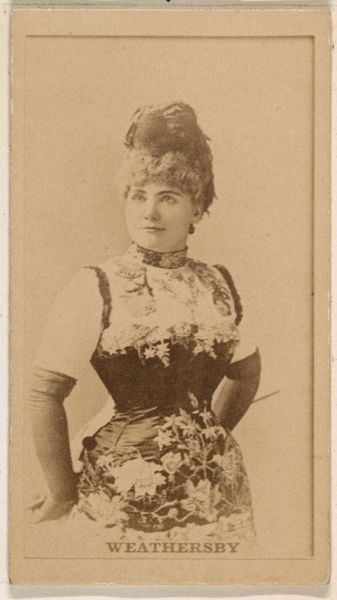
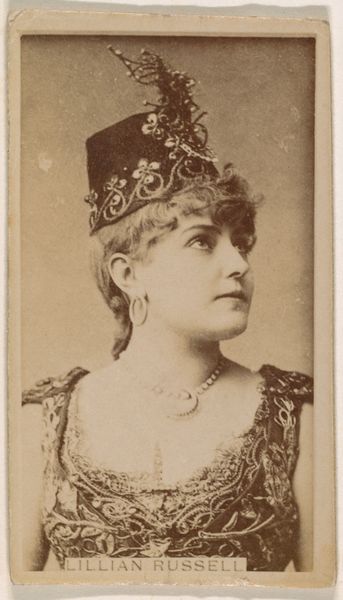
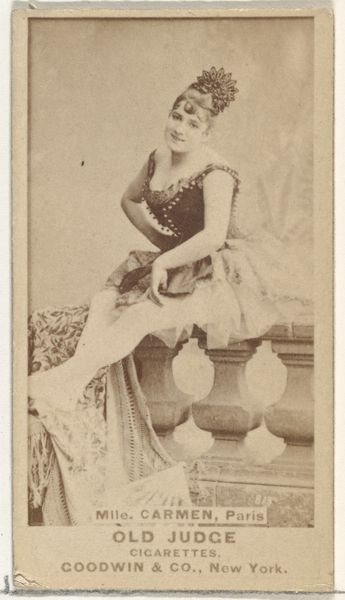
Editor: So, this is a photograph titled "Card 727, Mollie Fisher," created sometime between 1885 and 1891 by Allen & Ginter. It's an albumen print, a kind of photographic print, and it feels very much of its time. What symbols or readings jump out at you? Curator: Immediately, I see the layers of performance at play. This isn't simply a portrait of a woman; it's a carefully constructed image for public consumption, tied to the branding of Virginia Brights cigarettes. Look at how Mollie Fisher, presumably an actress, is styled. Editor: The feathered hat and elaborate costume do stand out. Curator: Precisely! Think about the cultural memory being crafted here. Tobacco companies frequently used imagery associating their products with glamour and celebrity. The portrait, reproduced and distributed on a mass scale, becomes a token of aspirational consumerism. It taps into the psychology of desire. Editor: It's interesting how the image is both intimate, showing a person, and yet entirely a commercial product. Does the 'N45, Type 2' part of the title hold significance? Curator: Indeed. That classification refers to a specific series and variation of cards issued by the company. Each element – the actress, the pose, the cigarette brand – becomes laden with meaning, shaping perceptions of femininity, success, and even modernity at the time. Notice how photography itself was then still a relatively novel medium, adding another layer of meaning. Editor: That makes a lot of sense. I hadn't considered all the layers involved. It really opens my eyes to how much cultural information is packed into one little card. Curator: Absolutely. By examining these symbols, we unlock a window into the values and aspirations of that era, and how images worked to both reflect and shape them.