c. 1833
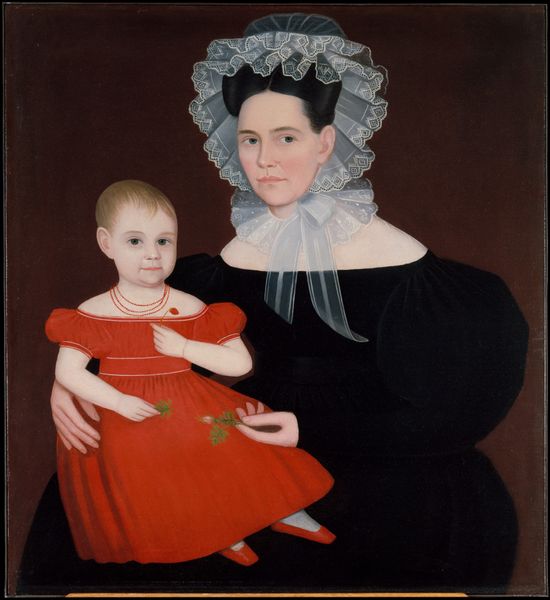
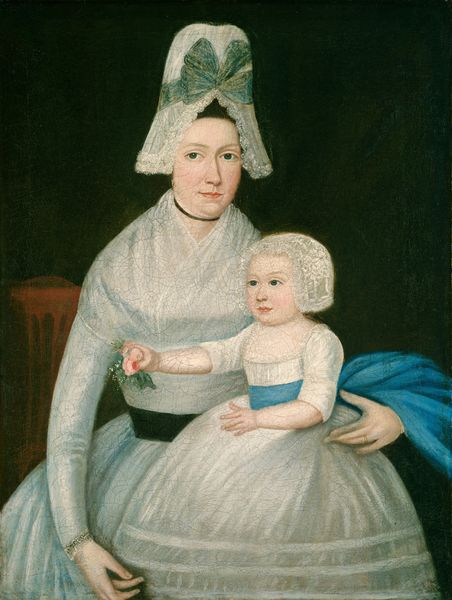
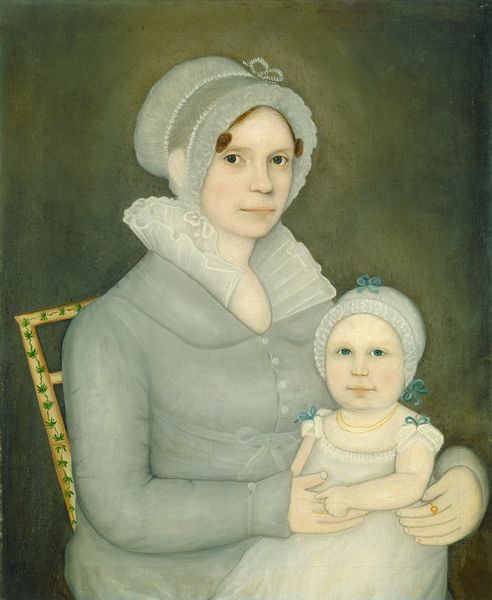
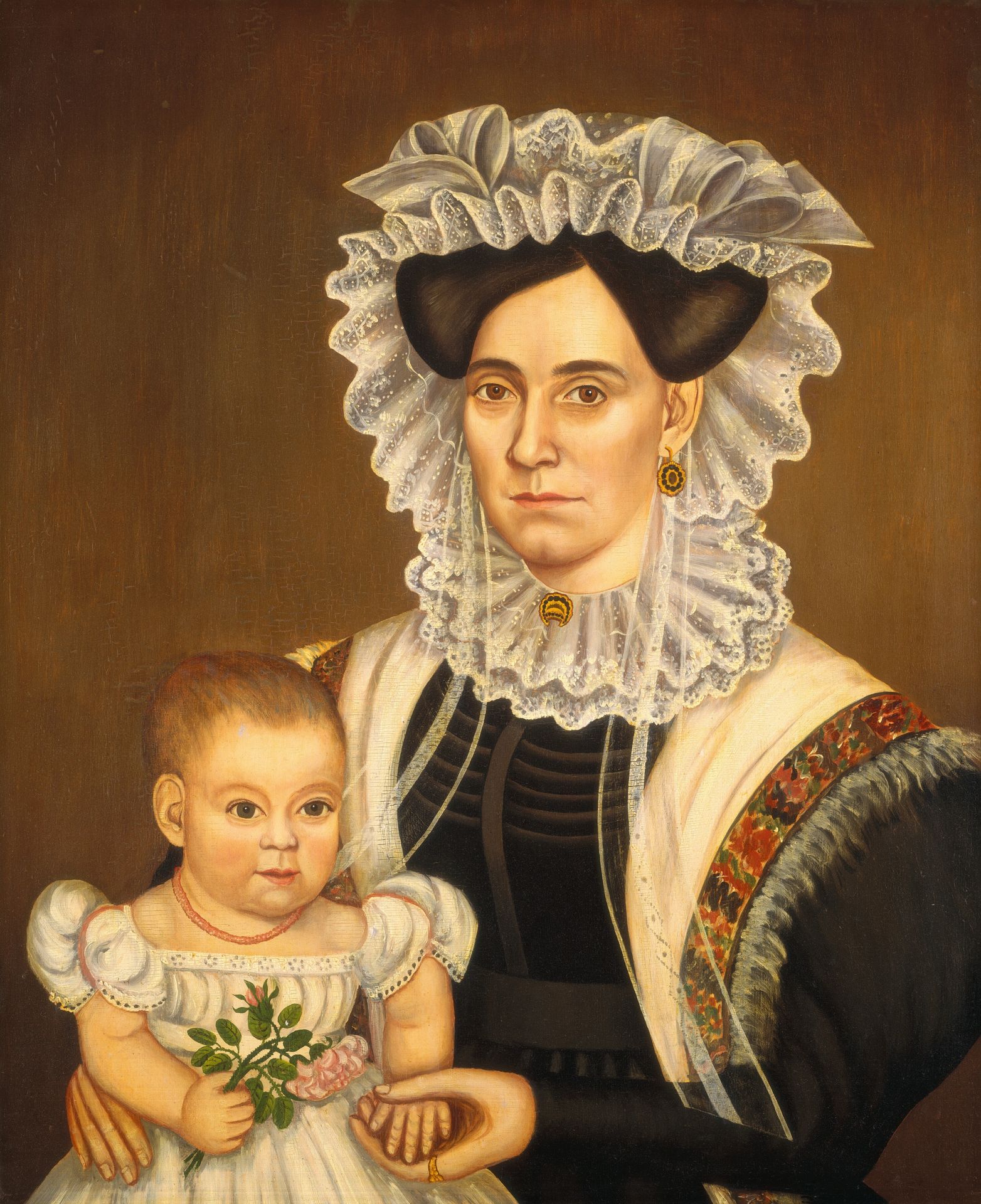
Aphia Salisbury Rich and Baby Edward


Listen to curator's interpretation
Curatorial notes
Milton W. Hopkins painted this portrait of Aphia Salisbury Rich and her baby Edward, using oil on canvas. Its dominant visual experience is one of formality and control. Aphia and Edward are rigidly posed against a plain, dark background. The shapes, lines, and color choices all contribute to this effect. Aphia's elaborate lace bonnet and collar frame her face with geometric precision. The dark, vertical lines of her dress contrast with the white of her shawl, creating a stark, structured composition. Note how the artist uses light and shadow sparingly, emphasizing the textures of the fabrics and the smoothness of the skin, creating an almost sculptural effect. Hopkins’ use of formal elements reflects the values of the early 19th century American society, where portraiture was a symbol of status and respectability. The painting functions not only as a likeness but also as a statement about social order and the sitter’s place within it. Remember, art invites us to engage in ongoing interpretation.