About this artwork
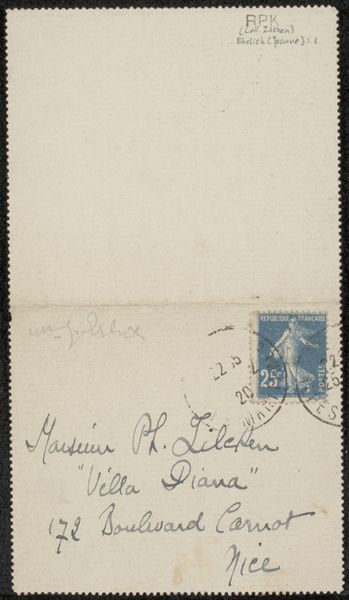
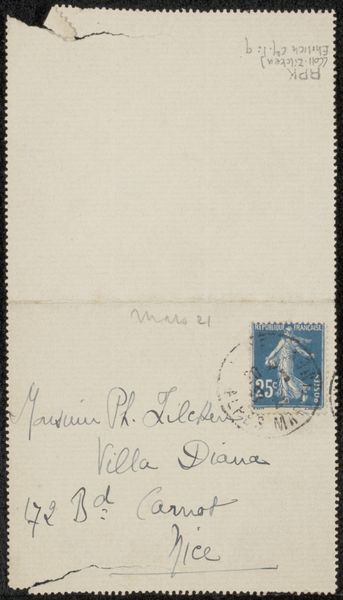
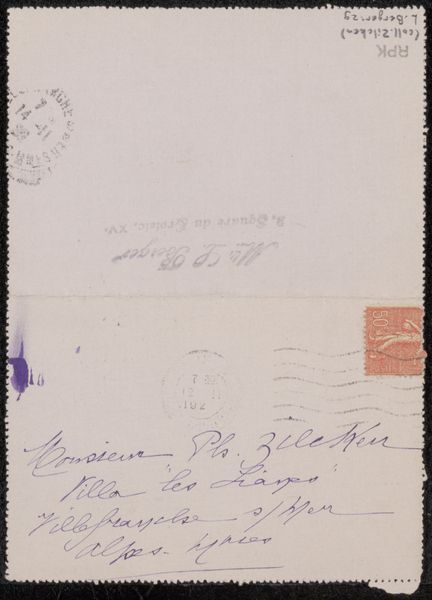
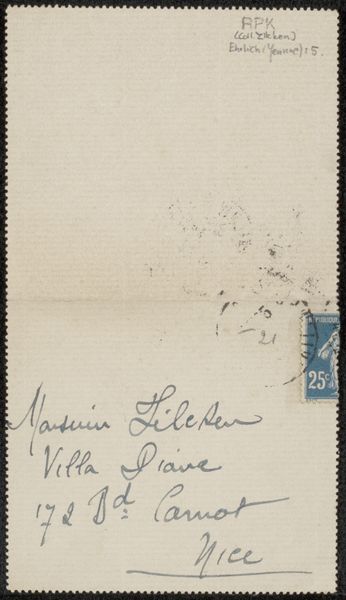
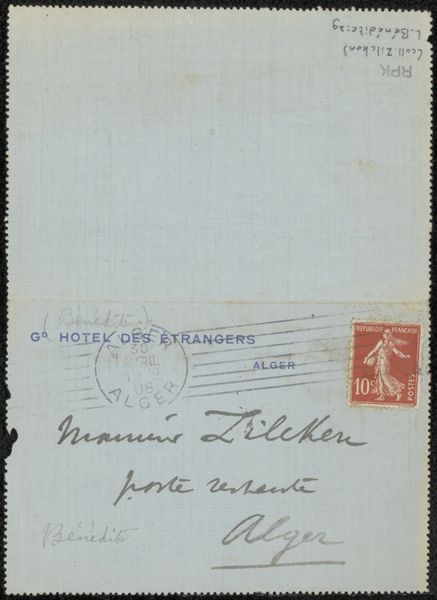
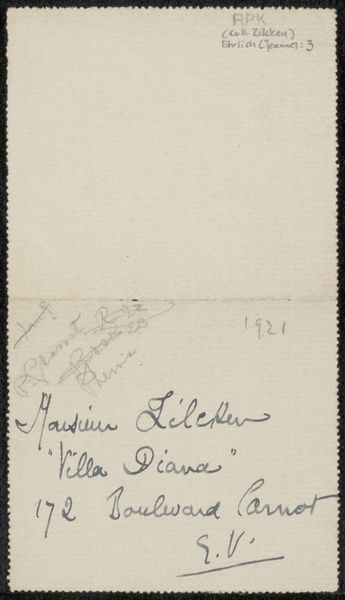
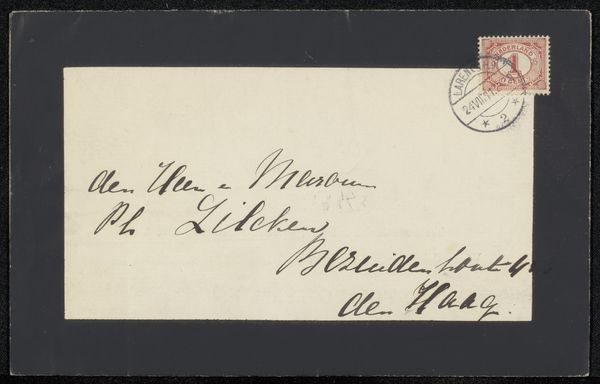
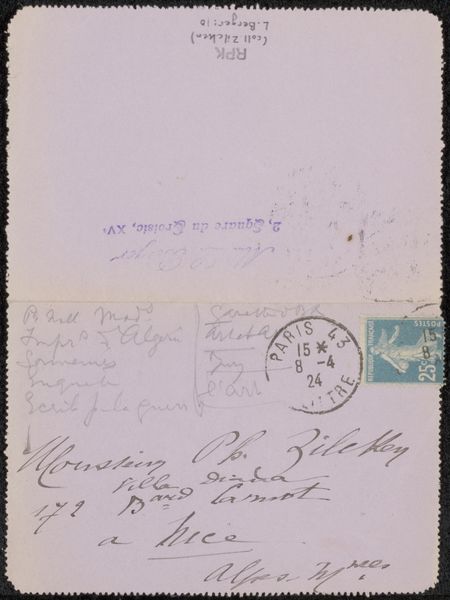
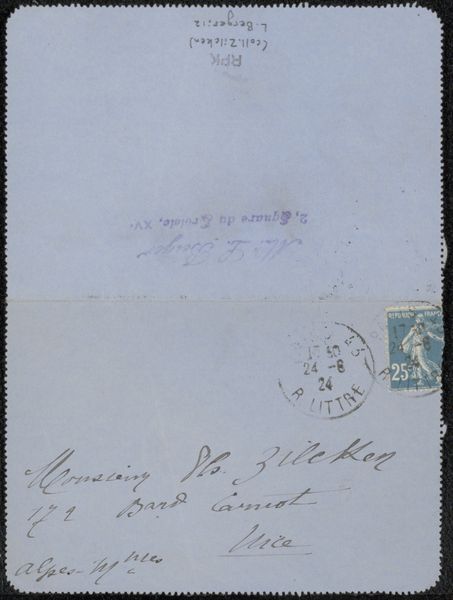
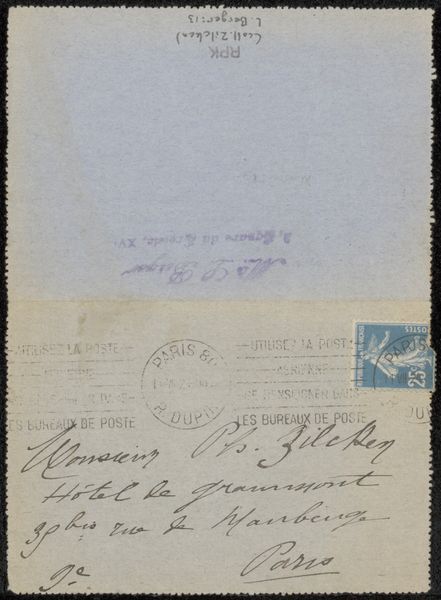
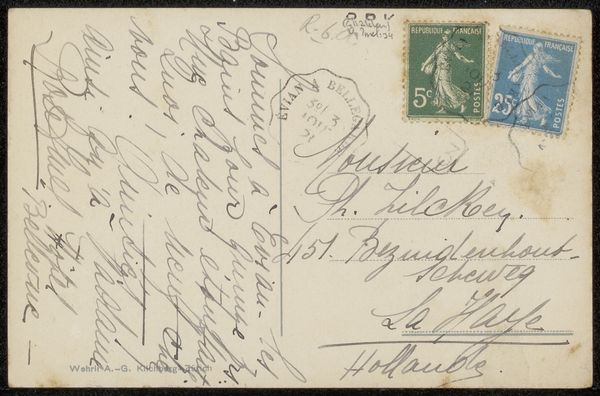
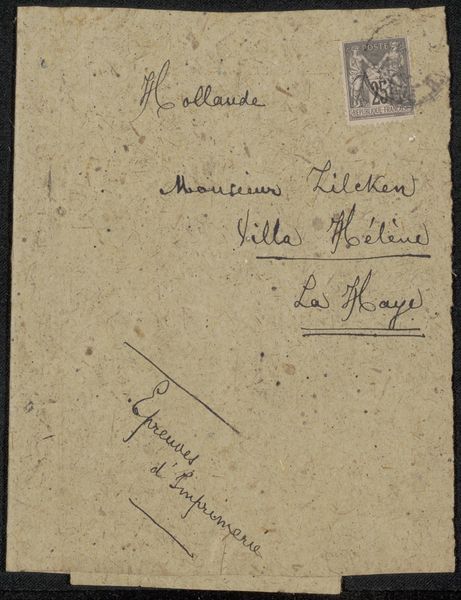
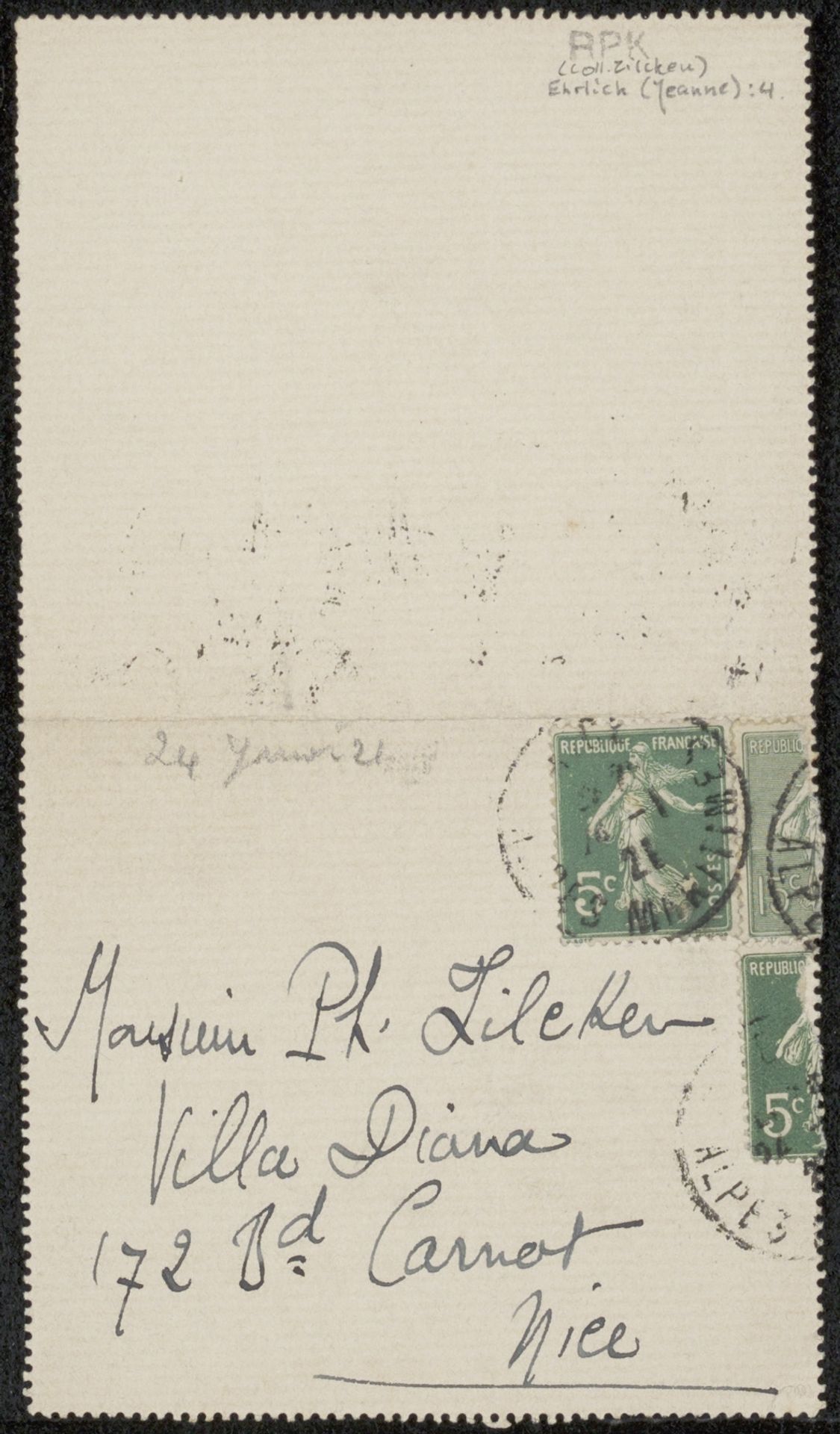
This envelope, addressed by Jeanne Erlich to Philip Zilcken, and postmarked June 24, is made of paper, ink, and adhesive. Its journey began with the harvesting of trees, pulped and pressed into sheets in a factory—a process intimately tied to the rise of industrial capitalism. The paper itself bears the marks of mass production, yet it also carries the hand-written address, a gesture of personal communication. Look closely, and you can see the green postage stamps which served as a kind of social contract, ensuring the letter’s delivery through a vast network of postal workers and transportation systems. The letter's journey speaks to a time when physical correspondence was a primary means of connection. In our digital age, the materiality of this envelope prompts reflection on labor, technology, and the ever-evolving means by which we communicate. It reminds us that even the simplest objects can reveal complex social and economic histories.

Artwork details
- Medium
- drawing, mixed-media, paper, ink
- Copyright
- Rijks Museum: Open Domain
Tags
drawing
mixed-media
paper
ink
Comments
No comments
About this artwork
This envelope, addressed by Jeanne Erlich to Philip Zilcken, and postmarked June 24, is made of paper, ink, and adhesive. Its journey began with the harvesting of trees, pulped and pressed into sheets in a factory—a process intimately tied to the rise of industrial capitalism. The paper itself bears the marks of mass production, yet it also carries the hand-written address, a gesture of personal communication. Look closely, and you can see the green postage stamps which served as a kind of social contract, ensuring the letter’s delivery through a vast network of postal workers and transportation systems. The letter's journey speaks to a time when physical correspondence was a primary means of connection. In our digital age, the materiality of this envelope prompts reflection on labor, technology, and the ever-evolving means by which we communicate. It reminds us that even the simplest objects can reveal complex social and economic histories.
Comments
No comments