c. 1590 - 1728
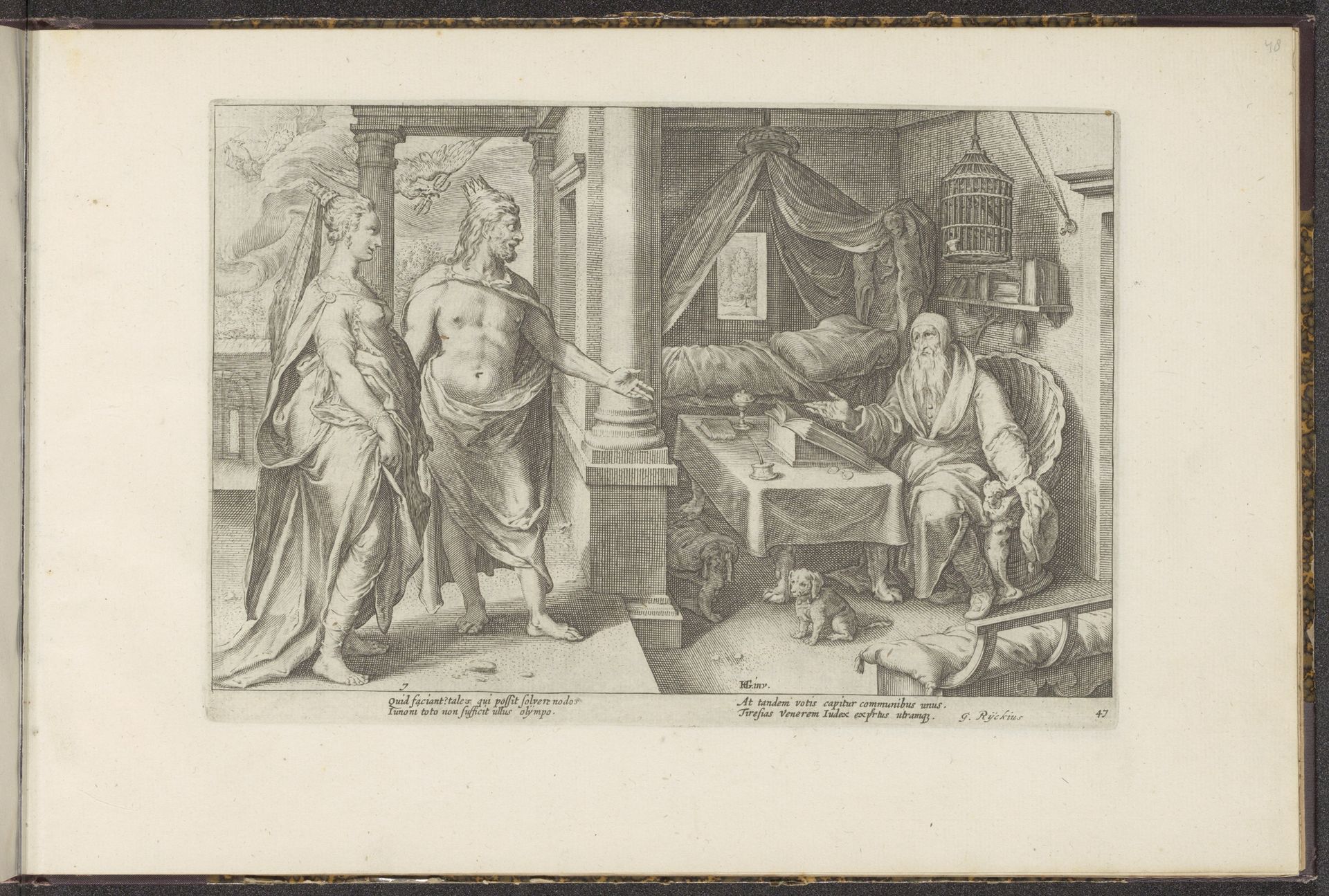
Juno en Jupiter vragen raad aan Tiresias

Hendrick Goltzius
1558 - 1617Location
RijksmuseumListen to curator's interpretation
Curatorial notes
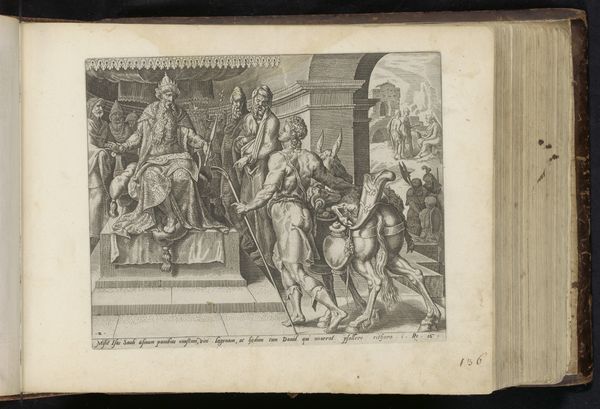
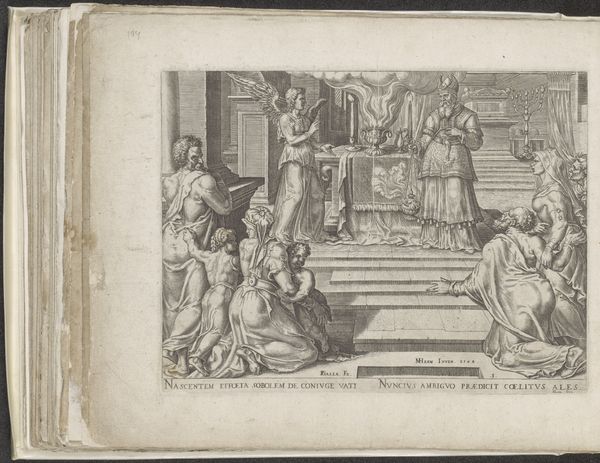
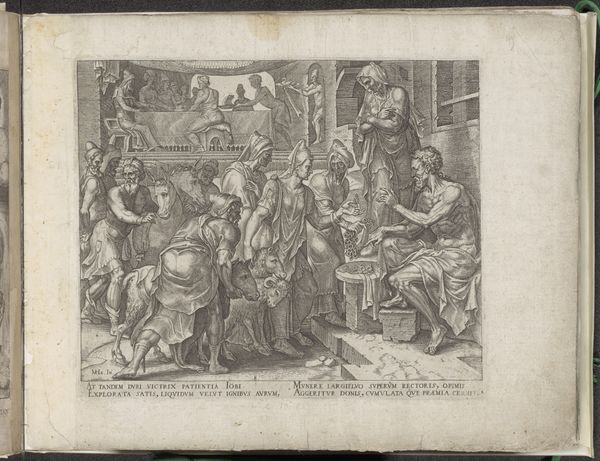
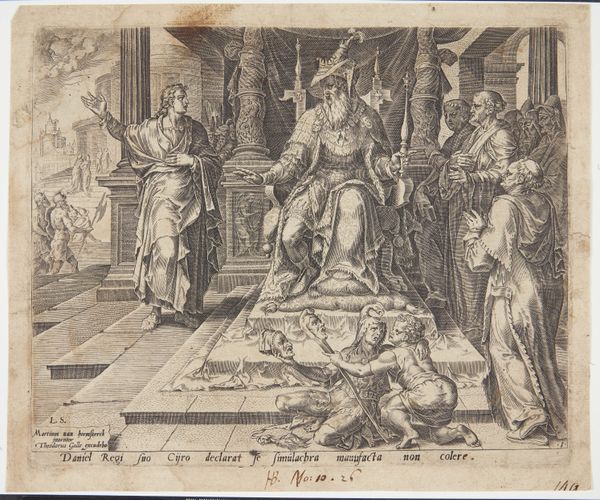
Editor: Here we have "Juno en Jupiter vragen raad aan Tiresias," an engraving by Hendrick Goltzius, dating somewhere between 1590 and 1728. It's striking how much detail he manages to achieve using just lines. What formal elements stand out to you in this composition? Curator: The linearity is indeed paramount, shaping the very structure of this visual plane. Observe how Goltzius masterfully employs hatching and cross-hatching, not just to delineate form but also to modulate light and shadow, effectively creating depth. The interplay of these graphic elements produces a rich visual texture. Editor: Yes, the texture is compelling. And the contrast between the figures of Juno and Jupiter versus Tiresias in his interior is remarkable. The composition almost splits the scene. What do you make of this? Curator: This compositional bifurcation invites us to consider the spatial dynamics. Note how the artist has deliberately juxtaposed the implied vastness beyond the architectural structure framing Juno and Jupiter against the contained, almost claustrophobic, domestic interior inhabited by Tiresias. Is it a mere division of space or also of opposing ideas? Editor: That’s a compelling point! Considering it further, what is emphasized to me now is the diagonal division that places more value and definition on Juno and Jupiter, using architecture as its compositional element. But how does that contribute to the narrative, or does it at all? Curator: Think about it - if we only look at the surface level as we initially might, we will be caught up on the superficial plane, neglecting to understand deeper intrinsic details. In terms of the organization of graphic forms, a certain equilibrium seems to emerge. And this has allowed us to explore new meaning through the artwork, that is in turn rewarding! Editor: That's given me so much to think about, especially regarding how initial readings can be expanded. I didn't really think the architecture could affect my interpretation of narrative. Thank you.