About this artwork
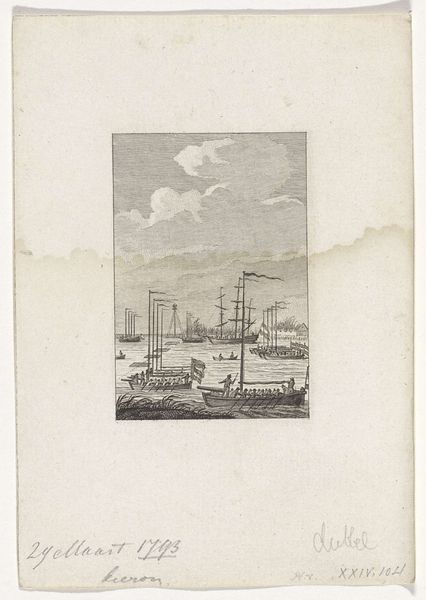
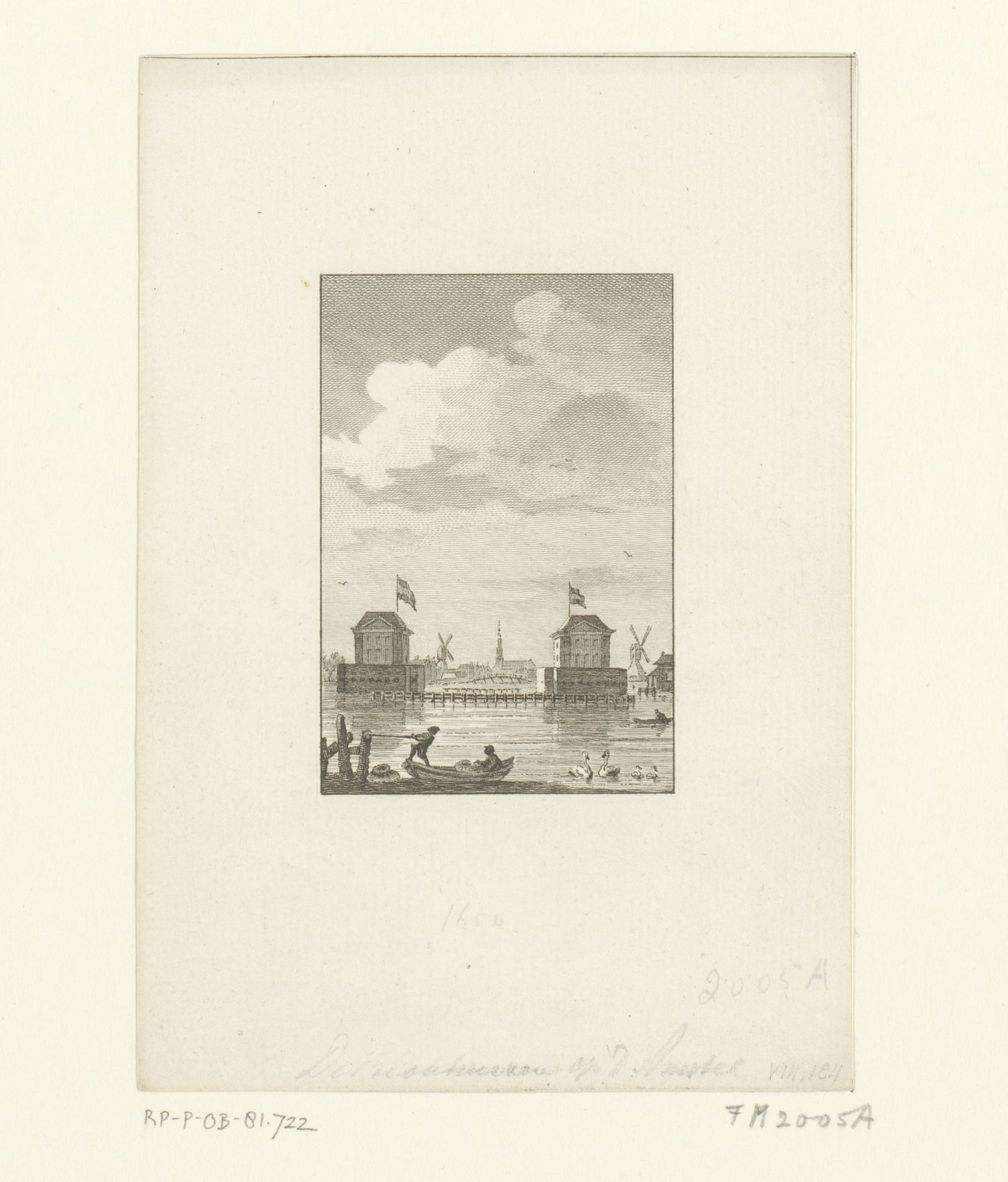
Reinier Vinkeles produced this print, "De twee Blokhuizen in de Amstel," sometime around 1651. Note the symmetrical composition, bisected by the calm waters of the Amstel. This division creates a mirrored effect, drawing our attention to the structures on either side. Vinkeles masterfully uses linear perspective to guide our eye toward the horizon. The subtle gradations of light and shadow give depth to the sky and water. The two blockhouses stand as sentinels, their flags mirroring each other, anchoring the composition, while the windmills and buildings in the distance contribute to the overall spatial recession. Consider how Vinkeles employs a semiotic structure through architecture and landscape. The blockhouses, with their symmetrical design and prominent placement, could symbolize order, control, or the demarcation of territory. This print encapsulates a specific moment, yet through its formal elements, invites us to consider broader themes of space, power, and representation.
De twee Blokhuizen in de Amstel, 1651
1780 - 1795

Reinier Vinkeles
1741 - 1816Location
RijksmuseumArtwork details
- Dimensions
- height 163 mm, width 112 mm
- Location
- Rijksmuseum
- Copyright
- Rijks Museum: Open Domain
Comments
Share your thoughts
About this artwork
Reinier Vinkeles produced this print, "De twee Blokhuizen in de Amstel," sometime around 1651. Note the symmetrical composition, bisected by the calm waters of the Amstel. This division creates a mirrored effect, drawing our attention to the structures on either side. Vinkeles masterfully uses linear perspective to guide our eye toward the horizon. The subtle gradations of light and shadow give depth to the sky and water. The two blockhouses stand as sentinels, their flags mirroring each other, anchoring the composition, while the windmills and buildings in the distance contribute to the overall spatial recession. Consider how Vinkeles employs a semiotic structure through architecture and landscape. The blockhouses, with their symmetrical design and prominent placement, could symbolize order, control, or the demarcation of territory. This print encapsulates a specific moment, yet through its formal elements, invites us to consider broader themes of space, power, and representation.
Comments
Share your thoughts