About this artwork
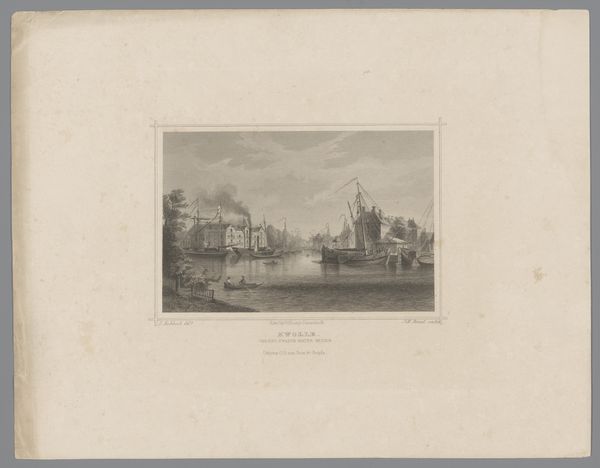
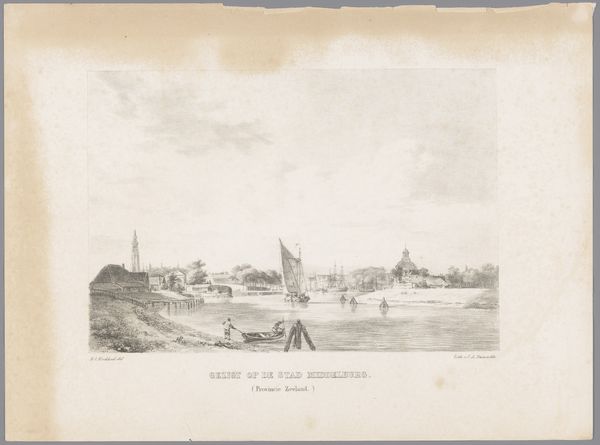
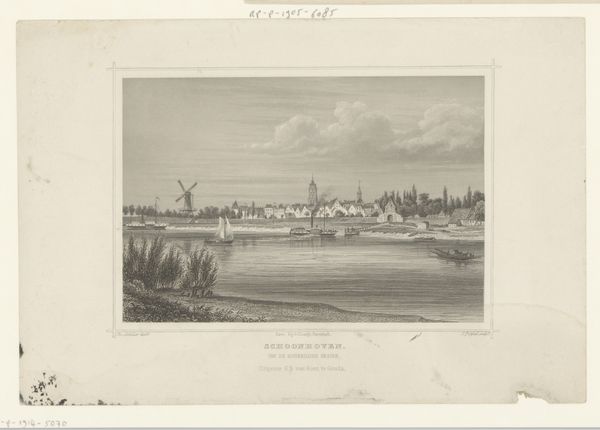
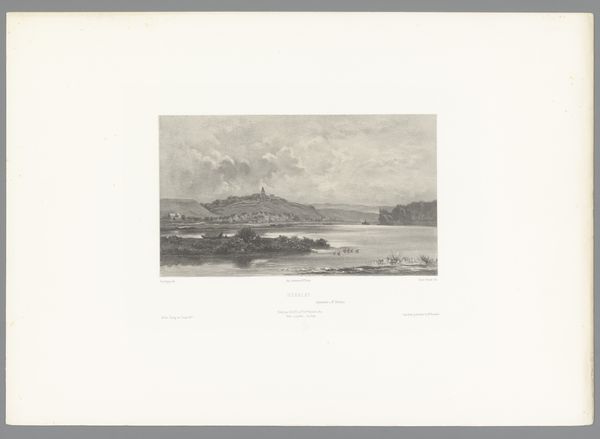
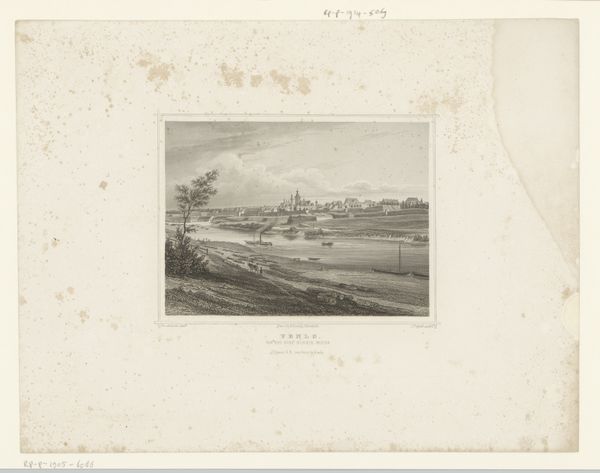
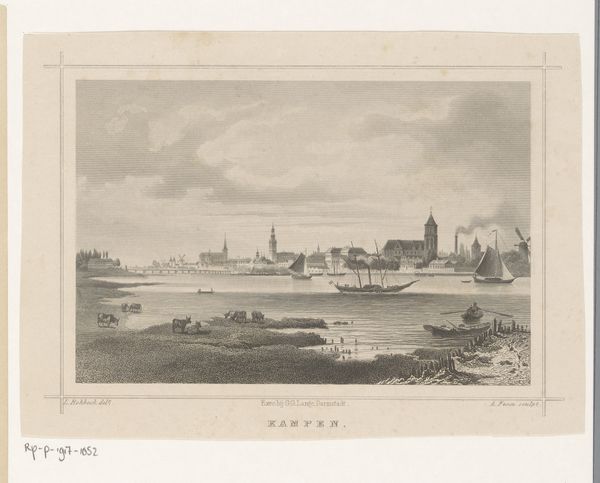
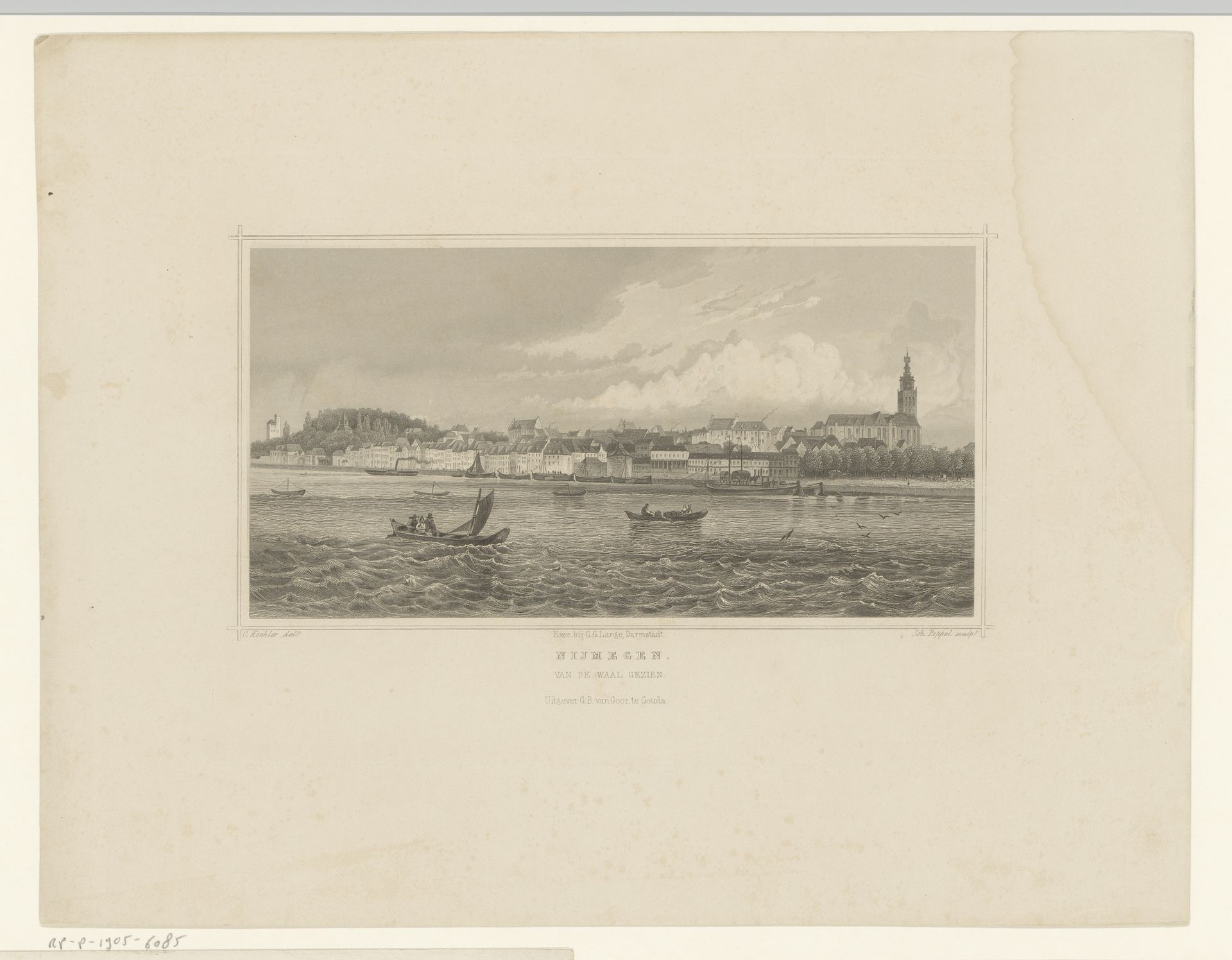
Curator: What strikes me first is the way the light plays across the water – almost dancing, wouldn't you say? It makes the whole scene feel alive, despite being a cityscape. Editor: Indeed. What we are seeing is a print entitled “Gezicht op Nijmegen,” created by Johann Gabriel Friedrich Poppel in 1858. It’s an engraving, held in the Rijksmuseum collection. I find its historical context fascinating. Images like these played a key role in shaping a shared national identity in the 19th century. Curator: Identity…That's an interesting point! I saw more of a moment in time. But yes, it does idealize and communicate a certain sense of place. Look how tranquil it feels from across the river. Editor: Right, while capturing a picturesque slice of life. Notice the tiny figures in boats. Those details provide depth and humanity but also create an illusion of a peaceful, functioning society in an era defined by swift political changes and social upheaval across Europe. These images, widely disseminated, told a specific story of the Netherlands. Curator: I never considered its dissemination – excellent context! All that intricate work for just a little snapshot… it is funny to consider how a piece of printed material could inspire. Editor: It is no different than viewing media today, I suspect. Even today images carry certain cultural values or social ideals; the difference here is the hand-crafting, which signals the value of the scene. I wonder, as well, about how that scene would appear today! Curator: If the river could talk, what tales it could tell! Perhaps this print is merely one whisper of that longer story. Editor: A tranquil whisper; almost as gentle as the sunlight flickering on that water. Thank you, Johann Poppel, for giving us this window onto history and into our imagination.

Artwork details
- Medium
- print, engraving
- Dimensions
- height 174 mm, width 237 mm
- Location
- Rijksmuseum
- Copyright
- Rijks Museum: Open Domain
Tags
dutch-golden-age
old engraving style
landscape
river
cityscape
engraving
realism
Comments
No comments
About this artwork
Curator: What strikes me first is the way the light plays across the water – almost dancing, wouldn't you say? It makes the whole scene feel alive, despite being a cityscape. Editor: Indeed. What we are seeing is a print entitled “Gezicht op Nijmegen,” created by Johann Gabriel Friedrich Poppel in 1858. It’s an engraving, held in the Rijksmuseum collection. I find its historical context fascinating. Images like these played a key role in shaping a shared national identity in the 19th century. Curator: Identity…That's an interesting point! I saw more of a moment in time. But yes, it does idealize and communicate a certain sense of place. Look how tranquil it feels from across the river. Editor: Right, while capturing a picturesque slice of life. Notice the tiny figures in boats. Those details provide depth and humanity but also create an illusion of a peaceful, functioning society in an era defined by swift political changes and social upheaval across Europe. These images, widely disseminated, told a specific story of the Netherlands. Curator: I never considered its dissemination – excellent context! All that intricate work for just a little snapshot… it is funny to consider how a piece of printed material could inspire. Editor: It is no different than viewing media today, I suspect. Even today images carry certain cultural values or social ideals; the difference here is the hand-crafting, which signals the value of the scene. I wonder, as well, about how that scene would appear today! Curator: If the river could talk, what tales it could tell! Perhaps this print is merely one whisper of that longer story. Editor: A tranquil whisper; almost as gentle as the sunlight flickering on that water. Thank you, Johann Poppel, for giving us this window onto history and into our imagination.
Comments
No comments