About this artwork
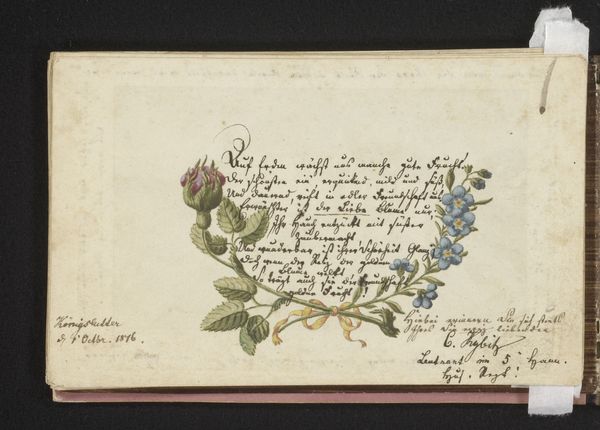
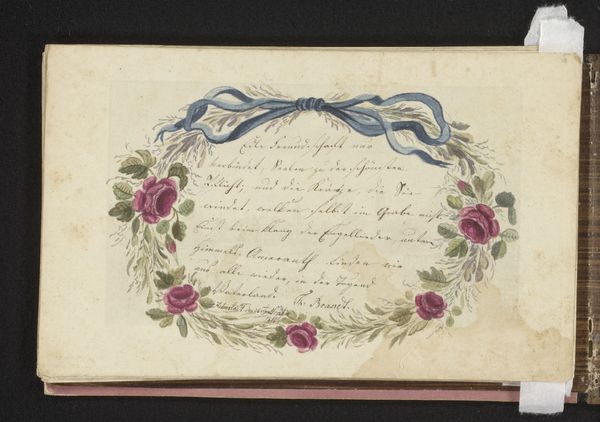
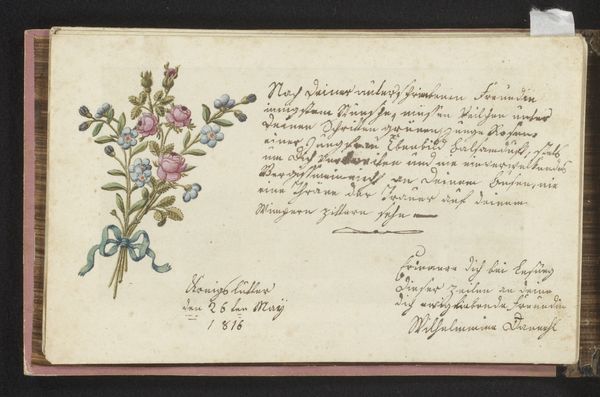
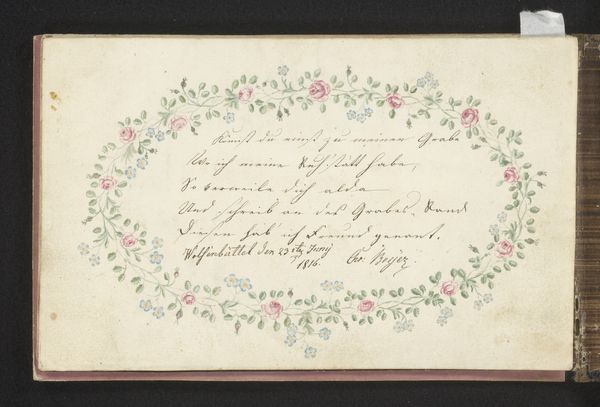
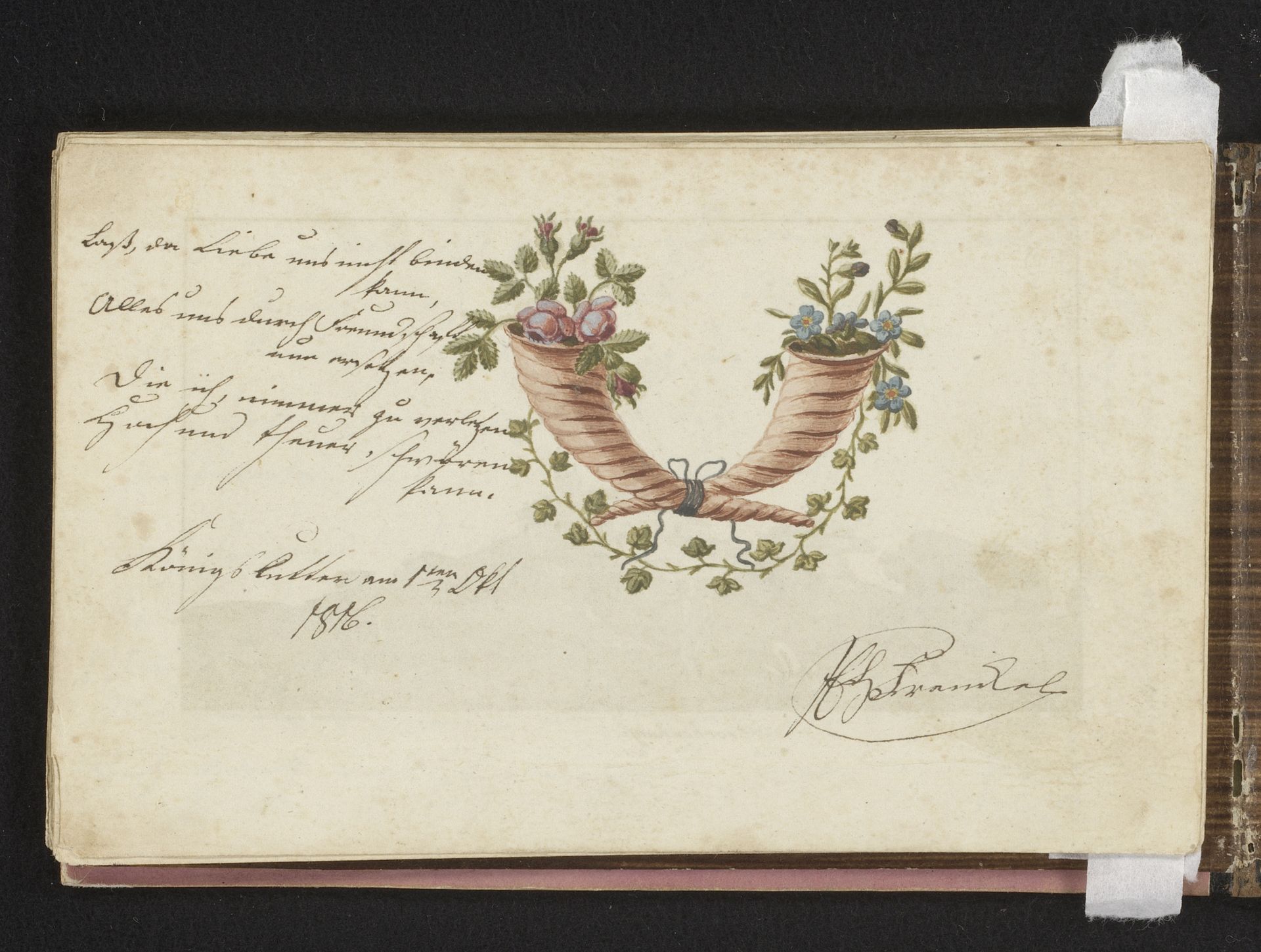
This is an undated drawing with text and two horns filled with forget-me-nots and roses, created by an anonymous artist. It exemplifies the symbolic language prevalent in early 19th-century bourgeois culture. During this period in German-speaking lands, the rise of the middle class saw an increasing emphasis on domestic life and sentimental expressions of love and friendship. Visual codes, like the flowers in this drawing, became a popular means of conveying emotion. Forget-me-nots symbolized remembrance, while roses often represented love and beauty. The cornucopias, or horns of plenty, were associated with abundance and good fortune, reinforcing the drawing's theme of heartfelt wishes. Without further historical context or artist information, our understanding of this work remains speculative. Investigating similar works within albums or friendship books of the period might reveal more about its specific social function. Ultimately, the drawing's meaning is contingent on the cultural practices and social values of its time.

Artwork details
- Medium
- drawing, coloured-pencil, paper, watercolor
- Dimensions
- height 105 mm, width 171 mm
- Copyright
- Rijks Museum: Open Domain
Tags
Comments
Share your thoughts
About this artwork
This is an undated drawing with text and two horns filled with forget-me-nots and roses, created by an anonymous artist. It exemplifies the symbolic language prevalent in early 19th-century bourgeois culture. During this period in German-speaking lands, the rise of the middle class saw an increasing emphasis on domestic life and sentimental expressions of love and friendship. Visual codes, like the flowers in this drawing, became a popular means of conveying emotion. Forget-me-nots symbolized remembrance, while roses often represented love and beauty. The cornucopias, or horns of plenty, were associated with abundance and good fortune, reinforcing the drawing's theme of heartfelt wishes. Without further historical context or artist information, our understanding of this work remains speculative. Investigating similar works within albums or friendship books of the period might reveal more about its specific social function. Ultimately, the drawing's meaning is contingent on the cultural practices and social values of its time.
Comments
Share your thoughts