About this artwork
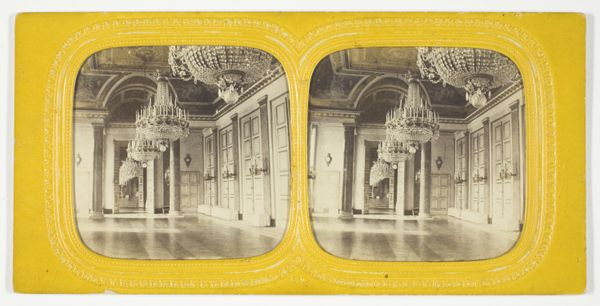
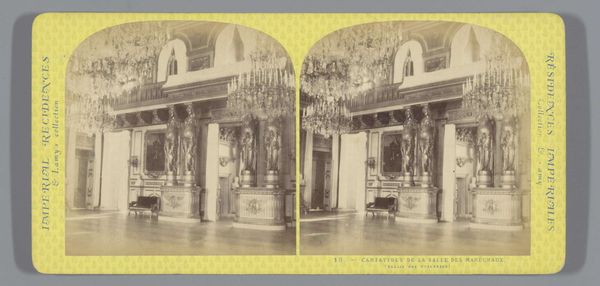
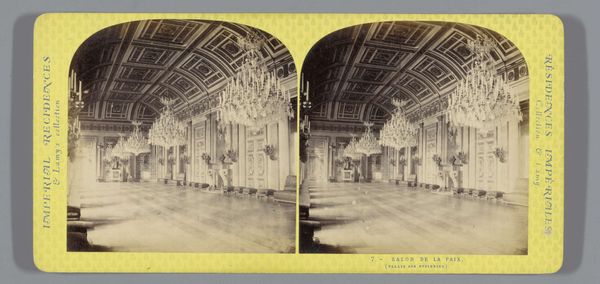
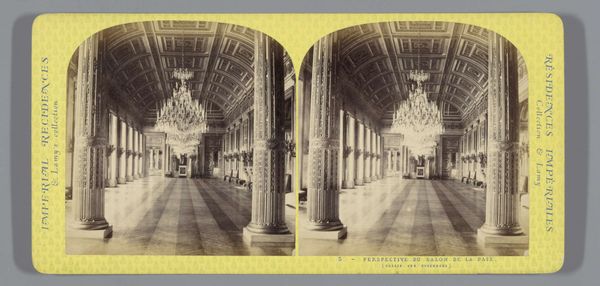
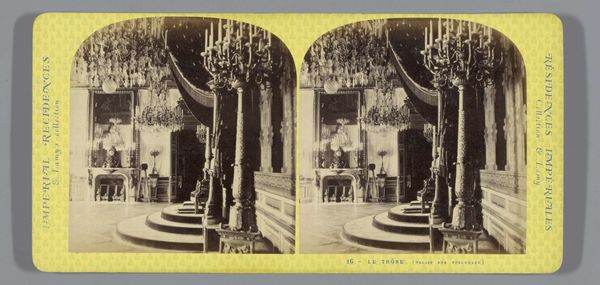
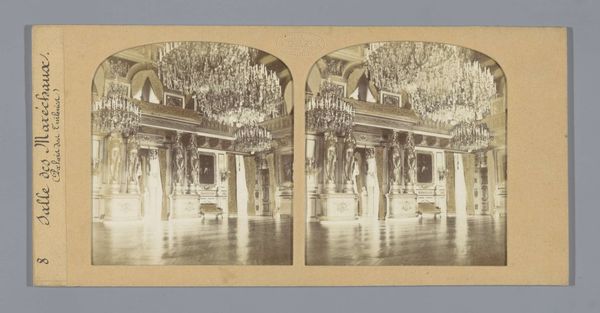
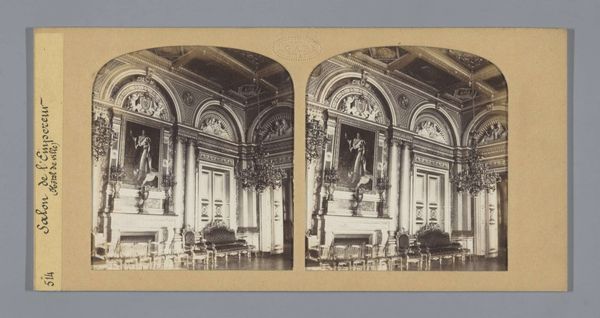
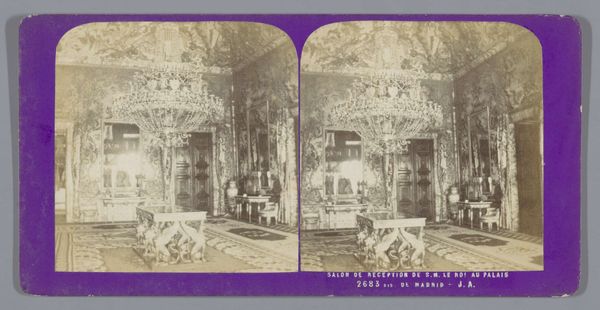
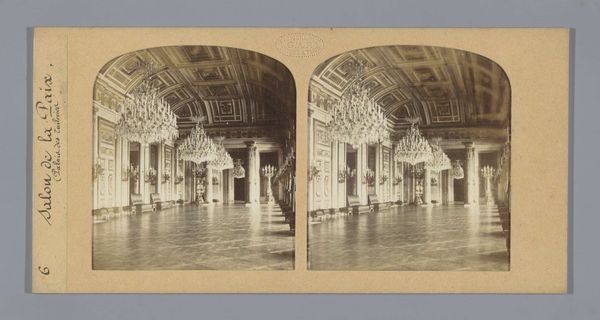
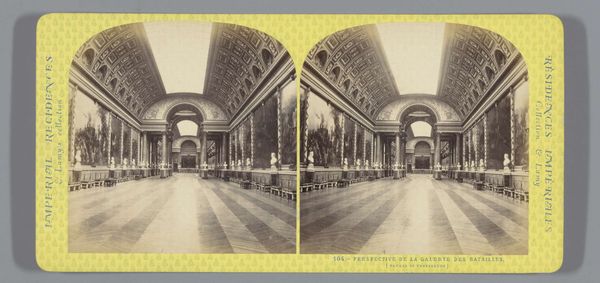
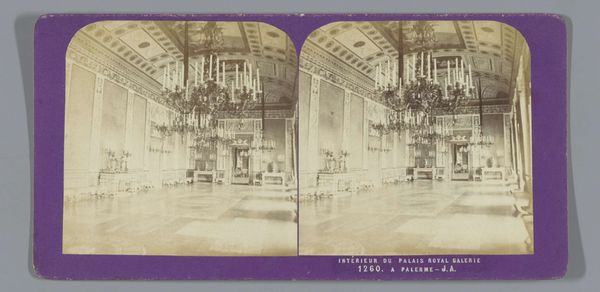
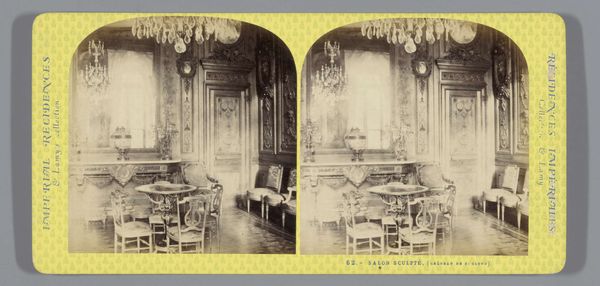
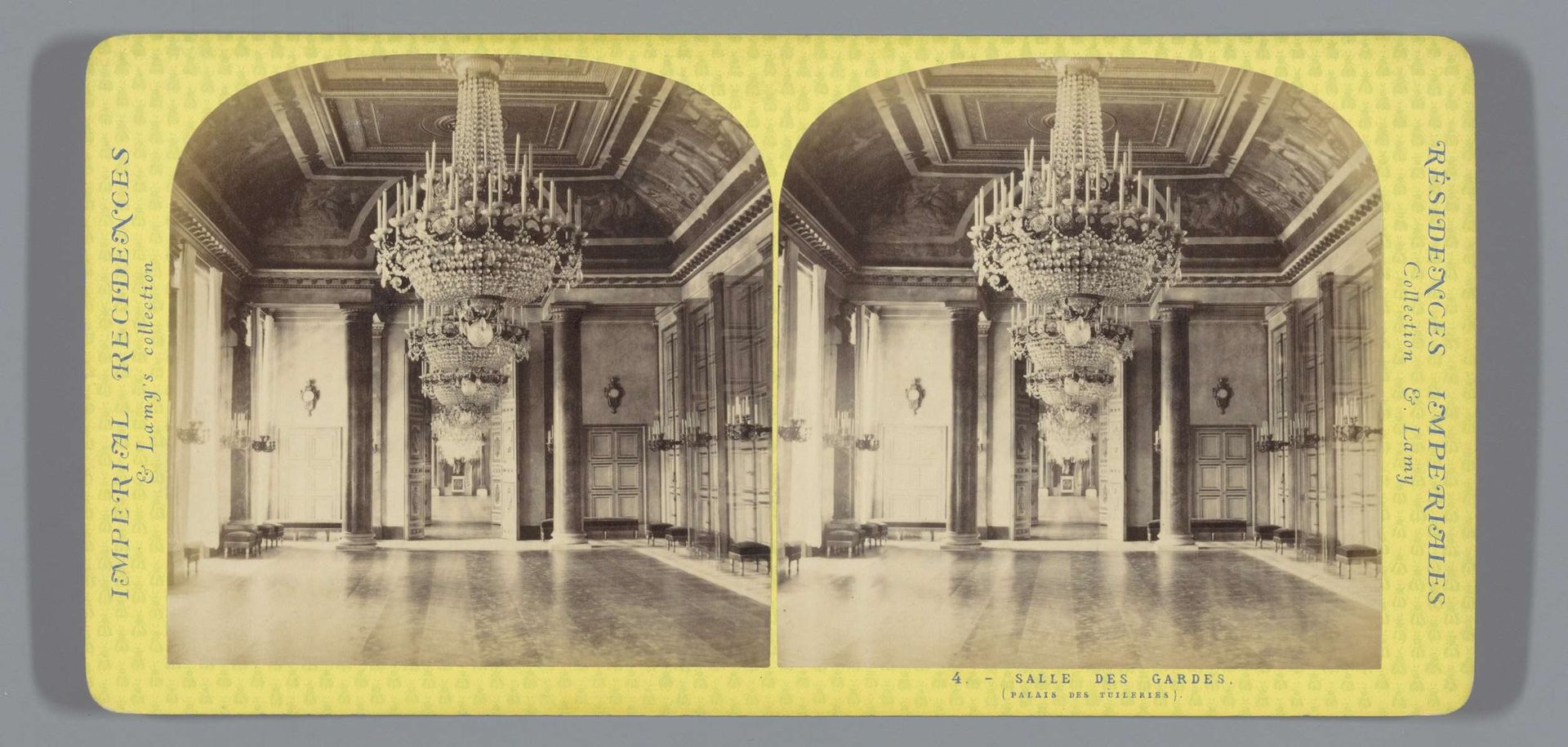
Ernest Eléonor Pierre Lamy made this stereoscopic photograph of the Salle des Travées in the Palais des Tuileries in Paris. In the nineteenth century, the stereoscopic photograph was a popular medium and this image presents a carefully composed view of a palatial interior. The Palais des Tuileries was a key site of the French monarchy and later housed Napoleon. Think about what it means to produce a photograph of this place. Does photography democratize the image, making it available to a wider public? Or does it reinforce the aura of power by presenting it as a spectacle? The photograph invites a deeper look into the relationship between art, power, and institutions in nineteenth-century France. Historical archives, architectural plans, and social histories of Paris are useful resources for understanding the context of this image. The meaning of art shifts according to its historical moment and the institutions that shape its creation and reception.
Salle des Travées in het Palais des Tuileries te Parijs before 1871

Artwork details
- Medium
- print, photography, gelatin-silver-print
- Dimensions
- height 85 mm, width 170 mm
- Copyright
- Rijks Museum: Open Domain
Tags
photography
gelatin-silver-print
history-painting
realism
Comments
No comments
About this artwork
Ernest Eléonor Pierre Lamy made this stereoscopic photograph of the Salle des Travées in the Palais des Tuileries in Paris. In the nineteenth century, the stereoscopic photograph was a popular medium and this image presents a carefully composed view of a palatial interior. The Palais des Tuileries was a key site of the French monarchy and later housed Napoleon. Think about what it means to produce a photograph of this place. Does photography democratize the image, making it available to a wider public? Or does it reinforce the aura of power by presenting it as a spectacle? The photograph invites a deeper look into the relationship between art, power, and institutions in nineteenth-century France. Historical archives, architectural plans, and social histories of Paris are useful resources for understanding the context of this image. The meaning of art shifts according to its historical moment and the institutions that shape its creation and reception.
Comments
No comments