About this artwork
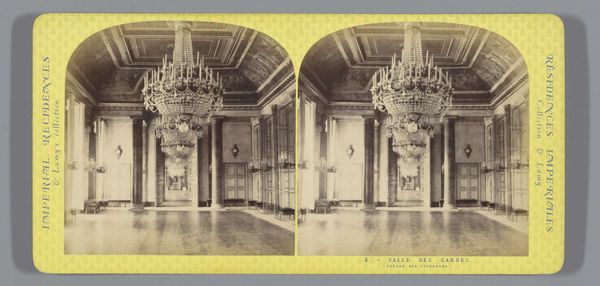
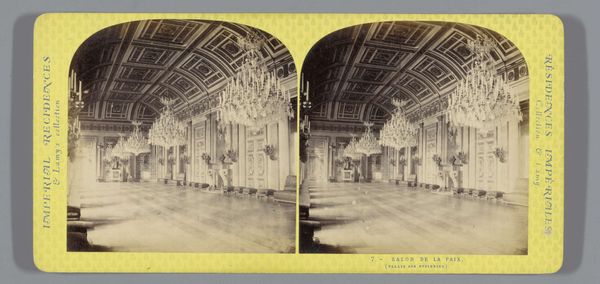
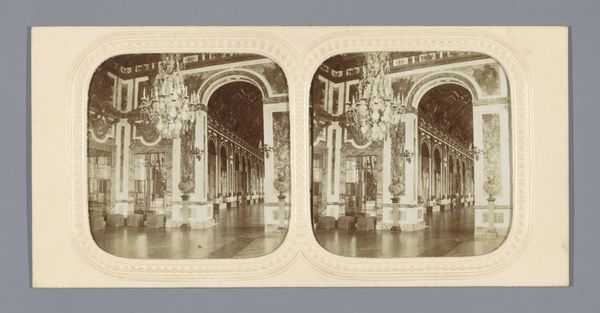
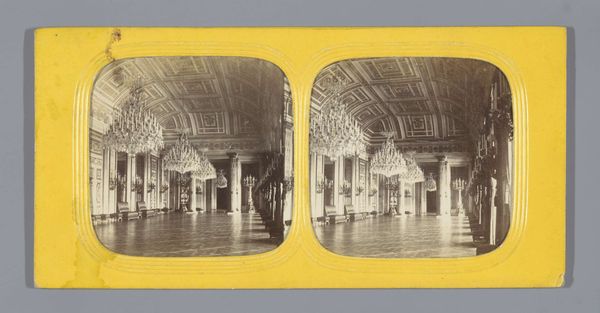
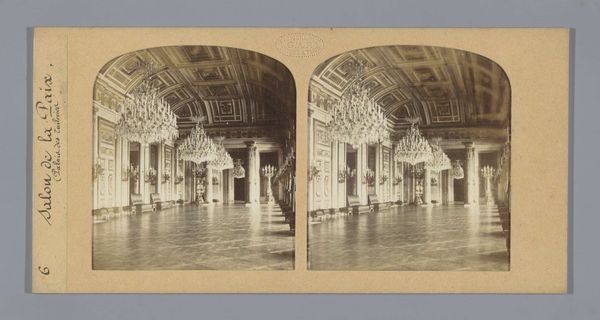
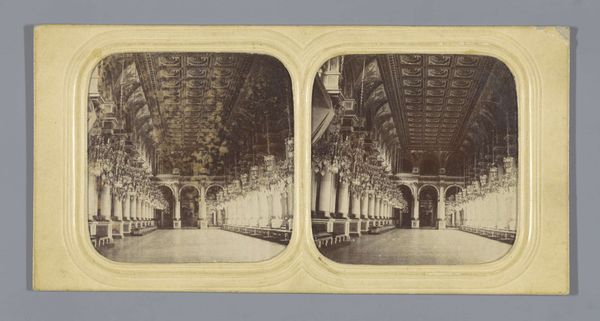
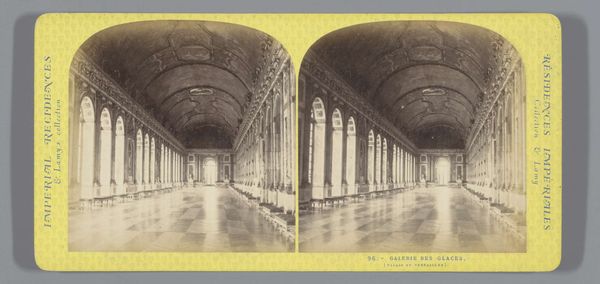
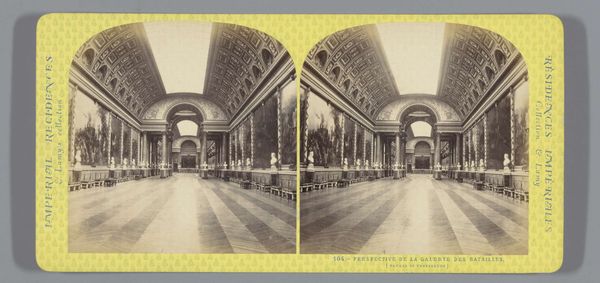
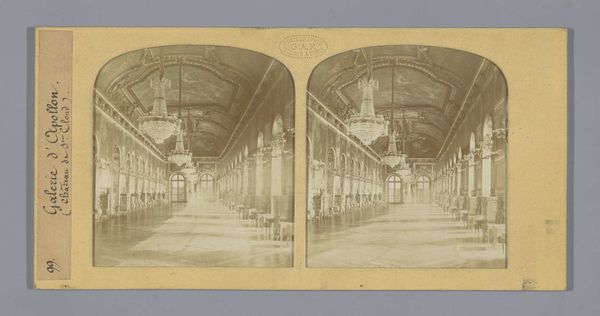
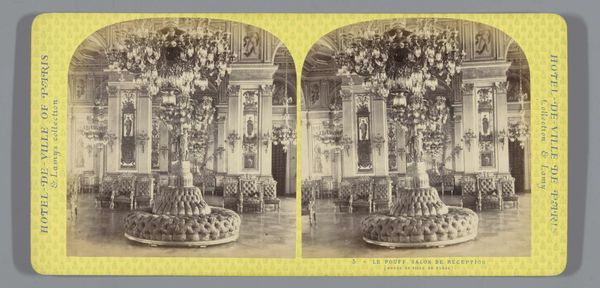
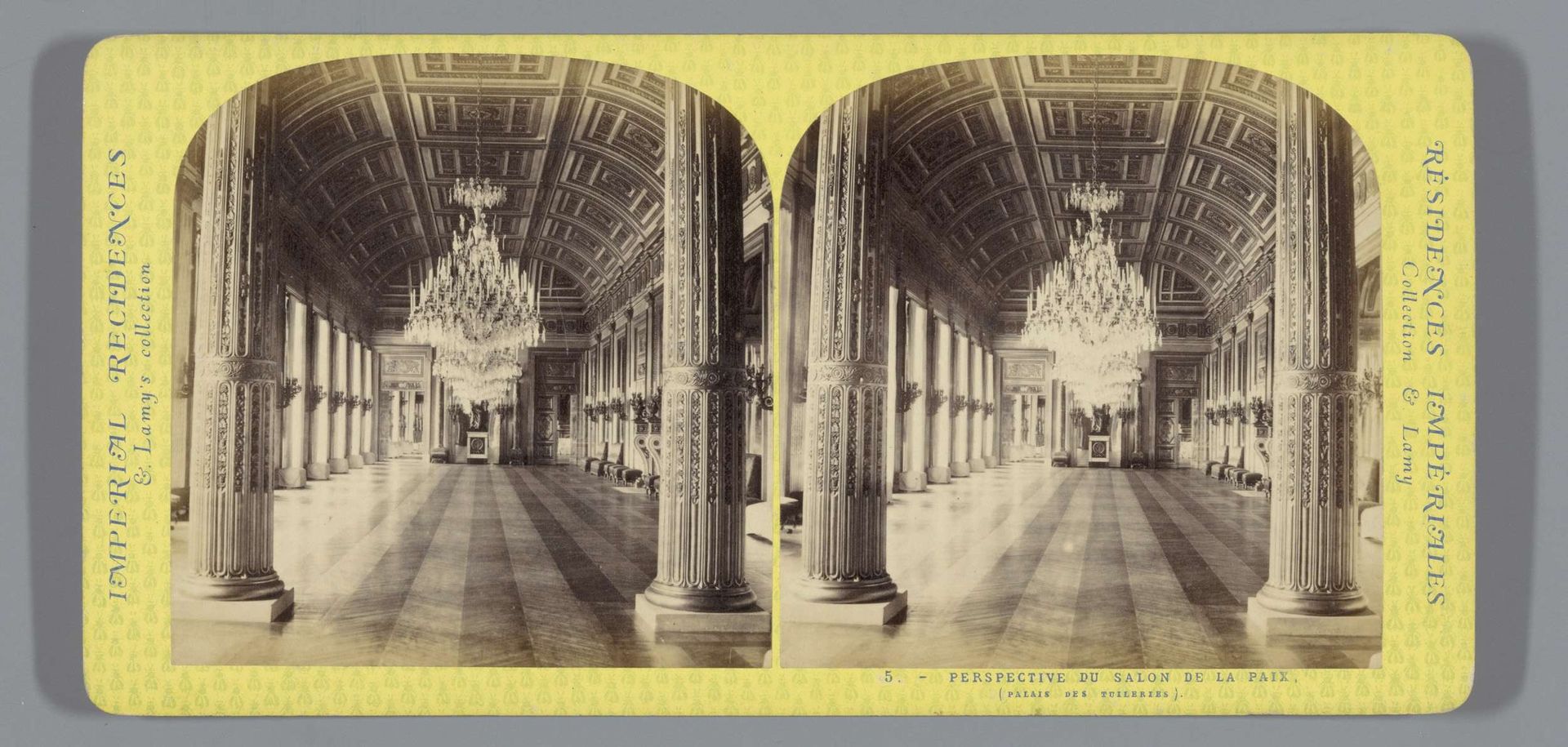
Ernest Eléonor Pierre Lamy created this stereoscopic image, ‘Interieur van een salon in het Palais des Tuileries te Parijs’, a view of the Salon de la Paix in the Tuileries Palace. Lamy’s photograph invites a reflection on the cultural and political meanings embedded in architectural spaces. The Tuileries Palace, originally built in the 16th century, was a symbol of French royalty and power. This interior view, with its grandiose scale and elaborate ornamentation, speaks to the values of the ruling class. Stereoscopic images like this one were incredibly popular in the mid-19th century, offering viewers an immersive experience. While appearing neutral, the image is framed within the social structures of the time. Who had access to such spaces, and whose labor was it that created and maintained this opulence? This photograph can serve as a starting point to examine how spaces reflect and shape social identities and power dynamics. As you consider this image, reflect on what stories are told through architecture, and whose perspectives are often left out of the frame.
Interieur van een salon in het Palais des Tuileries te Parijs
before 1871

Artwork details
- Medium
- photography
- Dimensions
- height 85 mm, width 170 mm
- Copyright
- Rijks Museum: Open Domain
Tags
landscape
perspective
photography
Comments
Be the first to share your thoughts about this work.
About this artwork
Ernest Eléonor Pierre Lamy created this stereoscopic image, ‘Interieur van een salon in het Palais des Tuileries te Parijs’, a view of the Salon de la Paix in the Tuileries Palace. Lamy’s photograph invites a reflection on the cultural and political meanings embedded in architectural spaces. The Tuileries Palace, originally built in the 16th century, was a symbol of French royalty and power. This interior view, with its grandiose scale and elaborate ornamentation, speaks to the values of the ruling class. Stereoscopic images like this one were incredibly popular in the mid-19th century, offering viewers an immersive experience. While appearing neutral, the image is framed within the social structures of the time. Who had access to such spaces, and whose labor was it that created and maintained this opulence? This photograph can serve as a starting point to examine how spaces reflect and shape social identities and power dynamics. As you consider this image, reflect on what stories are told through architecture, and whose perspectives are often left out of the frame.
Comments
Be the first to share your thoughts about this work.