About this artwork
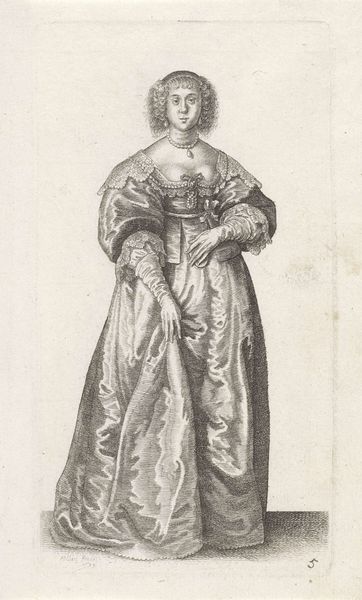
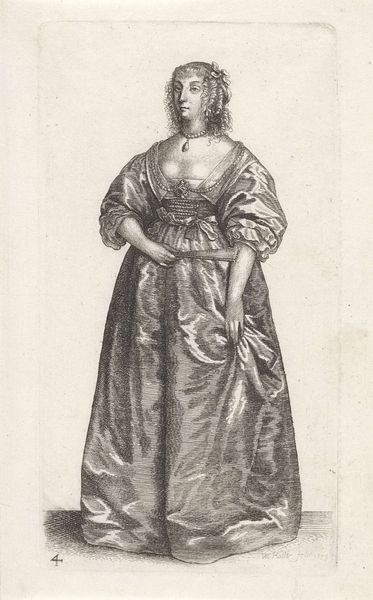
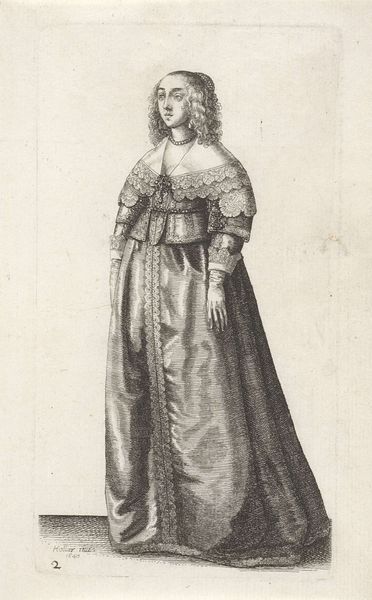
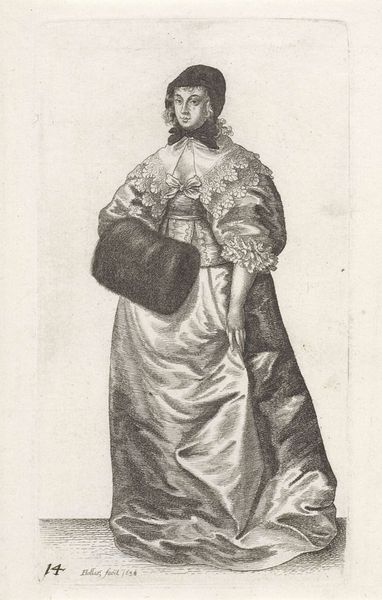
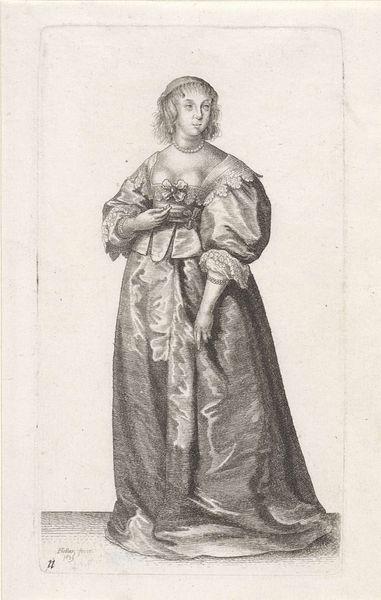
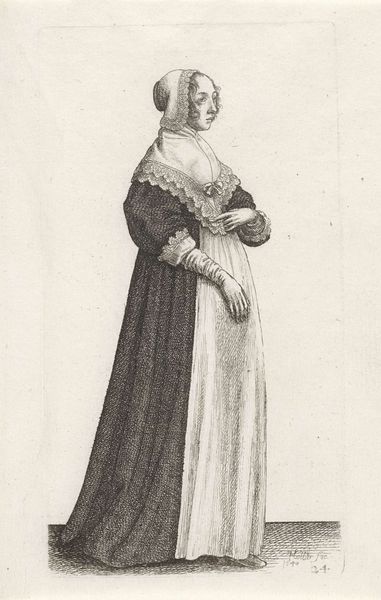
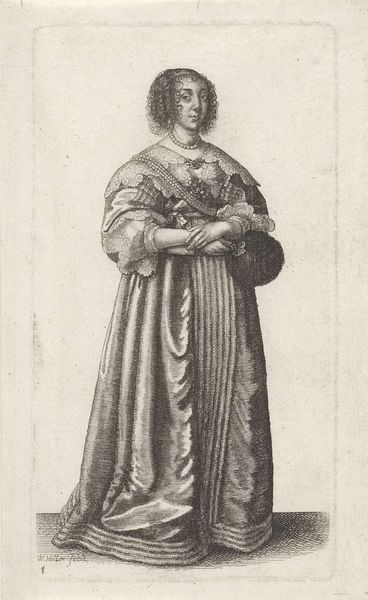
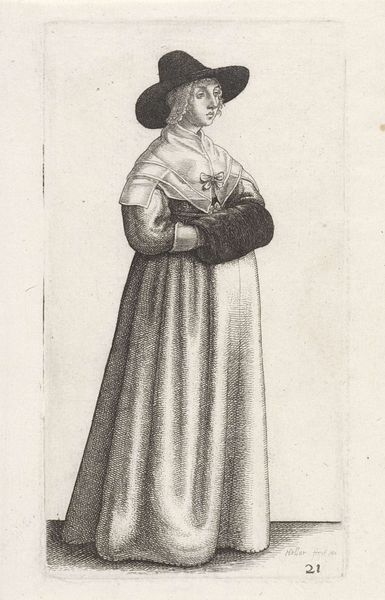
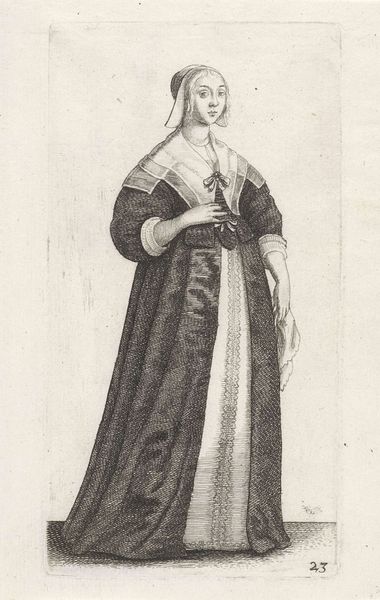
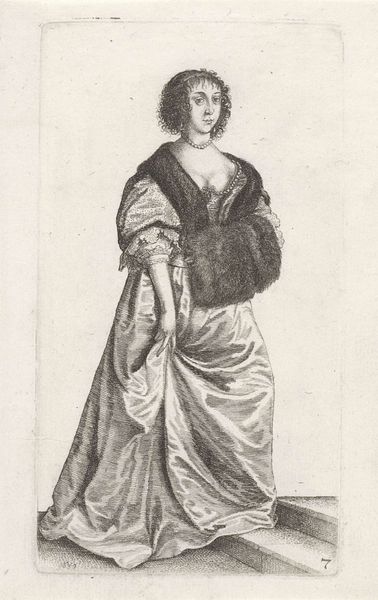
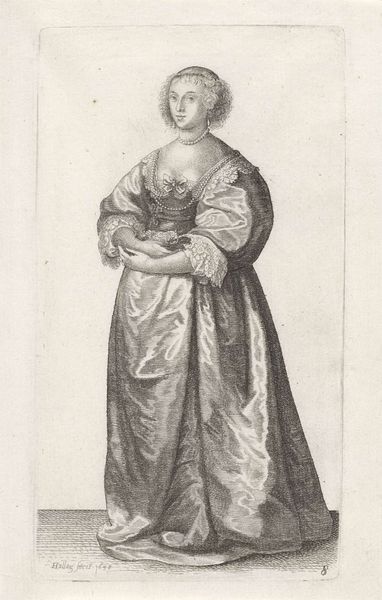
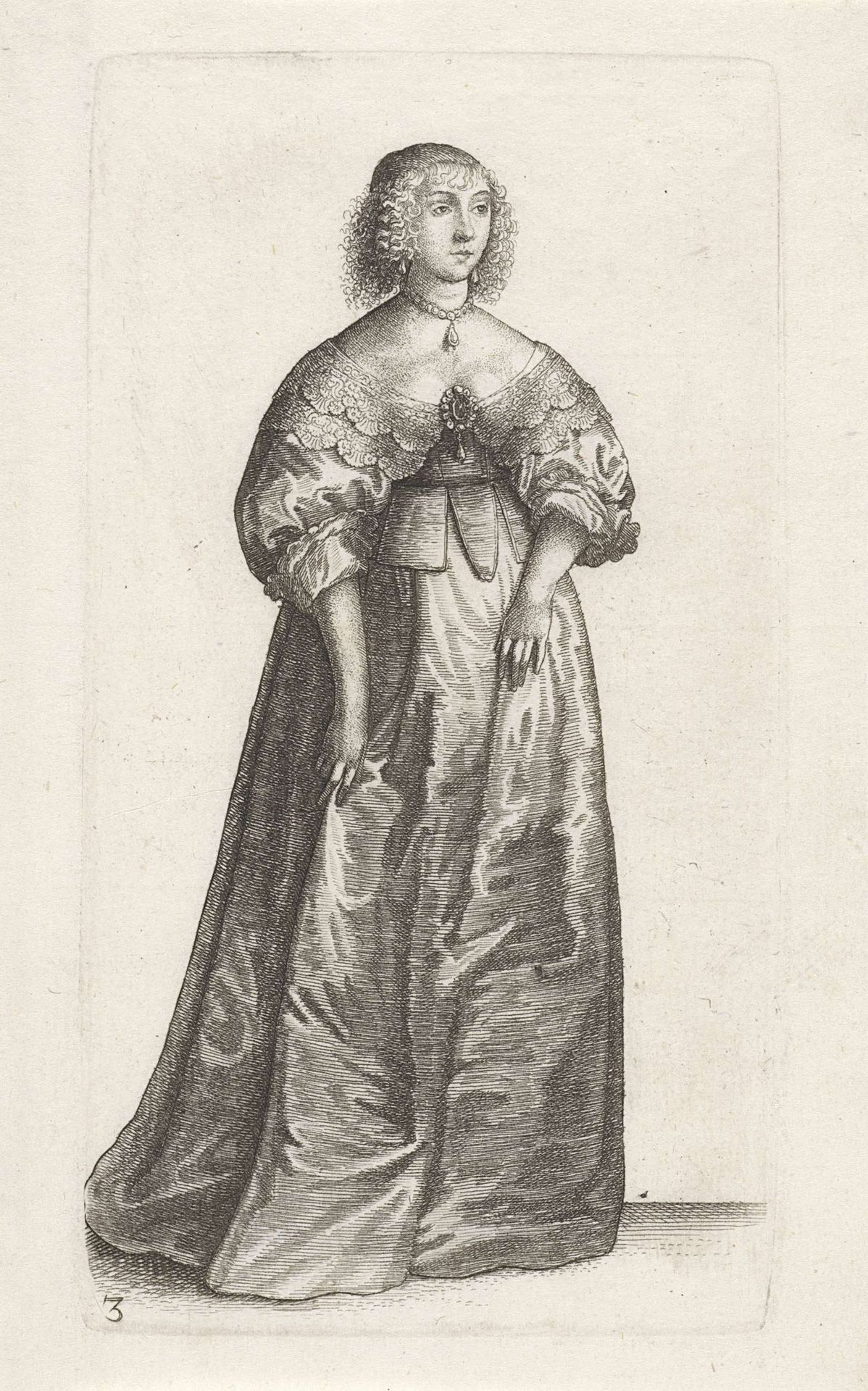
This engraving of an English lady, was created by Wenceslaus Hollar, sometime in the 17th century. The image was made using the intaglio process, where the design is incised into a metal plate, then filled with ink and printed. It’s a world away from today’s digital printing! Hollar was celebrated for his skills in capturing details of textiles, costume and fashion. Here, we can see the almost photorealistic rendering of her dress. Look closely, and you can see the way the material catches the light; the draped folds, the lace collar, even the jewel she wears on her chest. Hollar’s attention to detail invites us to consider the social significance of such attire. Clothes are never just clothes. They signal wealth, status, and identity, and are connected to global trade networks, labor, and consumption. By focusing on these everyday materials, Hollar elevates the status of craftsmanship, inviting us to look beyond the mere representation, and consider the broader context of labor, trade, and material culture.
Engelse dame met juweel op de borst
1638 - 1640

Wenceslaus Hollar
1607 - 1677Location
RijksmuseumArtwork details
- Medium
- print, engraving
- Dimensions
- height 134 mm, width 73 mm
- Location
- Rijksmuseum
- Copyright
- Rijks Museum: Open Domain
Tags
Comments
Share your thoughts
About this artwork
This engraving of an English lady, was created by Wenceslaus Hollar, sometime in the 17th century. The image was made using the intaglio process, where the design is incised into a metal plate, then filled with ink and printed. It’s a world away from today’s digital printing! Hollar was celebrated for his skills in capturing details of textiles, costume and fashion. Here, we can see the almost photorealistic rendering of her dress. Look closely, and you can see the way the material catches the light; the draped folds, the lace collar, even the jewel she wears on her chest. Hollar’s attention to detail invites us to consider the social significance of such attire. Clothes are never just clothes. They signal wealth, status, and identity, and are connected to global trade networks, labor, and consumption. By focusing on these everyday materials, Hollar elevates the status of craftsmanship, inviting us to look beyond the mere representation, and consider the broader context of labor, trade, and material culture.
Comments
Share your thoughts