About this artwork
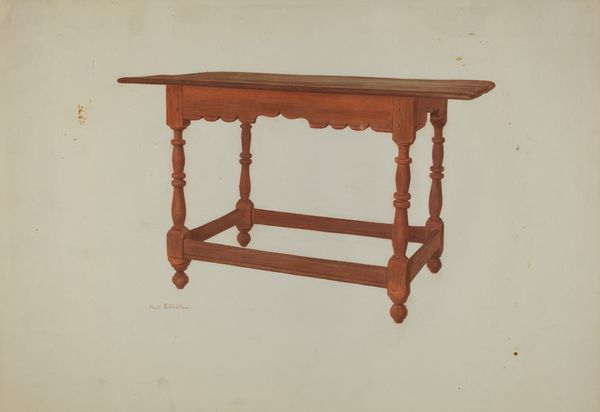
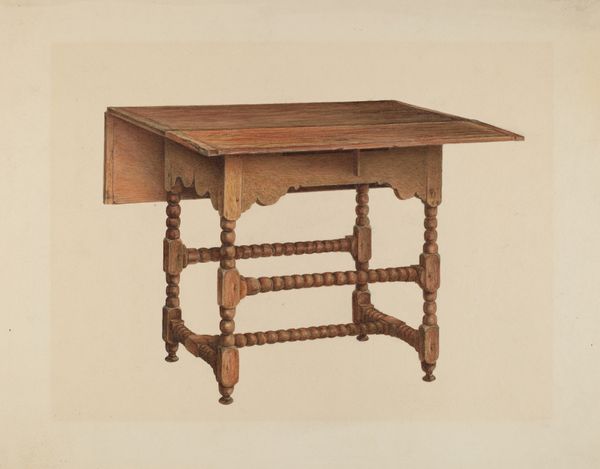
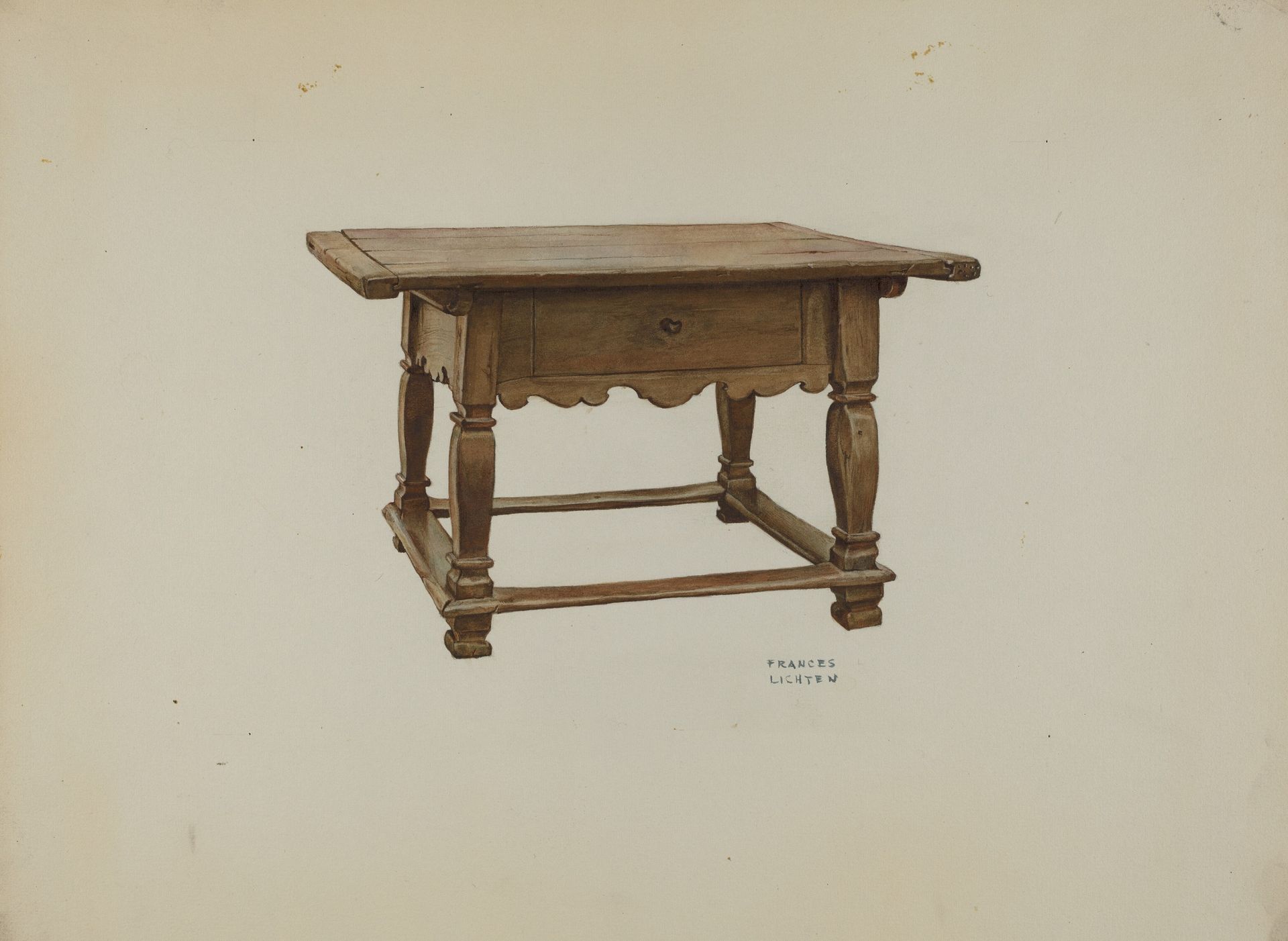
Frances Lichten created this watercolor painting of a ‘Pa. German Table.’ Lichten lived a long life spanning the late 19th and most of the 20th century; she was an artist, folklorist, and author. Her work provides a window into the material culture and traditions of the Pennsylvania Germans, also known as the Pennsylvania Dutch. These were a cultural group that began to arrive in the U.S. in the late 17th century, seeking religious freedom and economic opportunity. Lichten's rendering of this table is more than a still life, it reflects a broader interest in preserving and celebrating the cultural identity of a specific community. In the early to mid-20th century, there was an increasing interest in American folk art, particularly expressions of rural or immigrant communities. Lichten was part of a movement that valued traditional crafts and culture, against the backdrop of increasing industrialization and urbanization. This painting is an interesting document of how cultural identity can be expressed and maintained through everyday objects, reminding us of the stories and histories embedded in the things we live with.


Artwork details
- Medium
- drawing, watercolor
- Dimensions
- overall: 27.5 x 37.3 cm (10 13/16 x 14 11/16 in.)
- Copyright
- National Gallery of Art: CC0 1.0
Tags
Comments
Share your thoughts
About this artwork
Frances Lichten created this watercolor painting of a ‘Pa. German Table.’ Lichten lived a long life spanning the late 19th and most of the 20th century; she was an artist, folklorist, and author. Her work provides a window into the material culture and traditions of the Pennsylvania Germans, also known as the Pennsylvania Dutch. These were a cultural group that began to arrive in the U.S. in the late 17th century, seeking religious freedom and economic opportunity. Lichten's rendering of this table is more than a still life, it reflects a broader interest in preserving and celebrating the cultural identity of a specific community. In the early to mid-20th century, there was an increasing interest in American folk art, particularly expressions of rural or immigrant communities. Lichten was part of a movement that valued traditional crafts and culture, against the backdrop of increasing industrialization and urbanization. This painting is an interesting document of how cultural identity can be expressed and maintained through everyday objects, reminding us of the stories and histories embedded in the things we live with.
Comments
Share your thoughts