c. 1936
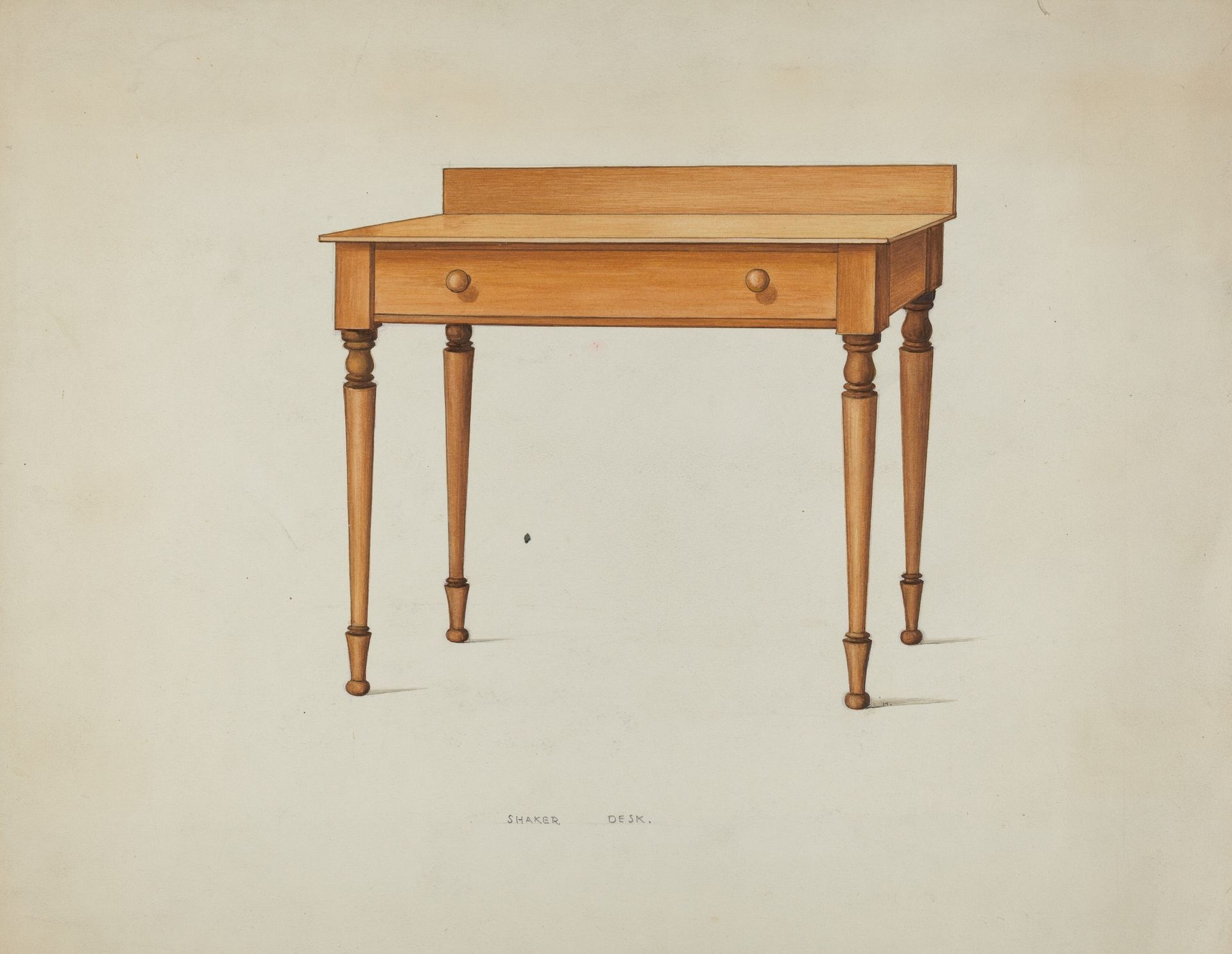
Shaker Desk


Listen to curator's interpretation
Curatorial notes
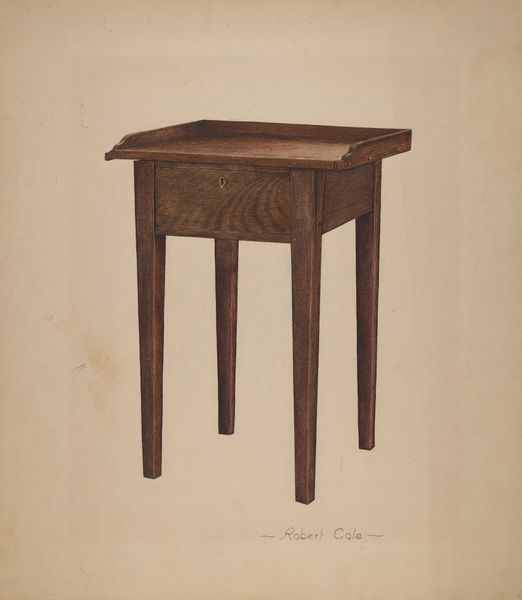
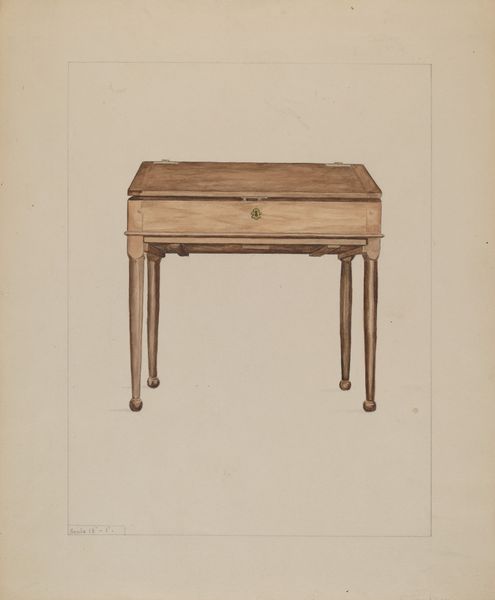
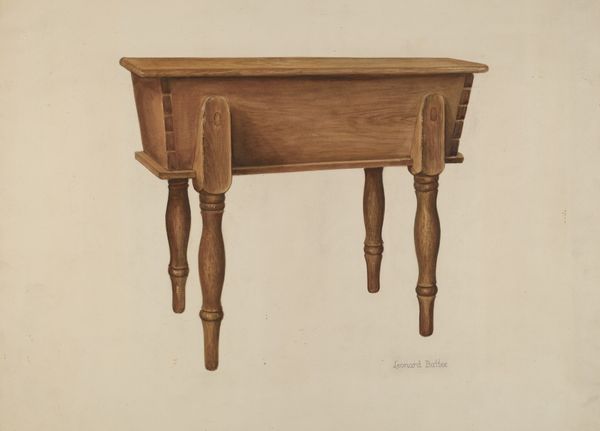
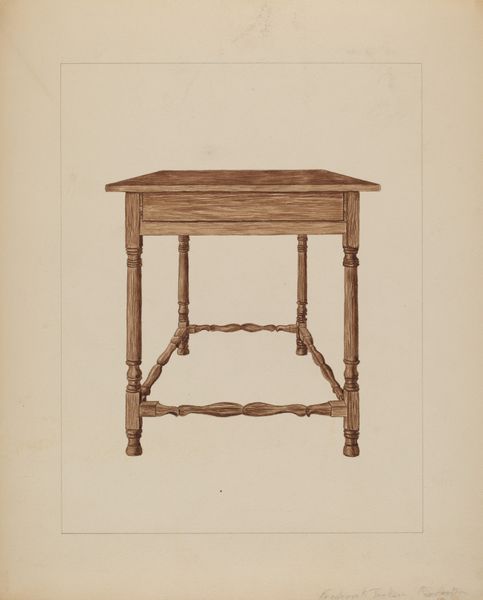
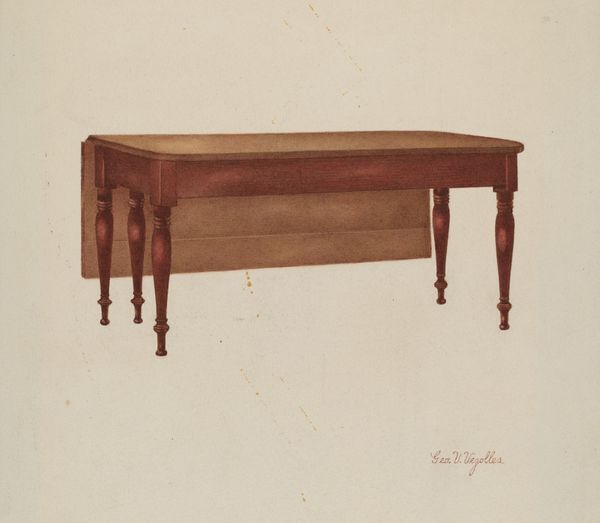
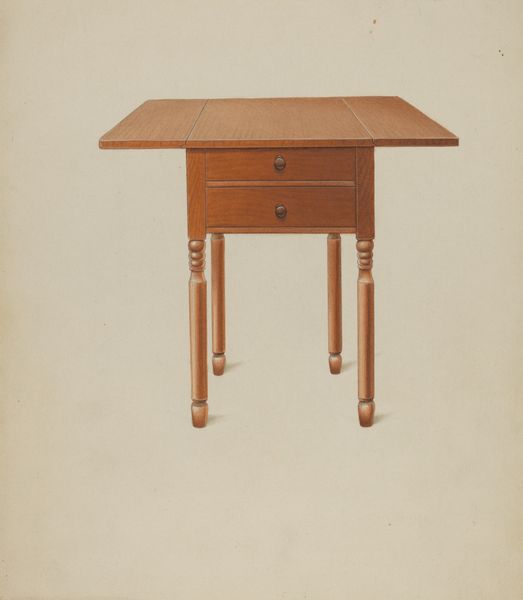
Curator: The artwork before us, entitled “Shaker Desk,” was created around 1936 by Ray Holden. It appears to be rendered in charcoal and possibly other drawing media on paper. Editor: It strikes me as strangely peaceful, even with its rigid geometric forms. The artist captured a serene, almost monastic simplicity. Curator: It's interesting that you mention "monastic" because the Shaker community itself valued simplicity, utility, and honesty in their design, mirroring their spiritual beliefs which aimed at a harmonious integration of daily life with spiritual ideals. We see that embodied in the clean lines and functional form of this desk. How do you see its forms interacting? Editor: I’m immediately drawn to the verticality established by those elegantly tapering legs against the more solid, horizontal plane of the desk surface. The contrasting visual weights creates a sense of balanced tension. And the warm tonality—presumably the color of the wood rendered by the charcoal — feels grounding. Curator: Absolutely. These Shaker designs served the domestic sphere and encouraged independence through a personal workspace for, in many cases, women managing household and personal business in what had often been previously public spheres largely dominated by men. These objects signified autonomy, a means to redefine the gendered roles of its time. Editor: So it is not simply about reductive aesthetics. Semiotically speaking, this "Shaker Desk" becomes more than just furniture; it's an assertion of social identity and perhaps even resistance? Curator: Precisely. The desk is both a workspace and a quiet declaration, challenging prescribed roles. It exemplifies a convergence of the utilitarian with evolving socio-political norms around identity. Editor: Considering its composition, its placement within this vast, neutral plane emphasizes both the isolation and the self-contained nature of this object. Curator: Viewing art is rarely neutral. This invites us to think of art’s interaction within a domestic narrative, its power as an ideological agent to alter conventional practices. Editor: I’ve never thought of something as simple and familiar as a desk as encapsulating so many layers. The artistry resides, at least partly, in inviting one to perceive the world anew, even through an everyday object.