About this artwork
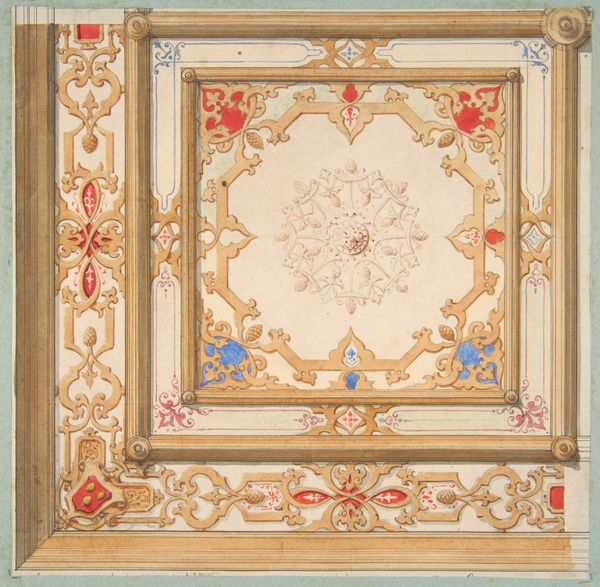
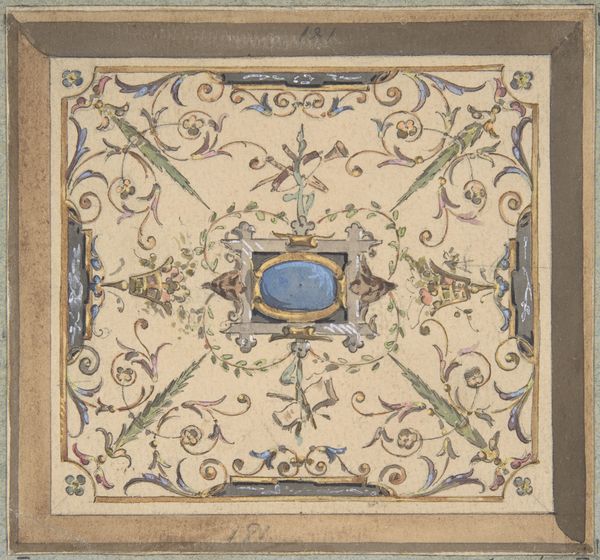
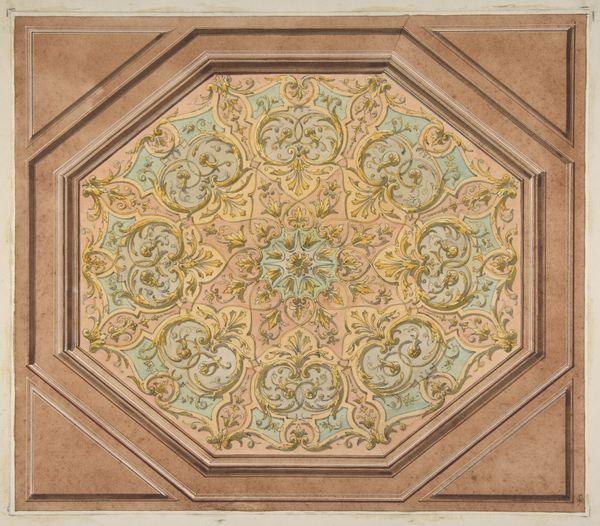
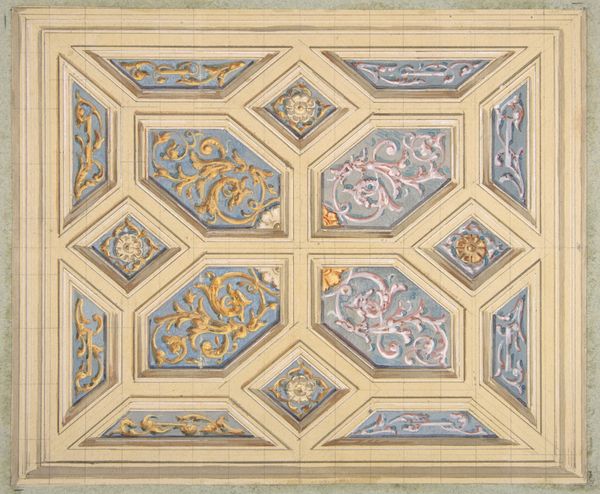
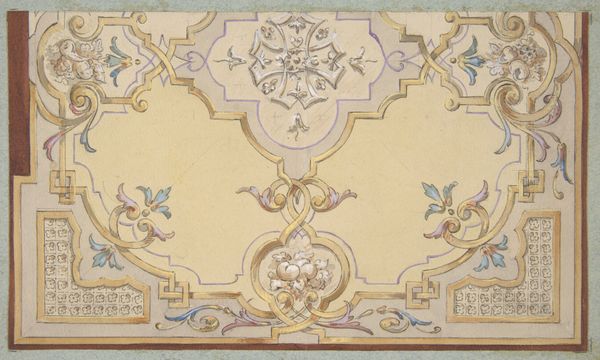
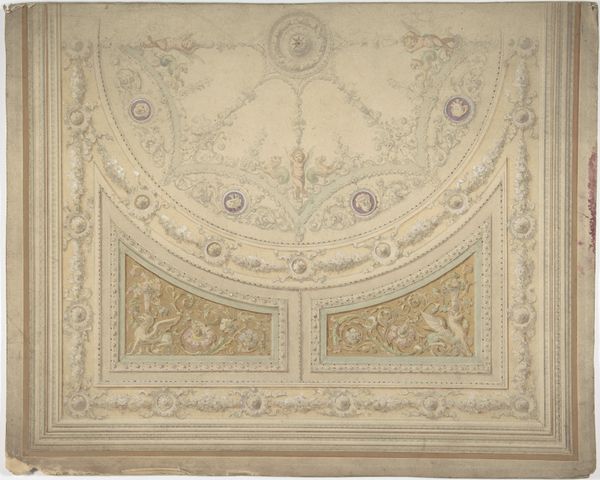
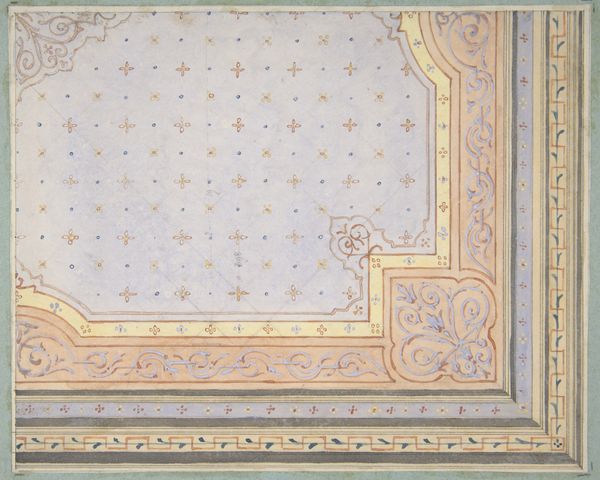
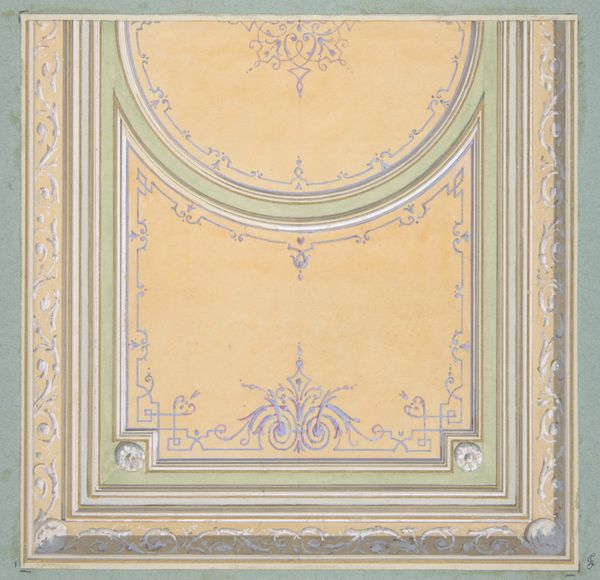
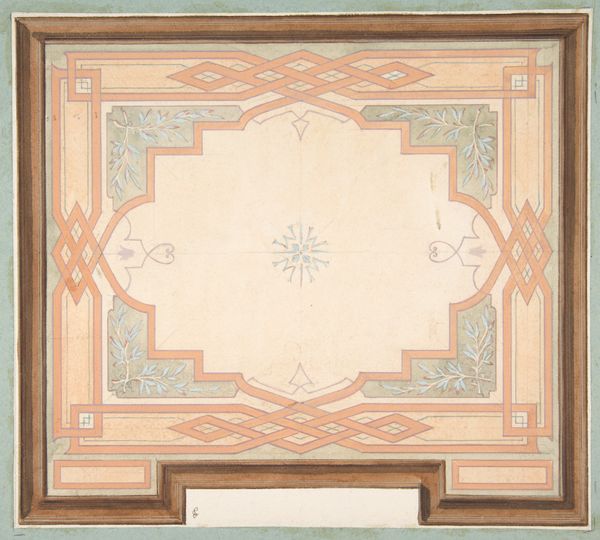
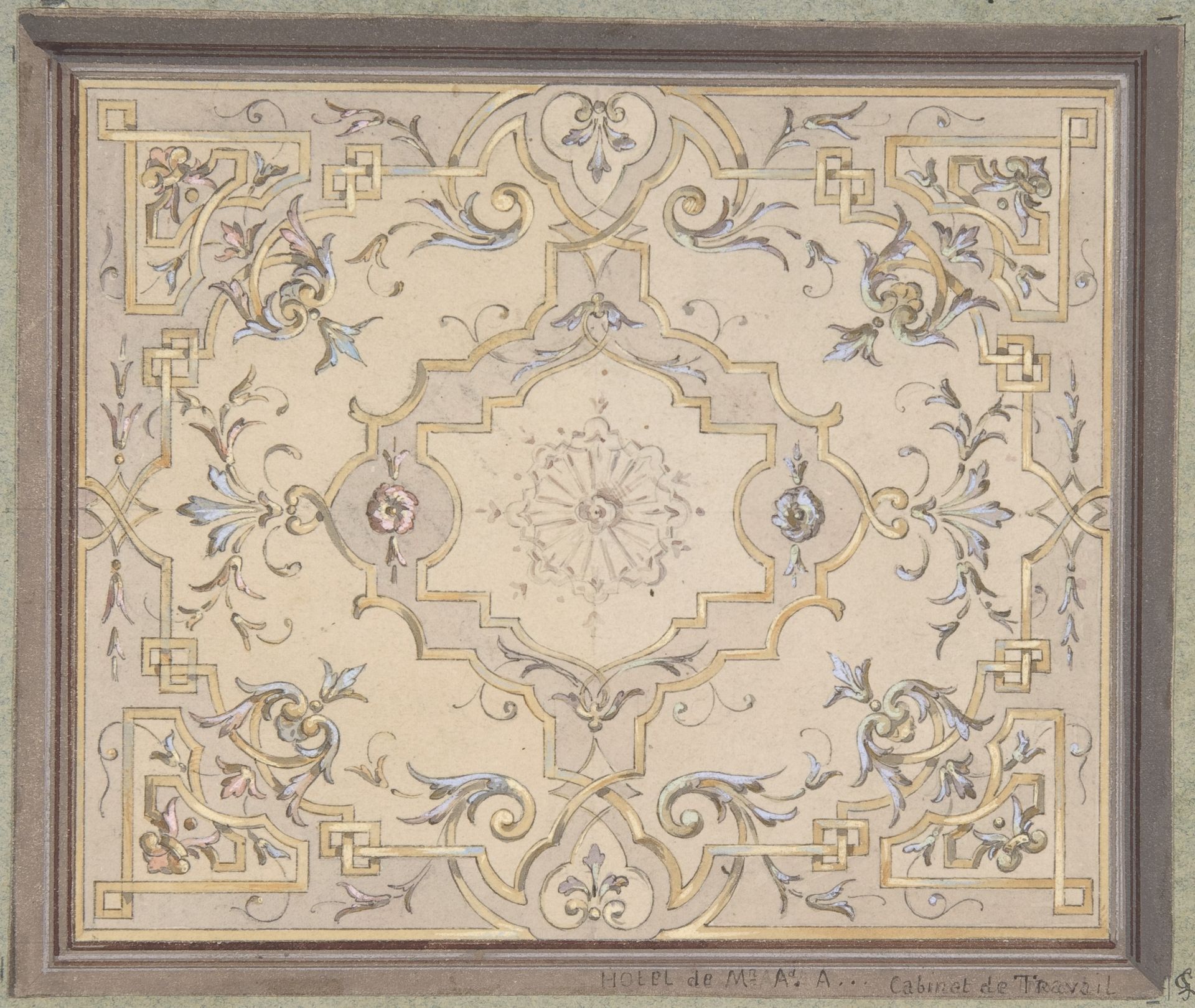
Editor: Here we have "Design for a Study Ceiling" created between 1850 and 1900 by Jules-Edmond-Charles Lachaise. It's a drawing and print currently residing at the Metropolitan Museum of Art. I’m immediately drawn to its symmetrical arrangement and subdued palette, which create a rather serene, almost dreamlike, ambiance. What strikes you most about the composition and form in this design? Curator: What captivates me is the interplay between geometric structure and organic, flowing forms. The rigid lines of the framework provide a foundation upon which the neo-romantic decorative elements are elegantly draped. Note how Lachaise orchestrates line and shape, crafting a complex rhythm of forms—geometric versus curvilinear, static versus dynamic. Consider how this arrangement, regardless of subject matter, generates an aesthetically complete experience. Editor: I see what you mean! It's a visual dance. Are there are aspects of Lachaise's line quality that stands out? Curator: Indeed. Observe the delicacy and precision with which each line is rendered. There is a remarkable economy of means here; a skillful simplicity that lends clarity and refinement to the overall design. Lachaise masterfully employs line as a tool for defining space, articulating form, and guiding the eye. What emotional qualities do you observe stemming from these lines? Editor: I notice how the curving lines of the foliage add movement to an otherwise fixed design. And the floral shapes give it a sense of life. I see how each choice elevates this beyond mere decoration. Curator: Precisely. Lachaise presents a compelling arrangement when each constituent formal choice is taken into account. Editor: I appreciate your shedding light on the formal and structural aspects! This really helps me better perceive its artistry. Curator: And you prompted consideration of how basic forms trigger rich affective responses. A fruitful exchange!
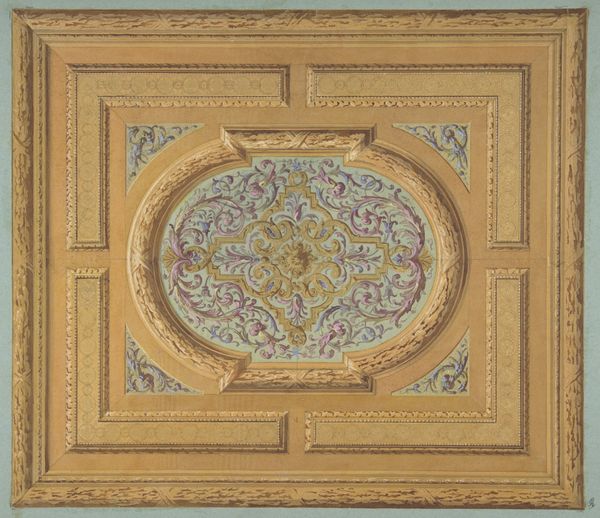
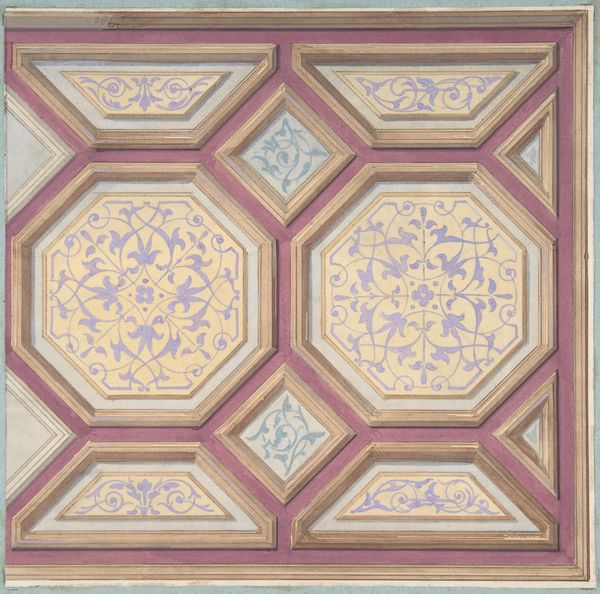
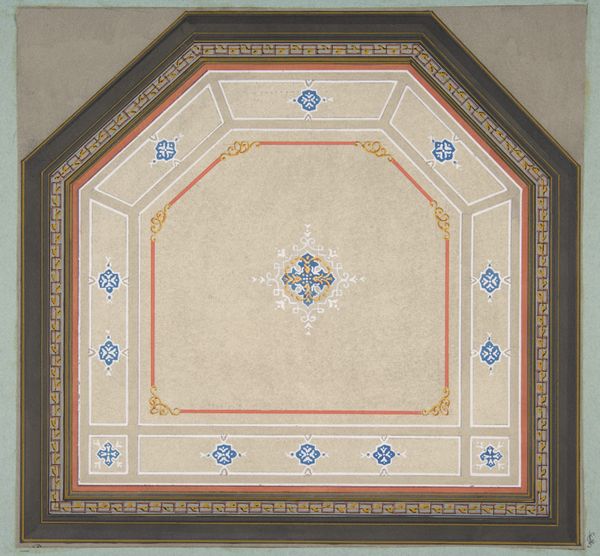
Design for a Study Ceiling
1850 - 1900

Jules-Edmond-Charles Lachaise
1897
The Metropolitan Museum of Art
Metropolitan Museum of Art, New York, NYArtwork details
- Medium
- drawing, print
- Dimensions
- 6 1/8 x 7 1/4 in. (15.6 x 18.4 cm)
- Location
- Metropolitan Museum of Art, New York, NY
- Copyright
- Public Domain
Tags
drawing
form
geometric
neo-romanticism
line
decorative-art
Comments
Be the first to share your thoughts about this work.
About this artwork
Editor: Here we have "Design for a Study Ceiling" created between 1850 and 1900 by Jules-Edmond-Charles Lachaise. It's a drawing and print currently residing at the Metropolitan Museum of Art. I’m immediately drawn to its symmetrical arrangement and subdued palette, which create a rather serene, almost dreamlike, ambiance. What strikes you most about the composition and form in this design? Curator: What captivates me is the interplay between geometric structure and organic, flowing forms. The rigid lines of the framework provide a foundation upon which the neo-romantic decorative elements are elegantly draped. Note how Lachaise orchestrates line and shape, crafting a complex rhythm of forms—geometric versus curvilinear, static versus dynamic. Consider how this arrangement, regardless of subject matter, generates an aesthetically complete experience. Editor: I see what you mean! It's a visual dance. Are there are aspects of Lachaise's line quality that stands out? Curator: Indeed. Observe the delicacy and precision with which each line is rendered. There is a remarkable economy of means here; a skillful simplicity that lends clarity and refinement to the overall design. Lachaise masterfully employs line as a tool for defining space, articulating form, and guiding the eye. What emotional qualities do you observe stemming from these lines? Editor: I notice how the curving lines of the foliage add movement to an otherwise fixed design. And the floral shapes give it a sense of life. I see how each choice elevates this beyond mere decoration. Curator: Precisely. Lachaise presents a compelling arrangement when each constituent formal choice is taken into account. Editor: I appreciate your shedding light on the formal and structural aspects! This really helps me better perceive its artistry. Curator: And you prompted consideration of how basic forms trigger rich affective responses. A fruitful exchange!
Comments
Be the first to share your thoughts about this work.