About this artwork
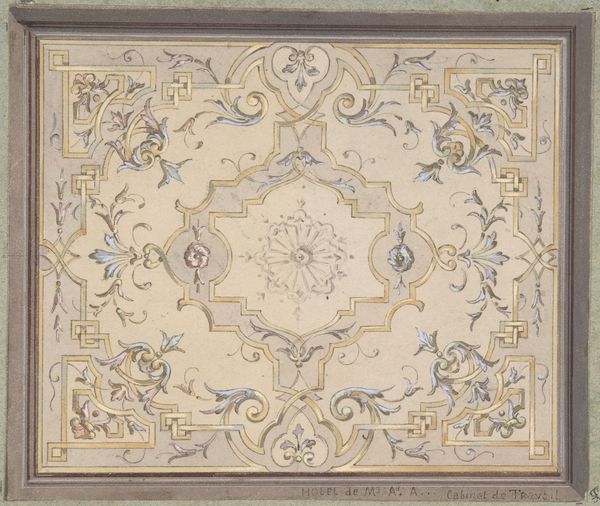
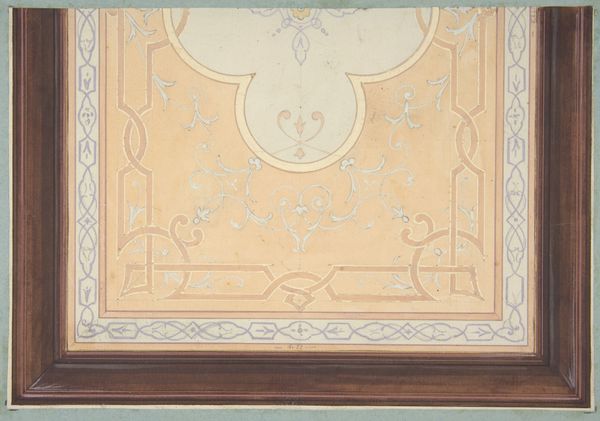
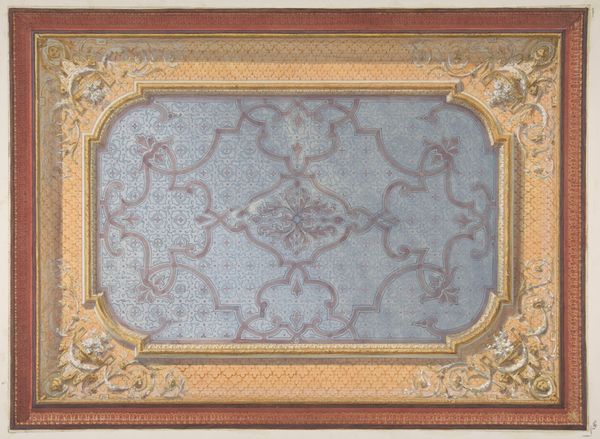
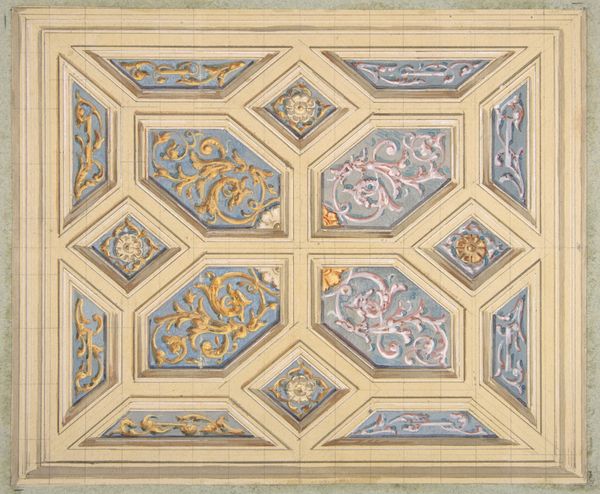
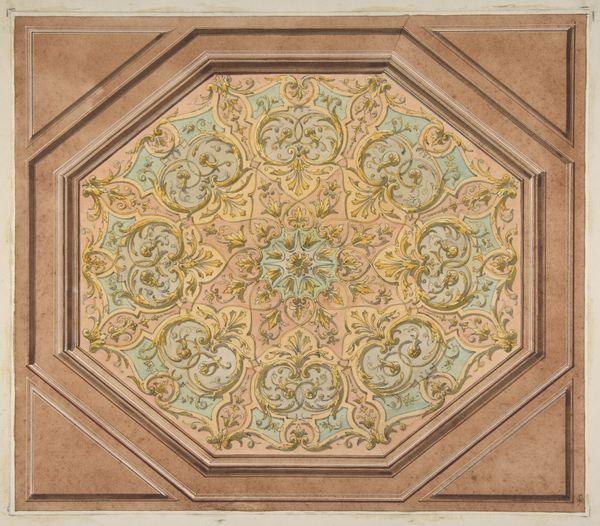
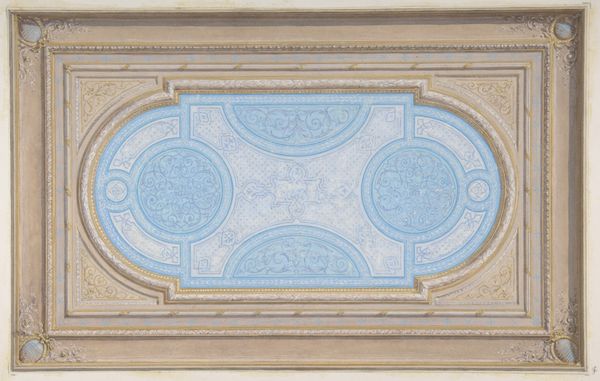
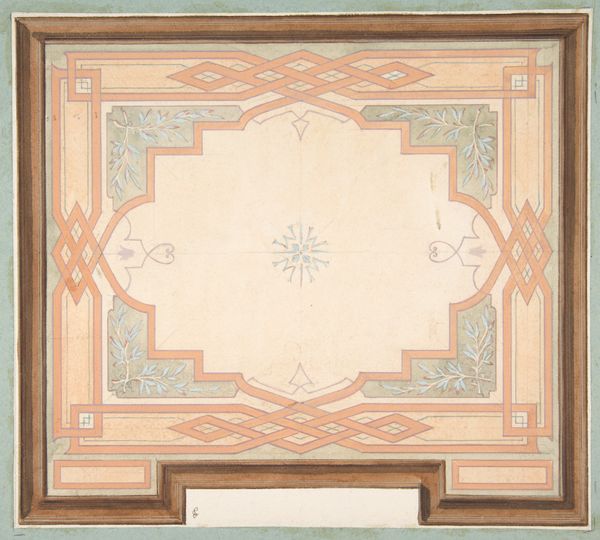
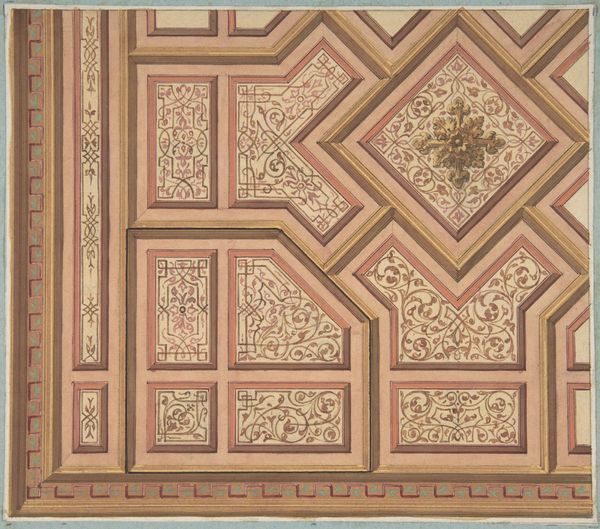
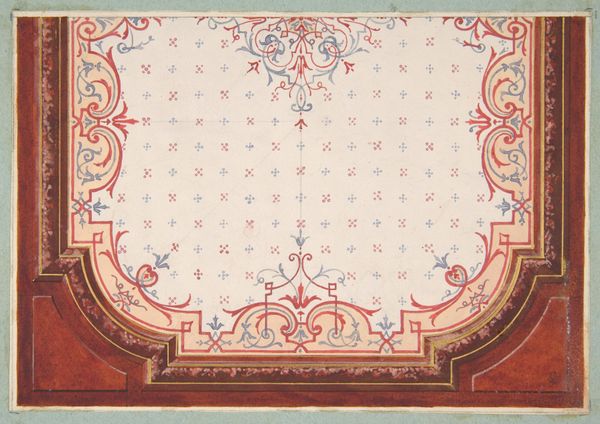
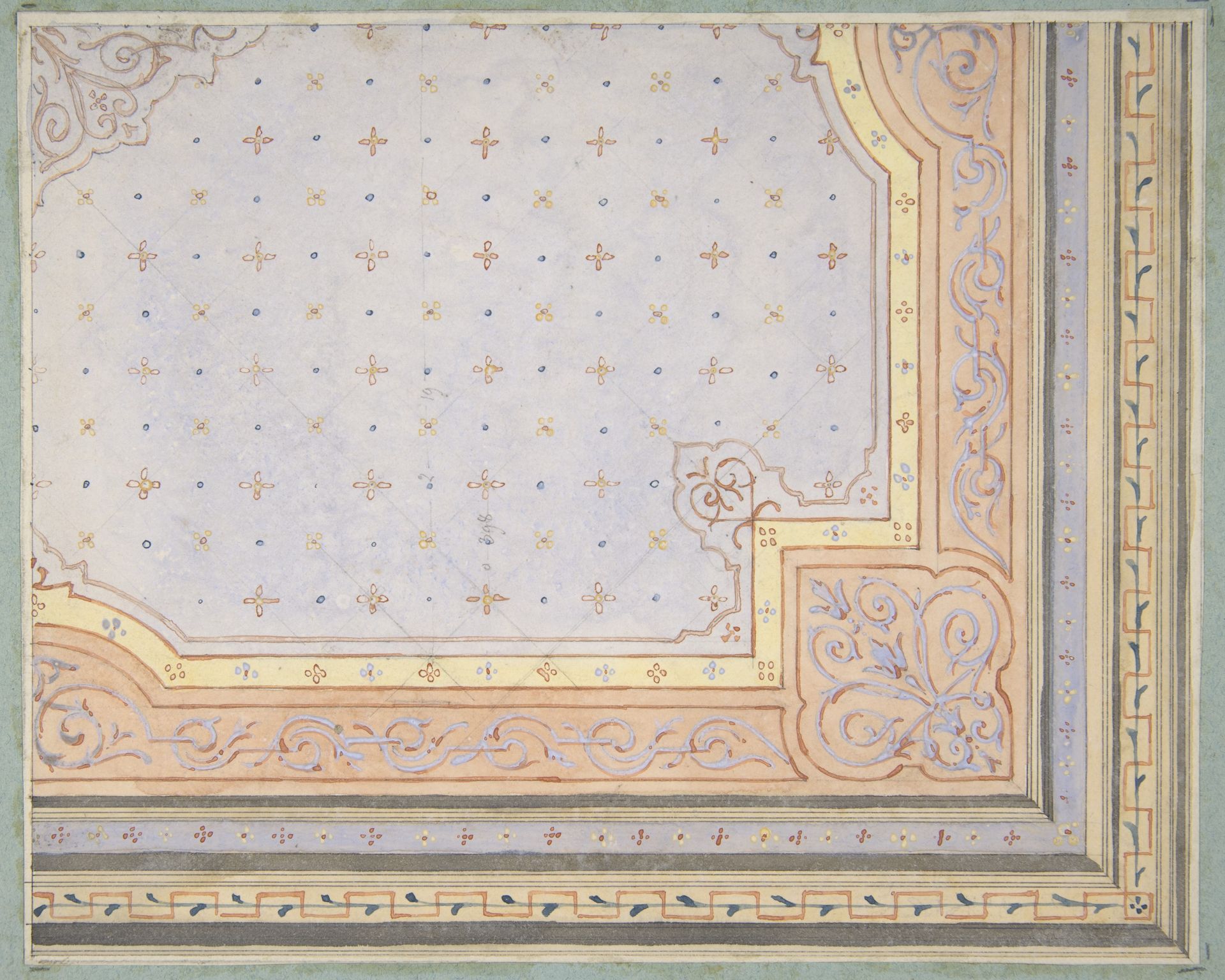
Jules-Edmond-Charles Lachaise rendered this partial ceiling design with watercolor, ink, and graphite. Notice the delicate floral motifs that punctuate the pale blue field, reminiscent of ancient Roman ceiling coffers, promising bounty and divine favor. These aren't merely decorative; they echo the 'horror vacui' – the fear of empty space – seen in ancient art, filling every corner to ward off unease. Similar patterns appear in Renaissance frescoes, like Pinturicchio’s work in the Vatican, where floral designs symbolize rebirth and renewal. Observe how Lachaise integrates these timeless motifs with the swirling arabesques, pulling from both classical and oriental traditions. This fusion isn't just aesthetic, but a symbolic dance across cultural memory. It evokes a shared human desire for order, beauty, and perhaps, a silent dialogue with ancestors. It's a psychological embrace of the past, comforting and familiar. Ultimately, Lachaise’s design invites us to look up, not just at a ceiling, but through centuries of art, revealing how symbols persist, adapt, and continue to shape our subconscious understanding of the world.
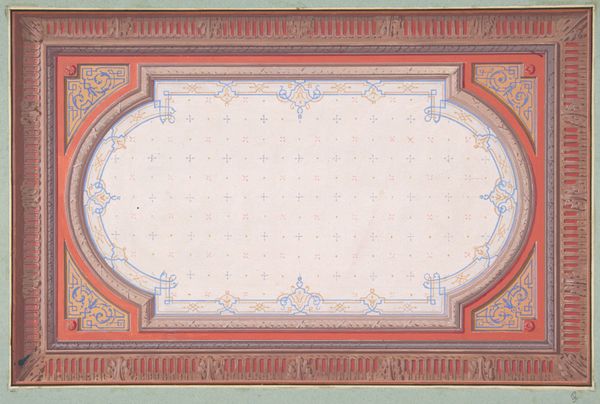
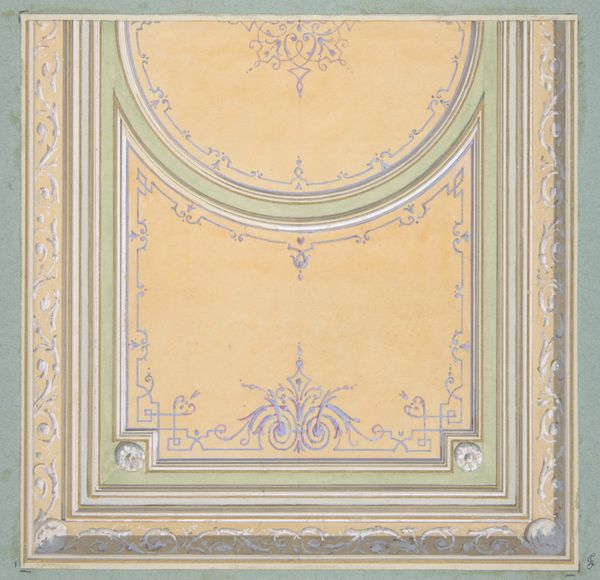
Partial design for the painted decoration of a ceiling
1830 - 1897

Jules-Edmond-Charles Lachaise
1897
The Metropolitan Museum of Art
Metropolitan Museum of Art, New York, NYArtwork details
- Medium
- drawing, print
- Dimensions
- Overall: 10 7/8 x 8 9/16 in. (27.6 x 21.7 cm) image: 7 15/16 x 6 7/16 in. (20.2 x 16.4 cm)
- Location
- Metropolitan Museum of Art, New York, NY
- Copyright
- Public Domain
Tags
Comments
Share your thoughts
About this artwork
Jules-Edmond-Charles Lachaise rendered this partial ceiling design with watercolor, ink, and graphite. Notice the delicate floral motifs that punctuate the pale blue field, reminiscent of ancient Roman ceiling coffers, promising bounty and divine favor. These aren't merely decorative; they echo the 'horror vacui' – the fear of empty space – seen in ancient art, filling every corner to ward off unease. Similar patterns appear in Renaissance frescoes, like Pinturicchio’s work in the Vatican, where floral designs symbolize rebirth and renewal. Observe how Lachaise integrates these timeless motifs with the swirling arabesques, pulling from both classical and oriental traditions. This fusion isn't just aesthetic, but a symbolic dance across cultural memory. It evokes a shared human desire for order, beauty, and perhaps, a silent dialogue with ancestors. It's a psychological embrace of the past, comforting and familiar. Ultimately, Lachaise’s design invites us to look up, not just at a ceiling, but through centuries of art, revealing how symbols persist, adapt, and continue to shape our subconscious understanding of the world.
Comments
Share your thoughts