1659
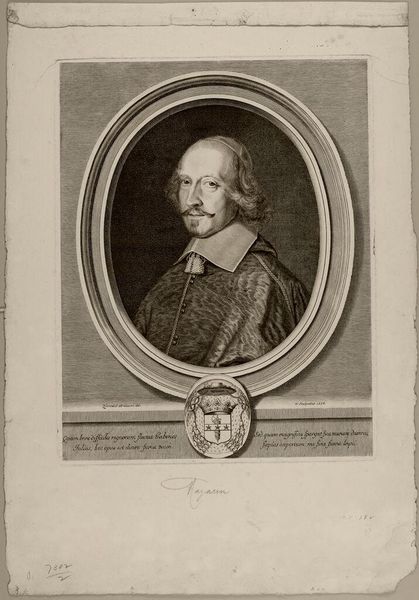
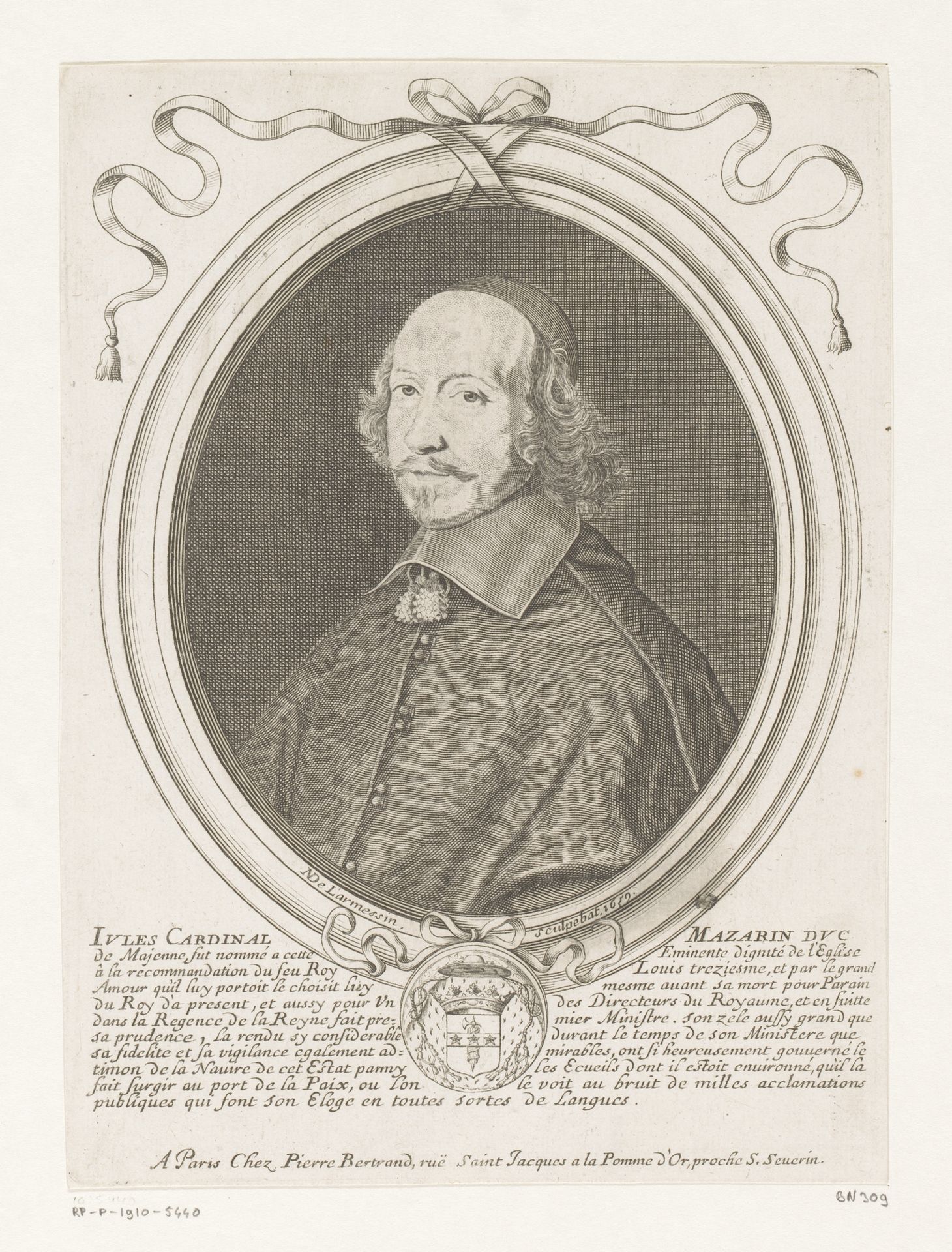
Portret van kardinaal Jules Mazarin

Nicolas de (I) Larmessin
1632 - 1694Location
RijksmuseumListen to curator's interpretation
Curatorial notes
Editor: Here we have Nicolas de Larmessin's "Portret van kardinaal Jules Mazarin," an engraving from 1659. The textures created solely by lines are quite remarkable. What draws your eye when you look at this work? Curator: I'm struck by the process of its creation. Consider the engraver's labor: each line meticulously etched to build form, texture, and ultimately, to circulate an image of power. This wasn't just about art; it was about manufacturing and distributing authority. Editor: So, you are more interested in how it was made and its function at the time rather than… what it depicts? Curator: Precisely. The lines themselves become a material manifestation of political machinery. Ask yourself: who controlled the means of production – the printing press – and how did that impact the message conveyed about Mazarin? Is it propaganda or simply a portrait? I find it compelling to think about the sheer volume of these prints and how they influenced public perception through repeated visual encounters. Editor: That's a fascinating way to consider it – shifting from the subject to the production and circulation of the image. Curator: It begs us to question: what is the social life of an engraving like this? Consider the economic exchange surrounding its creation. How does a work like this blur the line between artistic expression, skilled labor, and political tool? Editor: I never thought about an artwork's production that deeply. Thanks for sharing that perspective! Curator: And thank you for noticing its incredible textures! Now, I might think differently about engravings from this period too!