after 1659
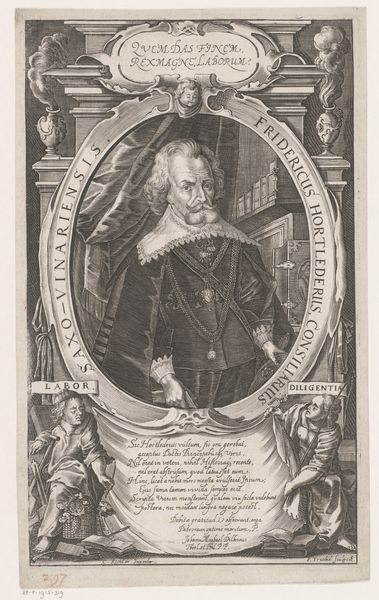
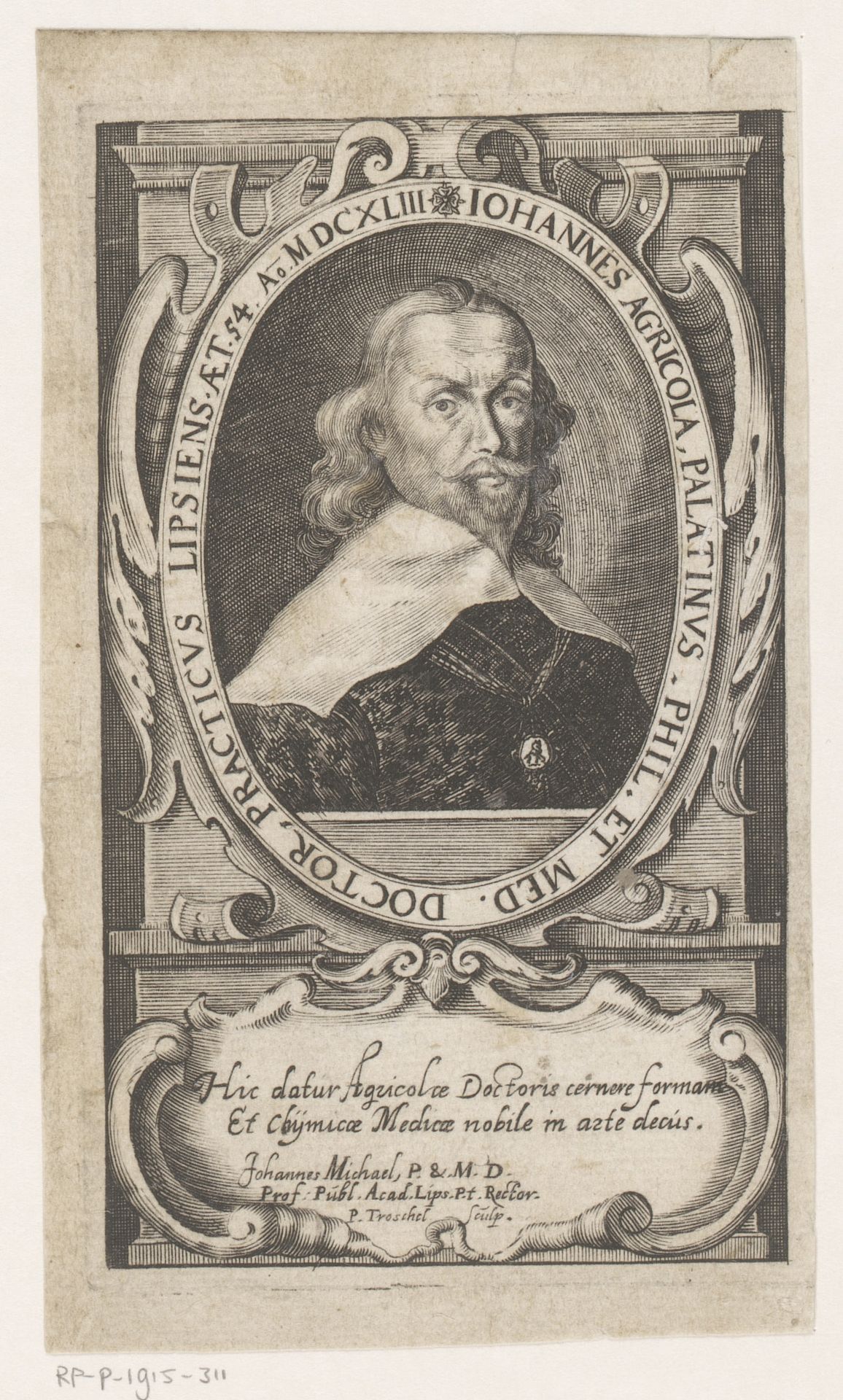
Portret van Johann Agricola

Listen to curator's interpretation
Curatorial notes
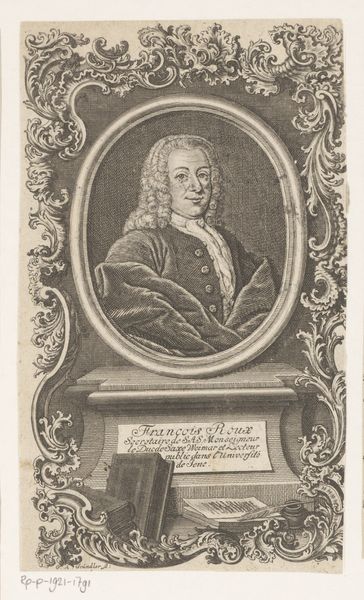
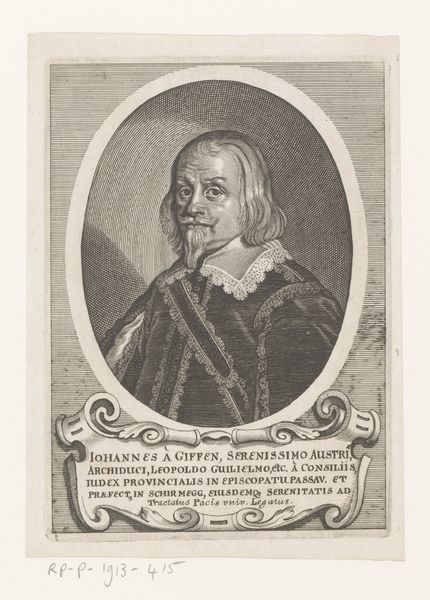
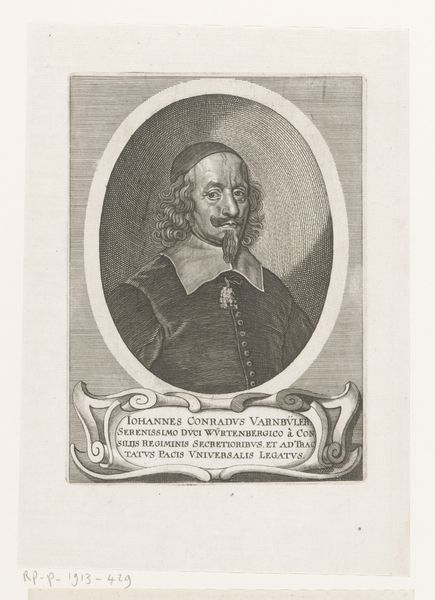
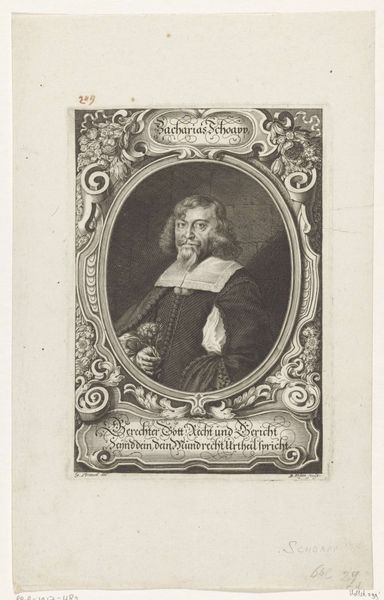
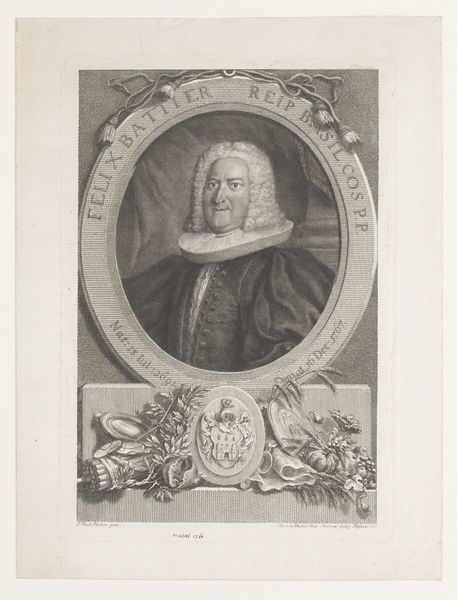
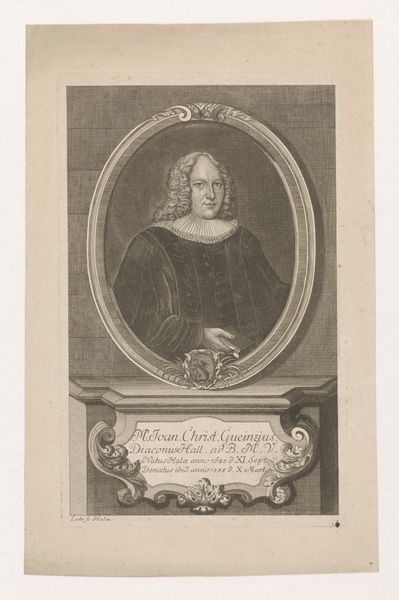
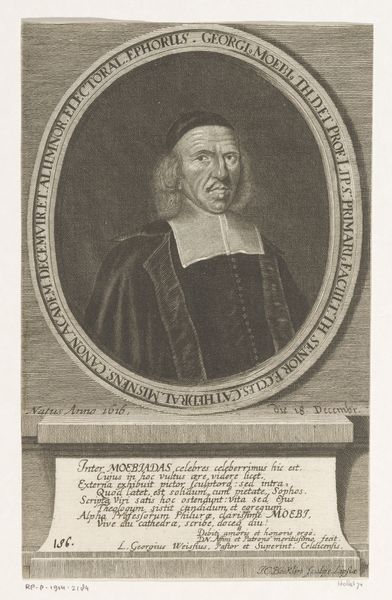
Curator: Welcome! Before us, we have "Portret van Johann Agricola," a print crafted by Peter Troschel after 1659. Editor: It's a rather austere depiction. The meticulous engraving lends a striking formality to the subject. Almost imposing. Curator: Indeed. Troschel situates Agricola, a physician and scholar from Leipzig, within an elaborate, almost baroque frame, which reinforces his status. Look closely; you can see the inscription detailing his age, titles, and the names of those involved in creating the image, all contributing to the piece's formal presentation within intellectual circles. Editor: The emphasis on typography in the Baroque period highlights an interesting aspect: how closely textual communication was linked with images, imprinting meaning through layers of production. These were meticulously produced prints – often multiple hands involved, from the creation of the image to the addition of explanatory texts. It raises the status of craftsmanship itself. Curator: Absolutely. This piece speaks volumes about the social role of portraiture in the 17th century. Prints like these were a vital way to disseminate knowledge, celebrate figures of authority, and reinforce social hierarchies. This wasn't just a portrait; it was a statement of Agricola’s achievements and position within society, carefully constructed through visual and textual means. Editor: Right. The texture achieved via engraving creates gradations in tone but more fascinatingly, emphasizes the labor invested, a material manifestation of value and respect conferred upon the subject and indirectly, upon the skills involved in the engraving process itself. Curator: A great point. Ultimately, this print showcases the interwoven threads of artistic production, intellectual culture, and societal values that shaped early modern Europe. Editor: And reminds us that "art" extends beyond the canvas, encompassing the skilled trades that enable broader accessibility to representation.