About this artwork
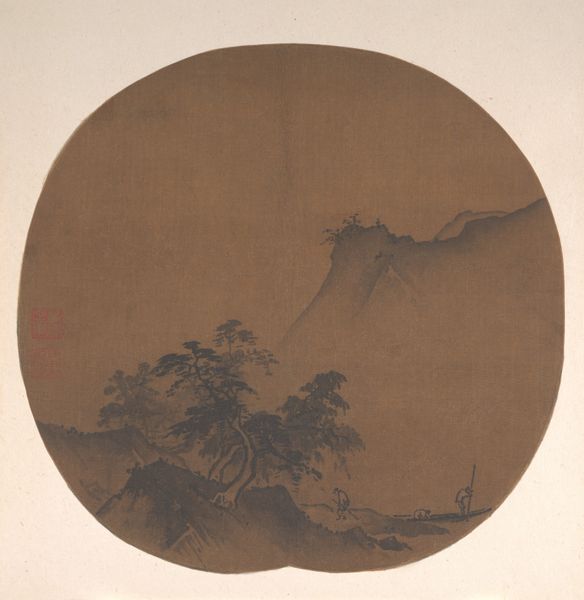
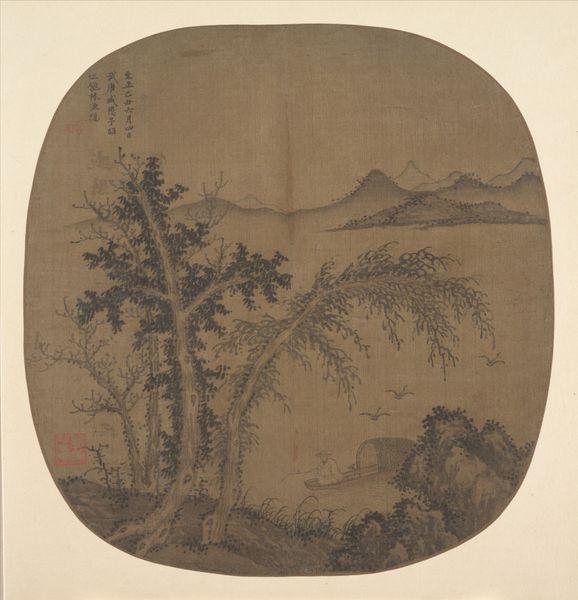
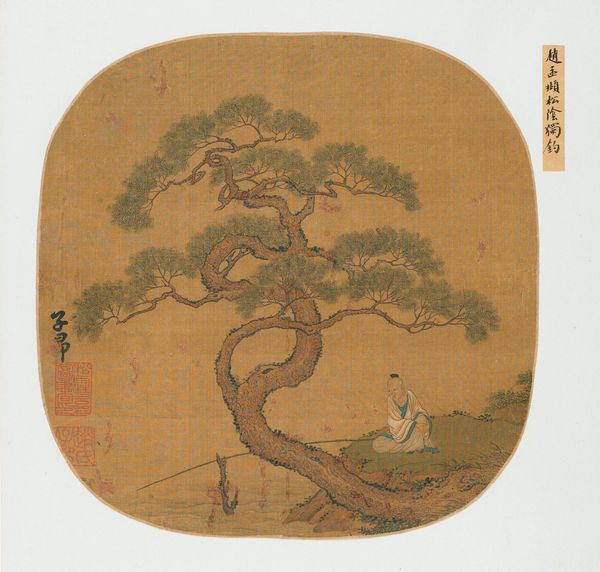
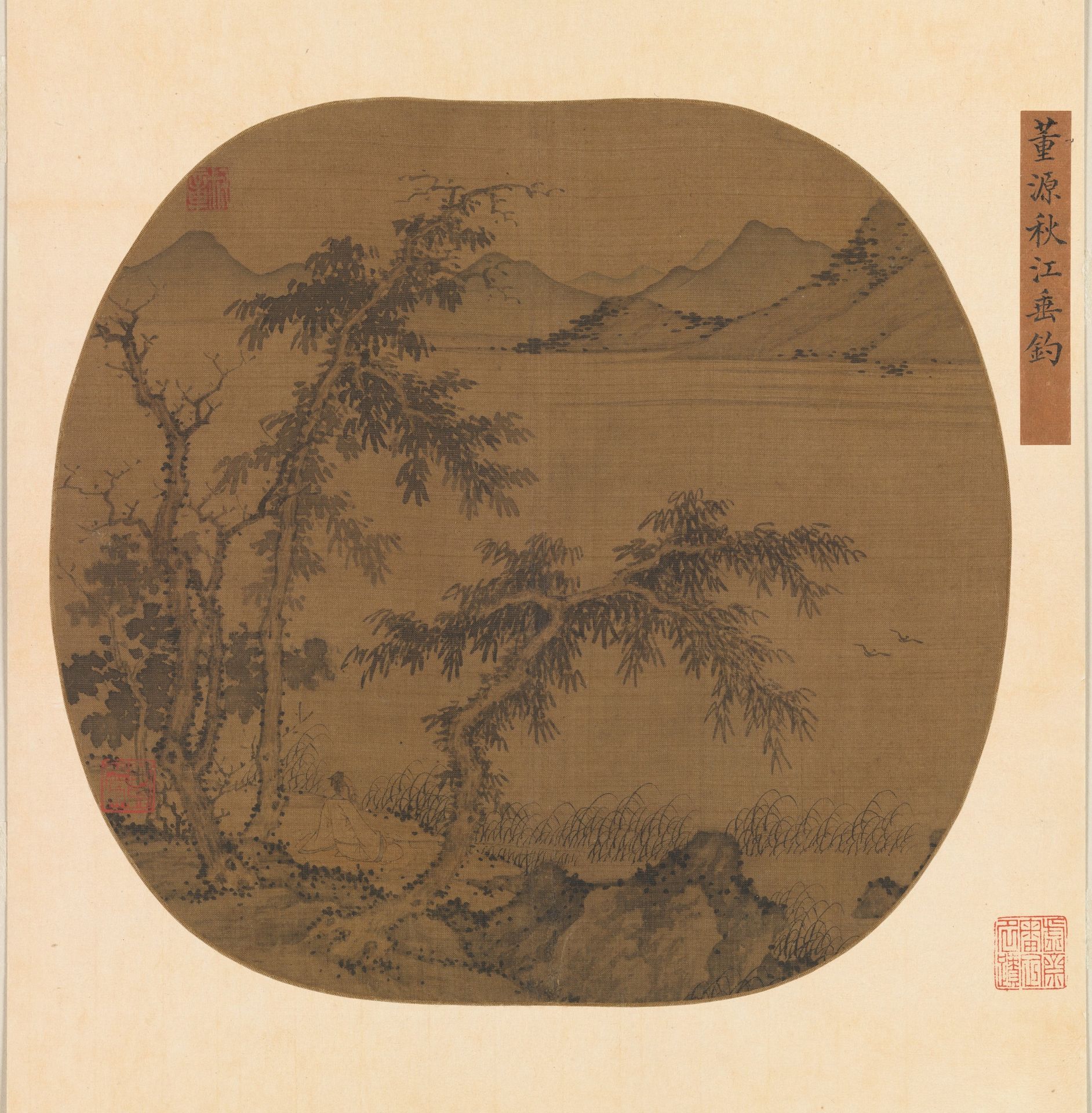
Sheng Zhu painted "Angling in the Autumn River" with ink on silk during the Yuan dynasty. The round shape suggests it was once part of a fan. In this period, painting was closely tied to social class. Scholarly or "literati" painting such as this became the dominant form of art expression. The image shows a lone figure fishing by a misty riverbank with bare trees. The fisherman and setting might be expressing the artist's own feelings of isolation or his desire to separate himself from the court. The Yuan dynasty was founded by the invading Mongols who placed foreigners in positions of power. Ethnic Han Chinese, like the artist, were excluded from this power structure. Studying historical documents can reveal what the artist thought of the court and their politics, thereby giving context to the painting's imagery and revealing the artist's mindset.
Angling in the Autumn River
1360 - 1380


Artwork details
- Medium
- painting, paper, ink
- Dimensions
- Image: 10 3/16 × 10 13/16 in. (25.9 × 27.5 cm)
- Location
- Metropolitan Museum of Art, New York, NY
- Copyright
- Public Domain
Tags
Comments
Share your thoughts
About this artwork
Sheng Zhu painted "Angling in the Autumn River" with ink on silk during the Yuan dynasty. The round shape suggests it was once part of a fan. In this period, painting was closely tied to social class. Scholarly or "literati" painting such as this became the dominant form of art expression. The image shows a lone figure fishing by a misty riverbank with bare trees. The fisherman and setting might be expressing the artist's own feelings of isolation or his desire to separate himself from the court. The Yuan dynasty was founded by the invading Mongols who placed foreigners in positions of power. Ethnic Han Chinese, like the artist, were excluded from this power structure. Studying historical documents can reveal what the artist thought of the court and their politics, thereby giving context to the painting's imagery and revealing the artist's mindset.
Comments
Share your thoughts