About this artwork
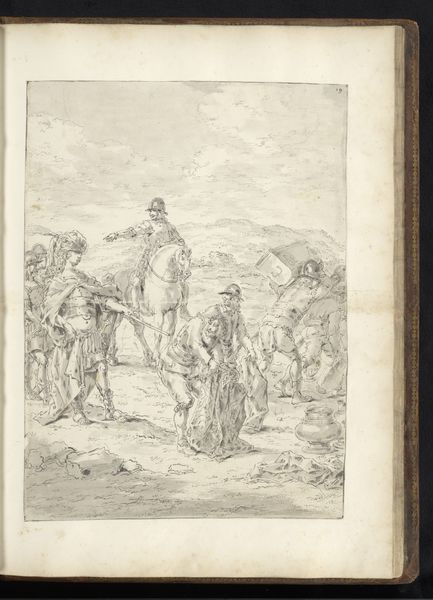
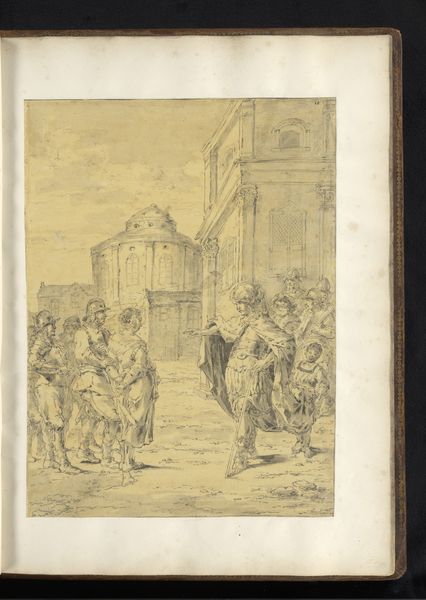
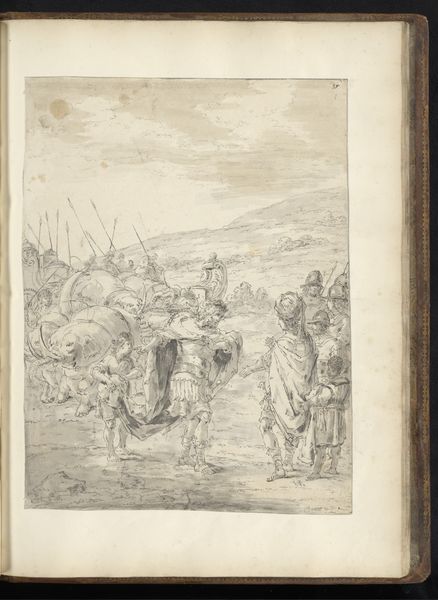
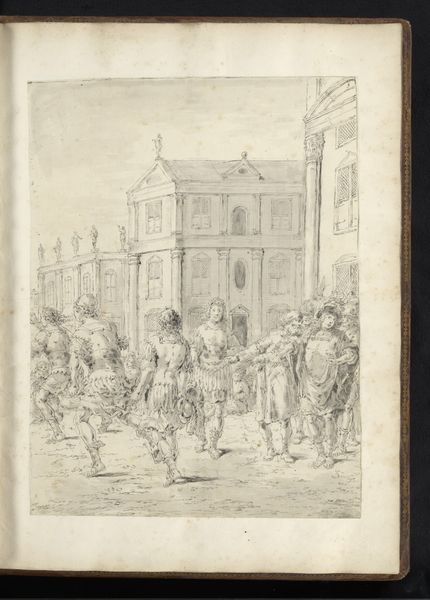
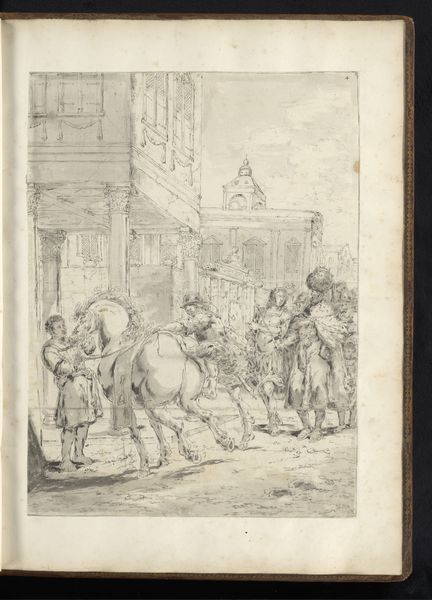
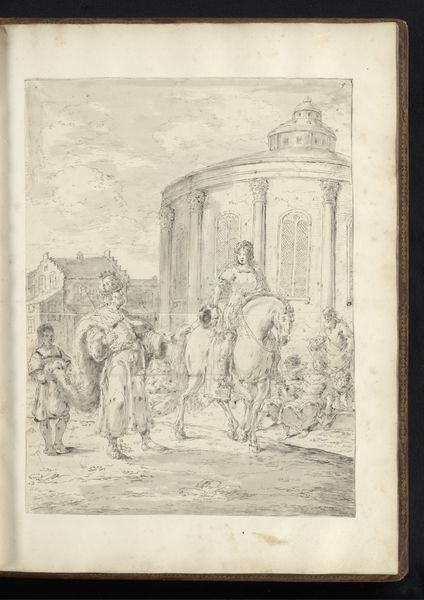
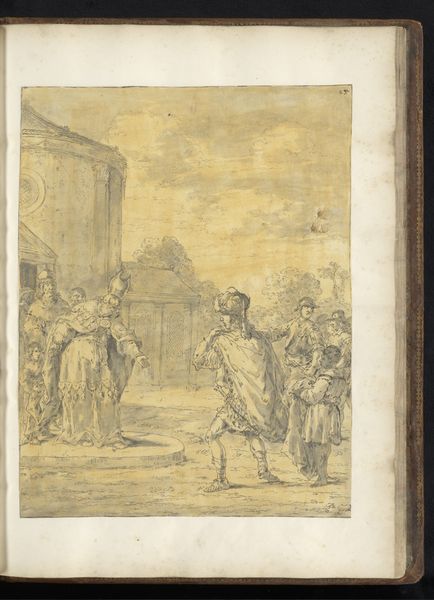
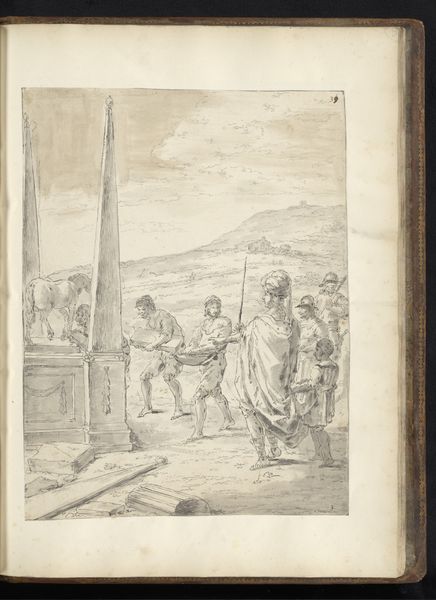
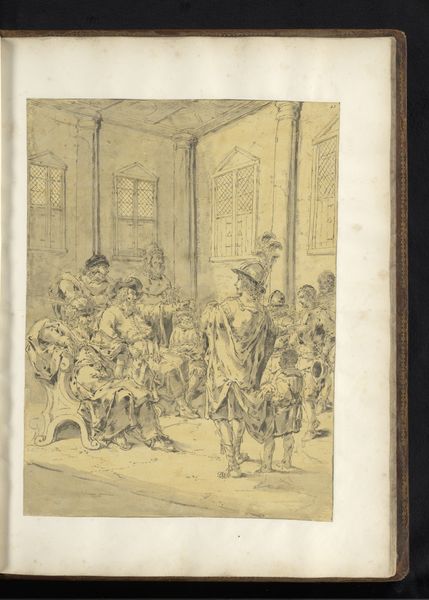
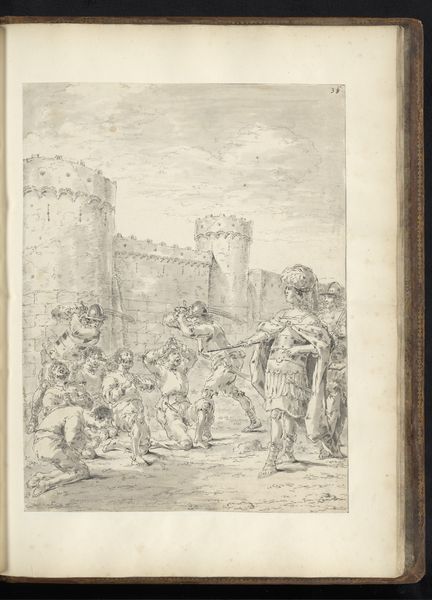
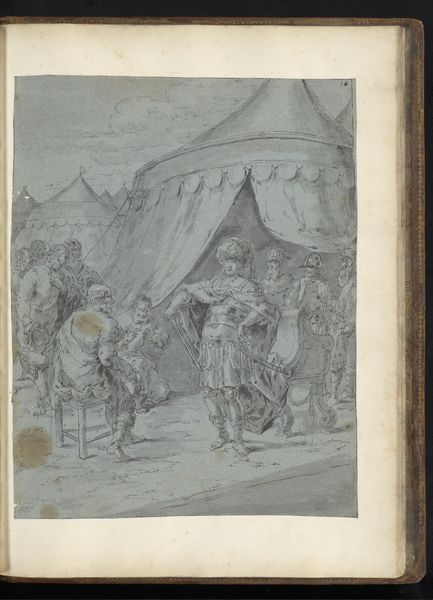
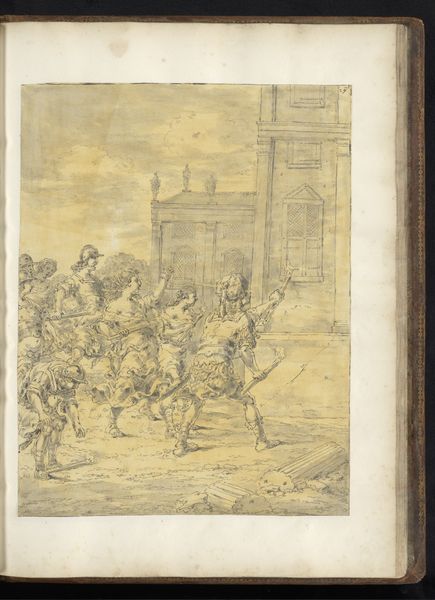
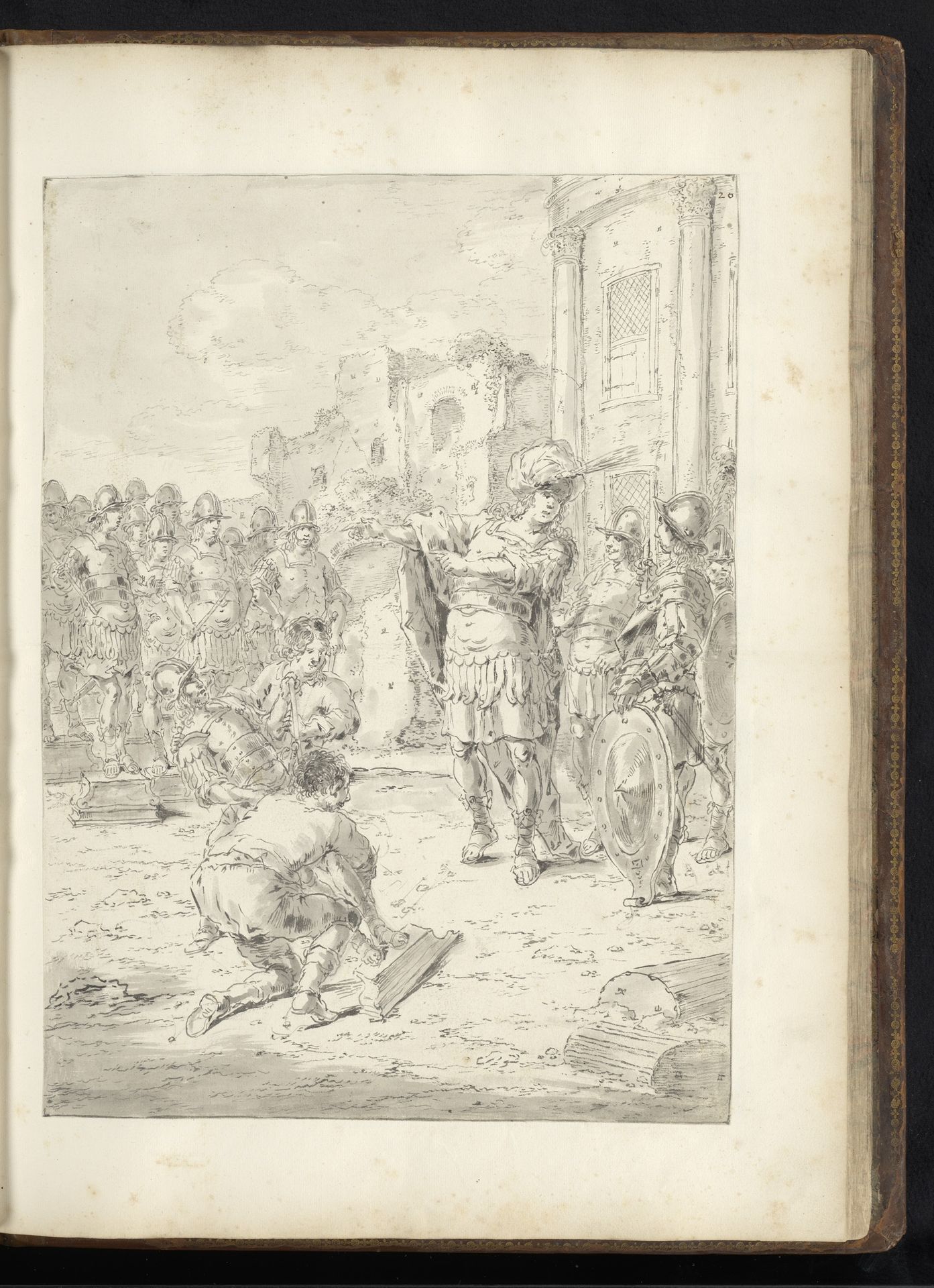
Leonaert Bramer created this drawing depicting Alexander the Great receiving sculptures from Lysippos. Observe how the artist uses a monochromatic palette to emphasize form and structure. The composition, primarily linear, directs our gaze through a sequence of carefully arranged figures and architectural fragments. Bramer employs line to delineate shape and suggest depth, creating a sense of space and perspective. The artist contrasts the detailed foreground with a more vaguely rendered background. This juxtaposition guides our eyes to the focal point. We are compelled to analyze not just what is depicted but how it is structured, encouraging us to consider the underlying semiotic system at play. The ruins might symbolize the transient nature of power. By inviting the viewer to consider the interplay between form and meaning, Bramer challenges the fixity of historical narratives. This work remains open to multiple interpretations and reflections.
Alexander de Grote krijgt beelden door Lysippos gepresenteerd
c. 1655 - 1665

Leonaert Bramer
1596 - 1674Location
RijksmuseumArtwork details
- Medium
- drawing, paper, ink, pen
- Dimensions
- height 410 mm, width 301 mm
- Location
- Rijksmuseum
- Copyright
- Rijks Museum: Open Domain
Tags
Comments
Share your thoughts
About this artwork
Leonaert Bramer created this drawing depicting Alexander the Great receiving sculptures from Lysippos. Observe how the artist uses a monochromatic palette to emphasize form and structure. The composition, primarily linear, directs our gaze through a sequence of carefully arranged figures and architectural fragments. Bramer employs line to delineate shape and suggest depth, creating a sense of space and perspective. The artist contrasts the detailed foreground with a more vaguely rendered background. This juxtaposition guides our eyes to the focal point. We are compelled to analyze not just what is depicted but how it is structured, encouraging us to consider the underlying semiotic system at play. The ruins might symbolize the transient nature of power. By inviting the viewer to consider the interplay between form and meaning, Bramer challenges the fixity of historical narratives. This work remains open to multiple interpretations and reflections.
Comments
Share your thoughts