About this artwork
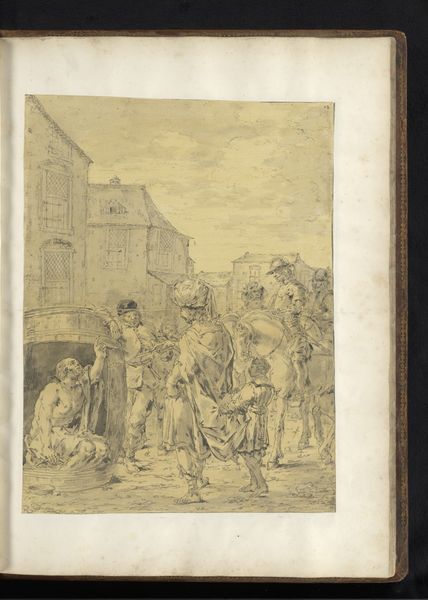
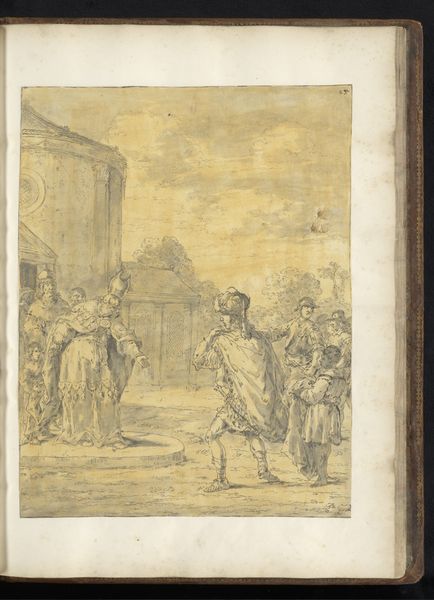
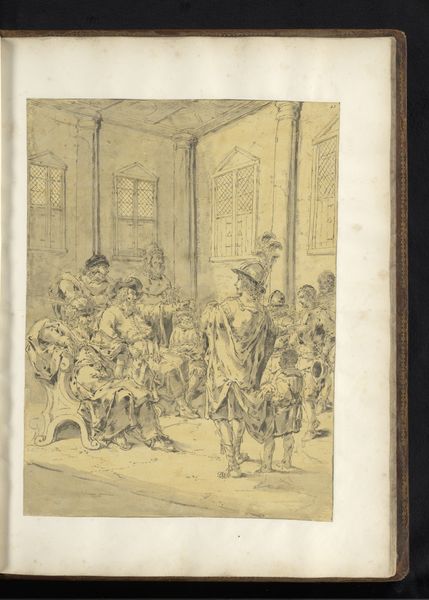
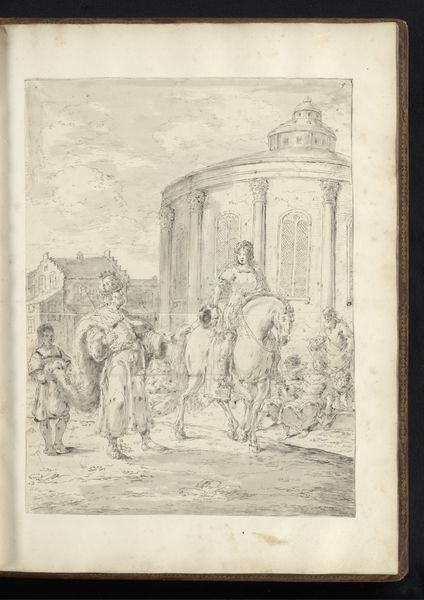
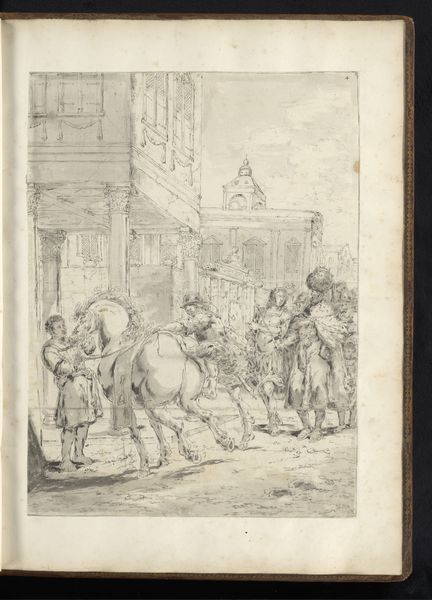
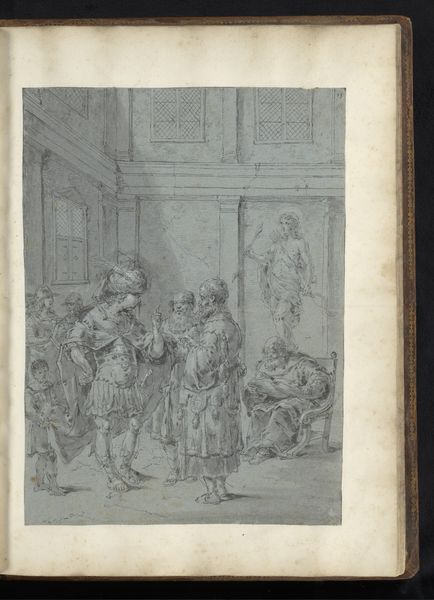
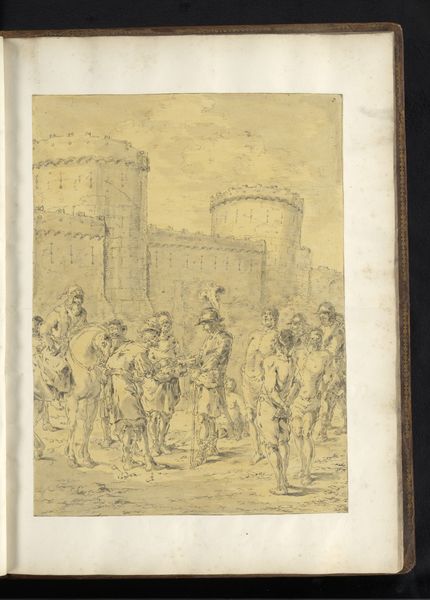
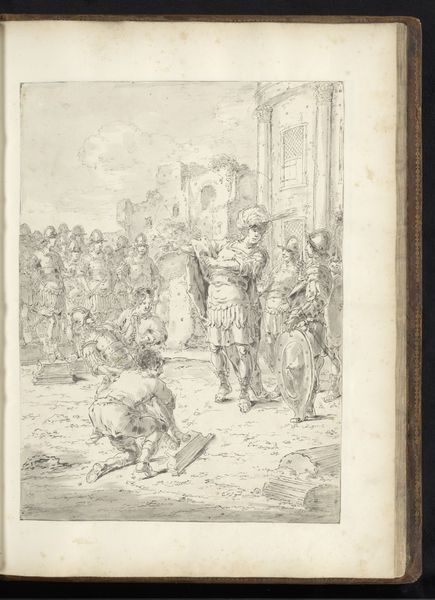
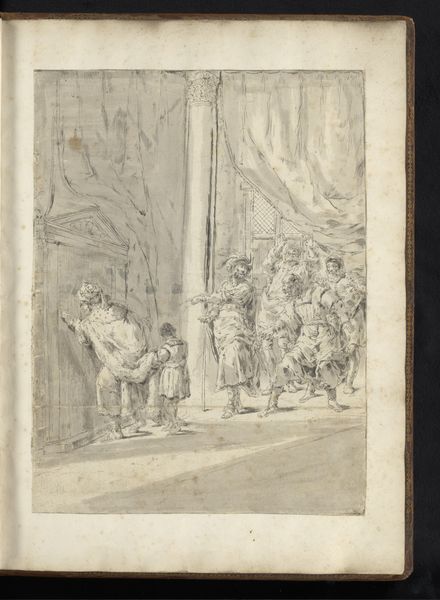
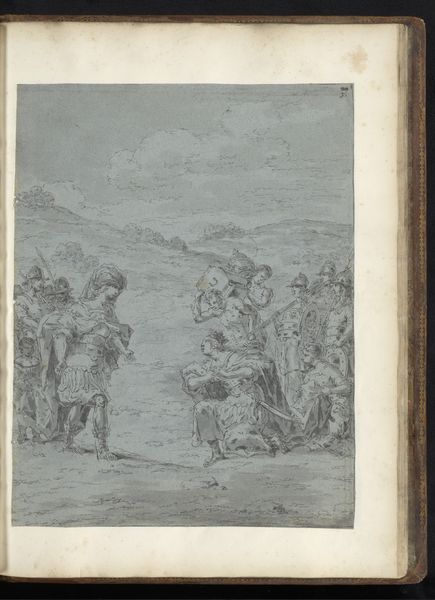
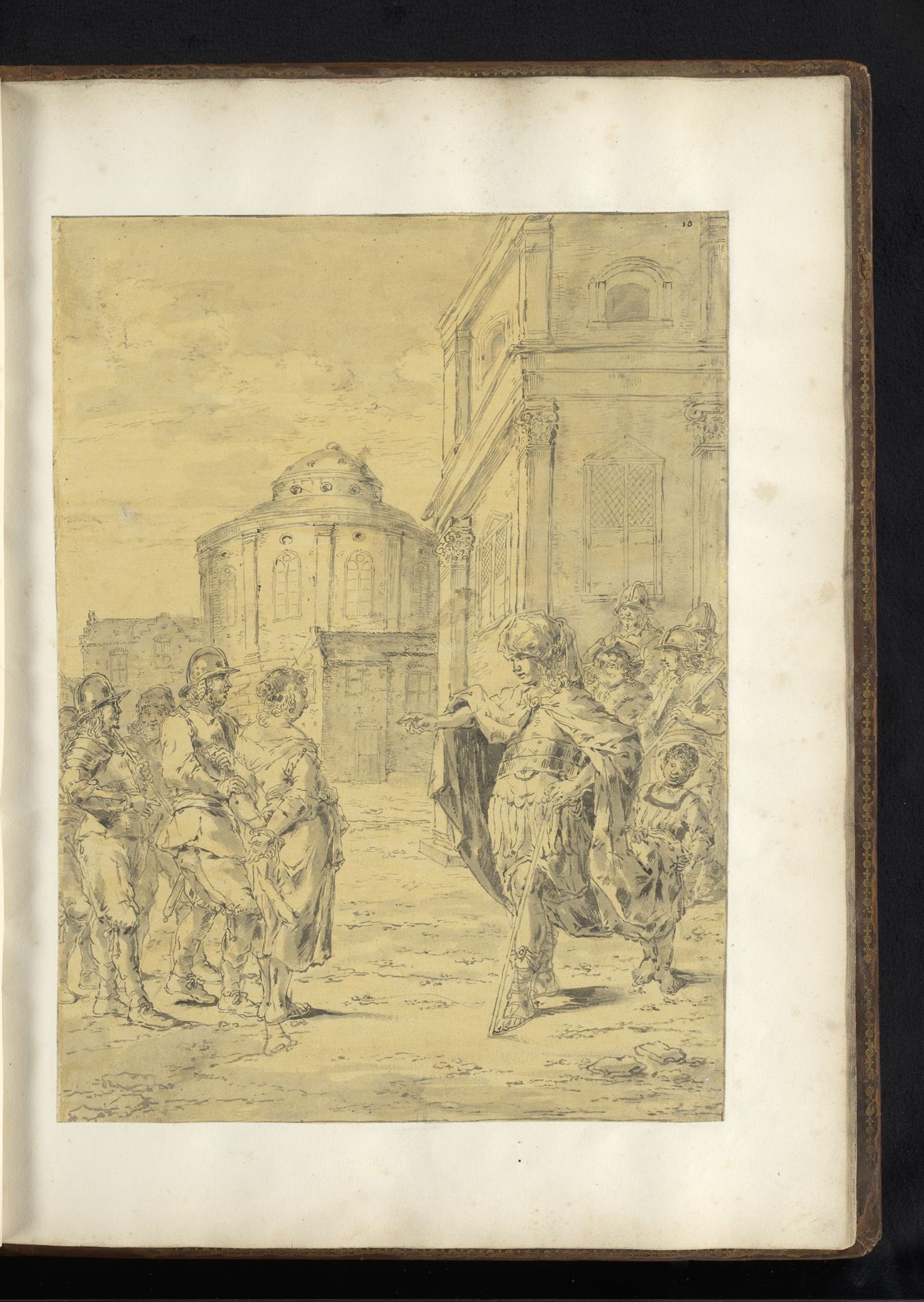
Leonaert Bramer rendered in ink Timoclea being brought before Alexander the Great. Alexander stands centrally, a semi-circular building looms in the background. Alexander's outstretched arm serves as a potent symbol here. Throughout art history, we see this gesture—the open hand, palm outward—used to signify power and control but also offering, or judgement. Consider, for instance, Roman emperors extending their hands in gestures of authority or benevolence. The open hand is a signifier passed down through the ages. The cultural memory embedded in gestures like this influences how we subconsciously perceive and interpret images. This connection to classical themes isn't linear. It echoes through time. These are images that resonate with a collective memory, surfacing repeatedly in various guises across epochs.
Timoclea wordt voor Alexander de Grote gebracht
c. 1655 - 1665

Leonaert Bramer
1596 - 1674Location
RijksmuseumArtwork details
- Medium
- drawing, paper, pencil
- Dimensions
- height 404 mm, width 296 mm
- Location
- Rijksmuseum
- Copyright
- Rijks Museum: Open Domain
Tags
drawing
narrative-art
baroque
landscape
figuration
paper
pencil
history-painting
Comments
Be the first to share your thoughts about this work.
About this artwork
Leonaert Bramer rendered in ink Timoclea being brought before Alexander the Great. Alexander stands centrally, a semi-circular building looms in the background. Alexander's outstretched arm serves as a potent symbol here. Throughout art history, we see this gesture—the open hand, palm outward—used to signify power and control but also offering, or judgement. Consider, for instance, Roman emperors extending their hands in gestures of authority or benevolence. The open hand is a signifier passed down through the ages. The cultural memory embedded in gestures like this influences how we subconsciously perceive and interpret images. This connection to classical themes isn't linear. It echoes through time. These are images that resonate with a collective memory, surfacing repeatedly in various guises across epochs.
Comments
Be the first to share your thoughts about this work.