1876 - 1885
Compote


Listen to curator's interpretation
Curatorial notes
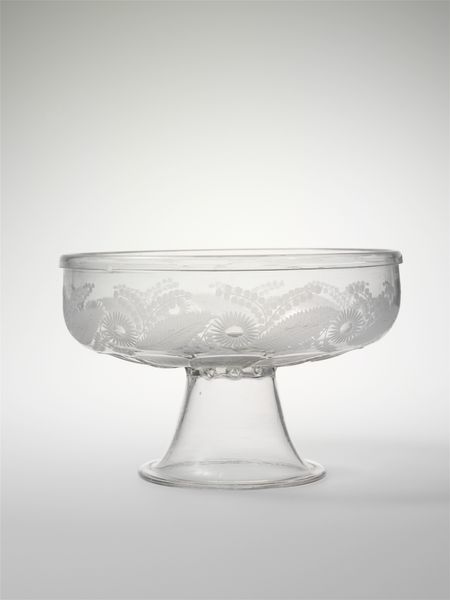
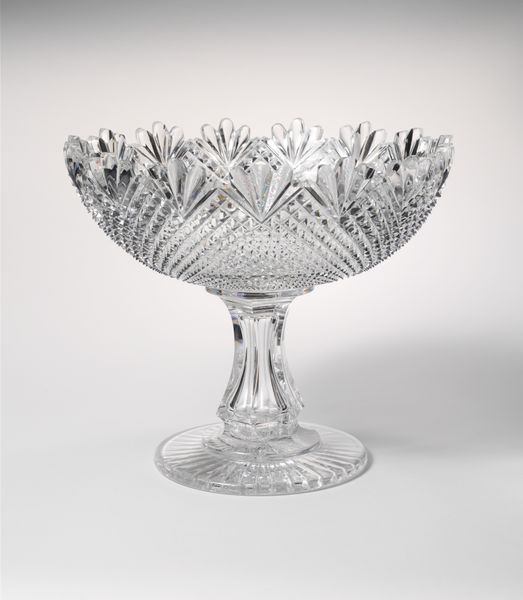
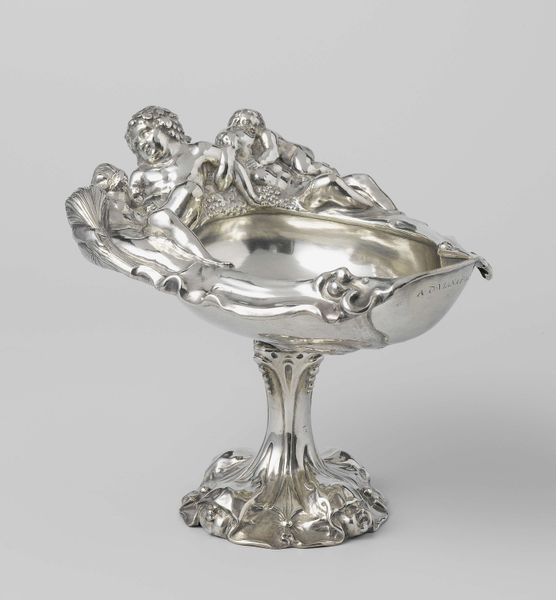
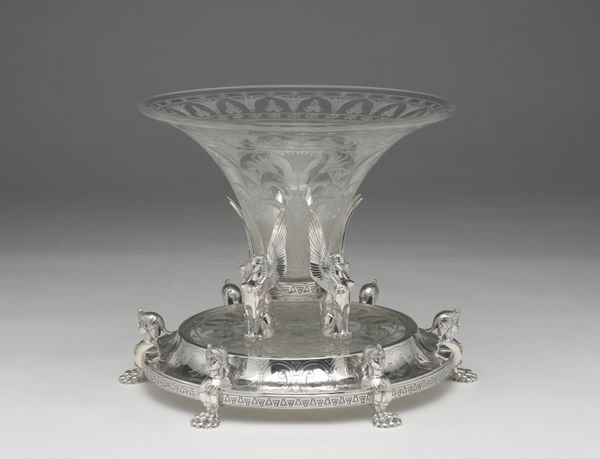
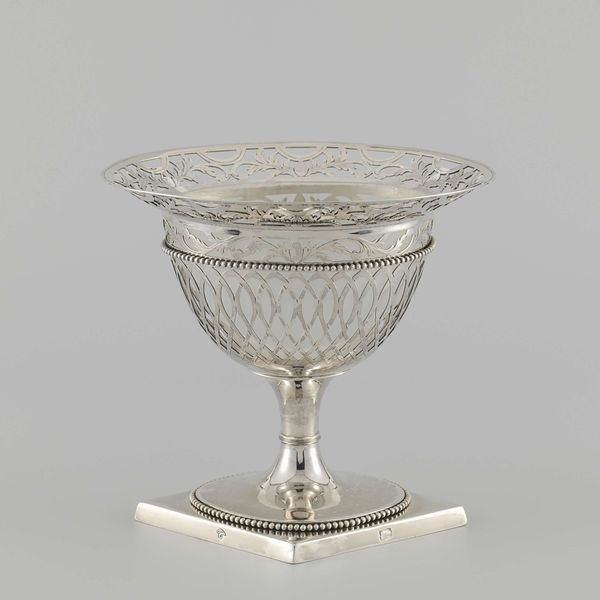
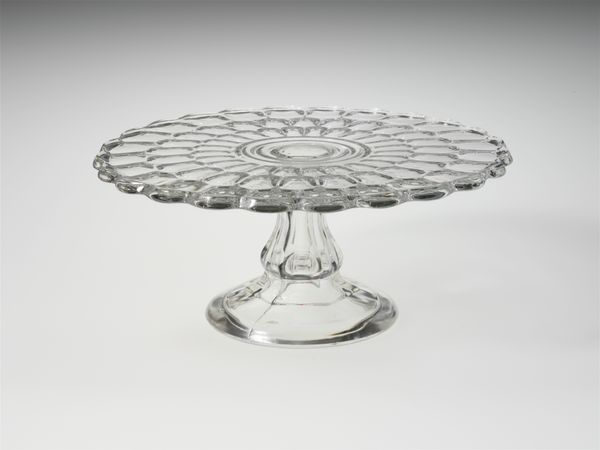
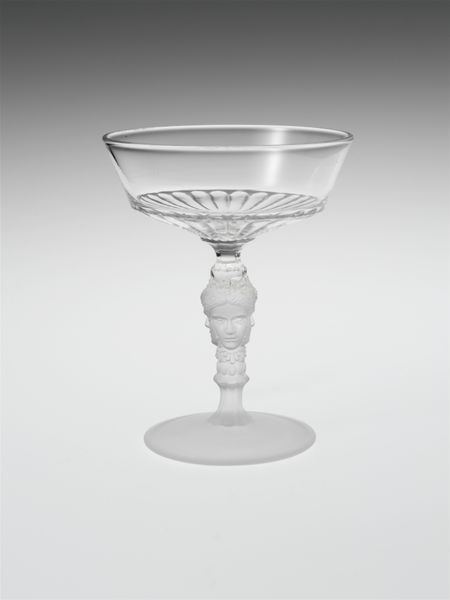
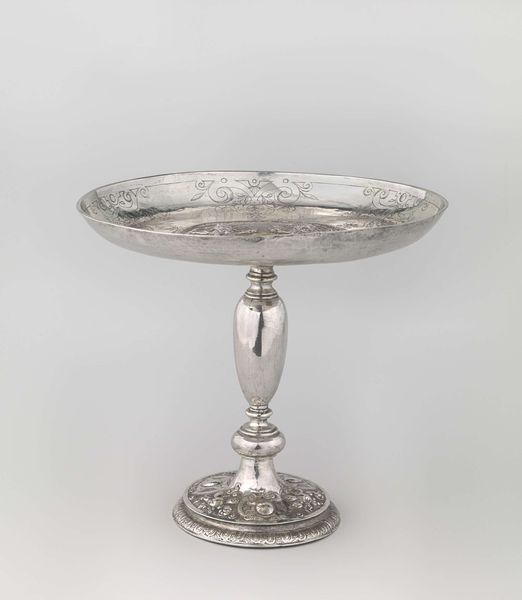
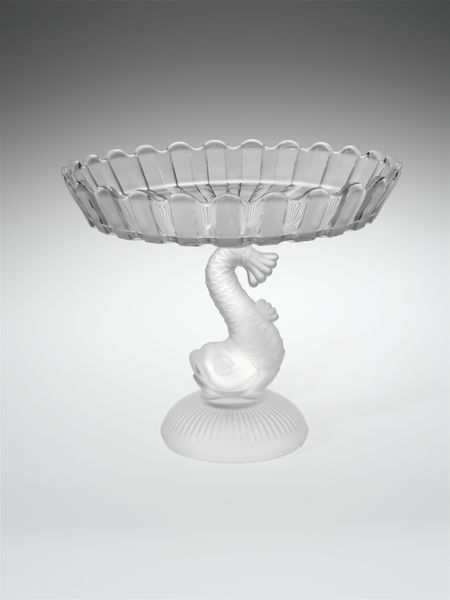
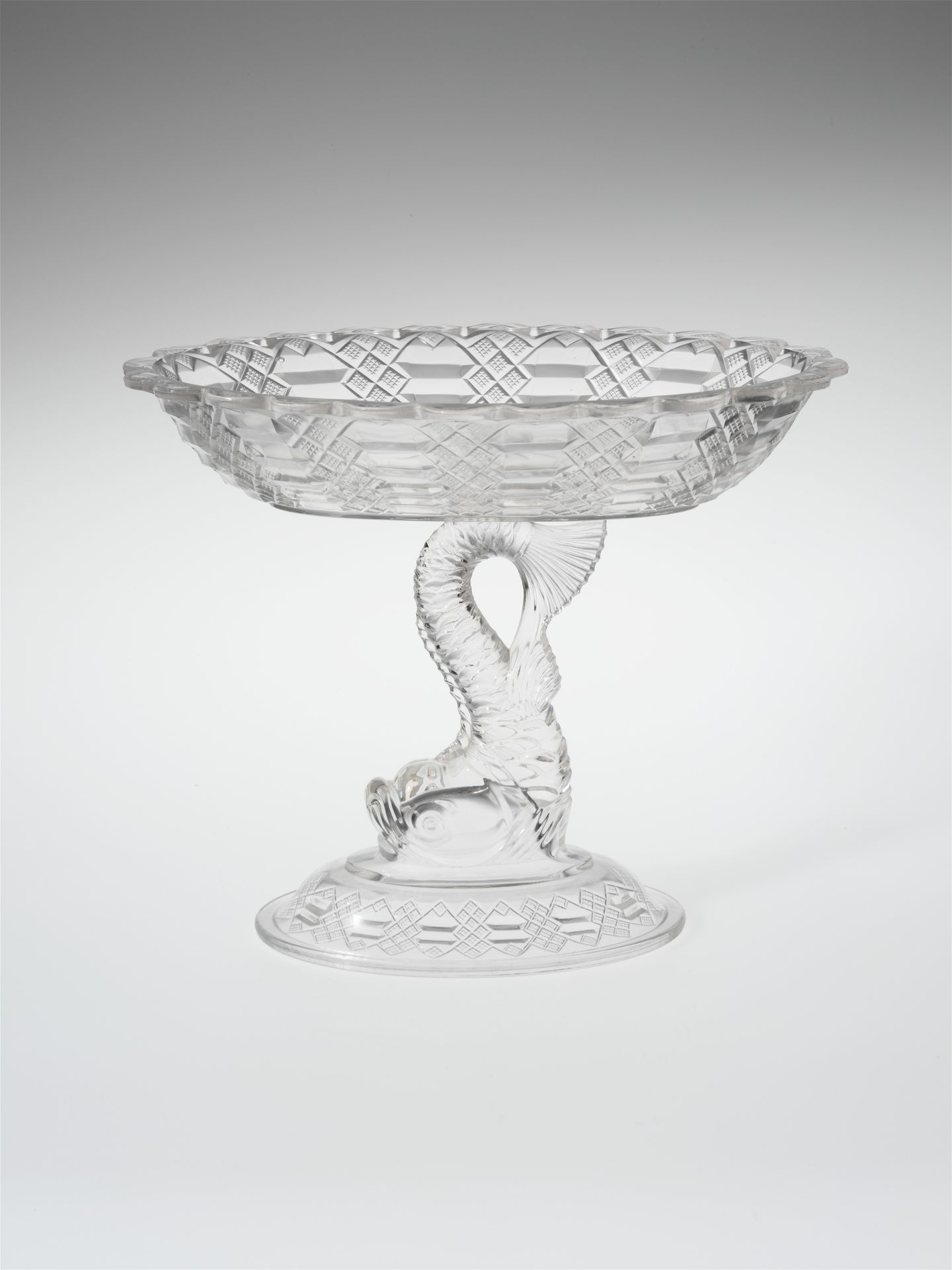
Editor: Here we have "Compote" created between 1876 and 1885, by Bryce Brothers. It's a glass sculpture, quite delicate and fantastical with the dolphin-shaped support. What catches your eye when you look at this? Curator: The dolphin immediately connects us to the classical world – think of Poseidon, of maritime power and myths of transformation. Glass, especially clear glass like this, often represents fragility, luxury, and even a kind of fleeting beauty. Doesn't this strike you as particularly interesting, considering how solid and enduring classical symbolism usually is? Editor: I see what you mean! The dolphin seems to hold a weightier cultural significance than the transparency of the glass implies. The intricate patterns also make it look more ornamental than functional. Curator: Exactly! Consider the late 19th century, where displays of wealth and refinement became paramount. Objects like this *compote* transcend their practical purpose. This object signifies something grander; social standing and an embrace of historical grandeur within domestic life. Editor: So it’s less about holding fruit and more about making a statement? A statement about the owner's aspirations? Curator: Precisely! It invites reflection upon the ambitions of a society reaching for status and permanence. It prompts a question of what it meant to create a kind of modern mythology through decorative arts. What would they choose to keep with them, from history and their ever evolving values? Editor: It’s fascinating how an everyday object like this can tell us so much about a specific period and culture. I will always look twice at decorative pieces from now on! Curator: And hopefully consider how these symbols still resonate today. They may be subtle, yet incredibly telling about where we find our inspiration.