About this artwork
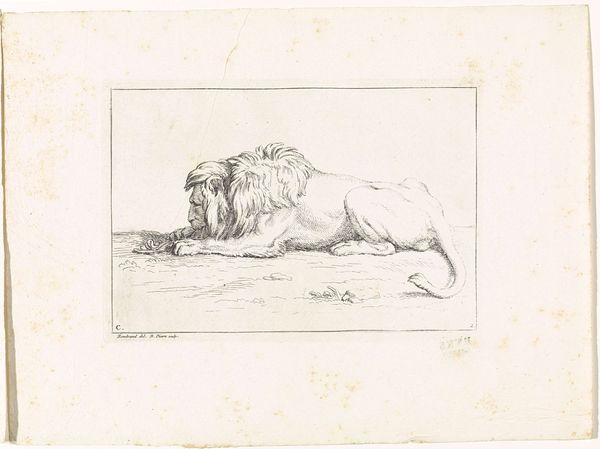
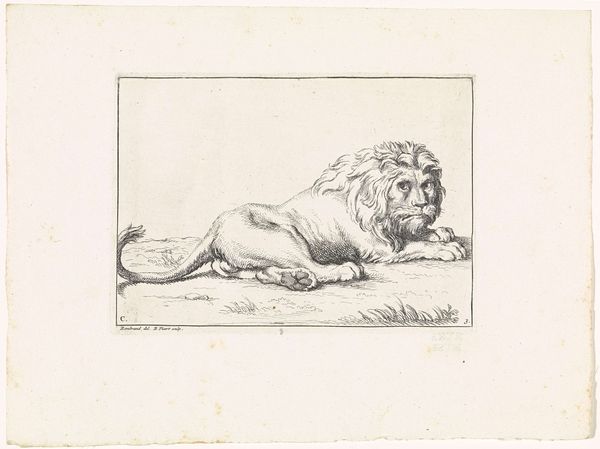
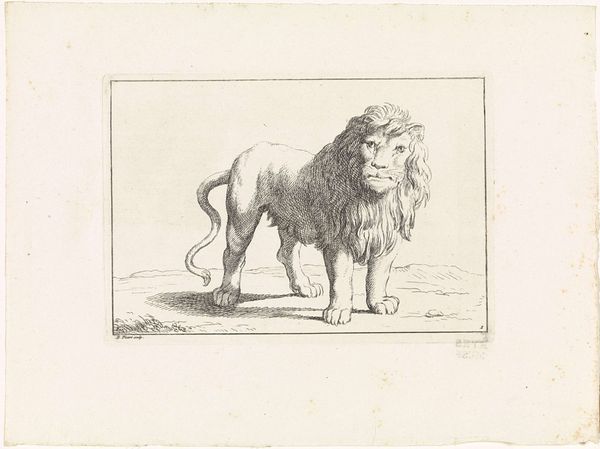
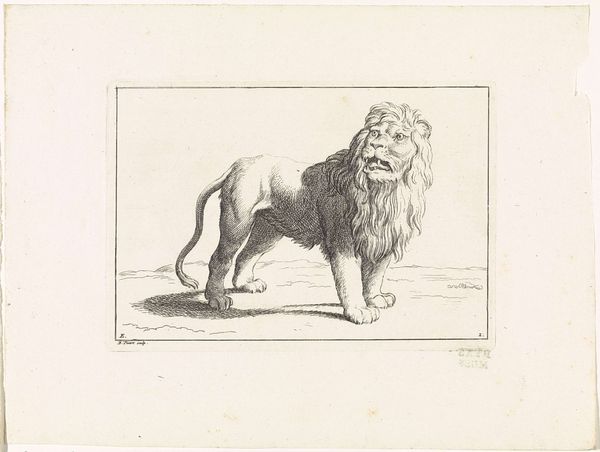
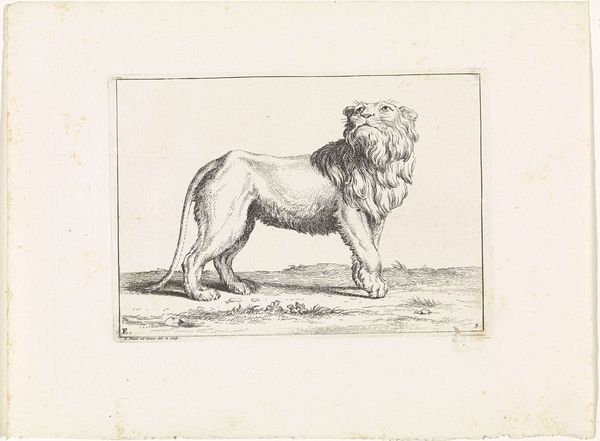
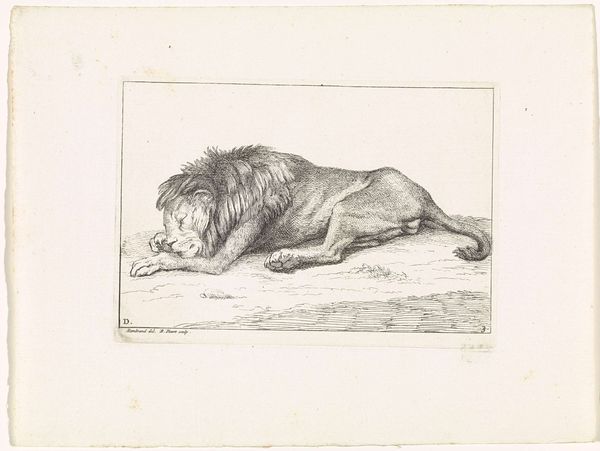
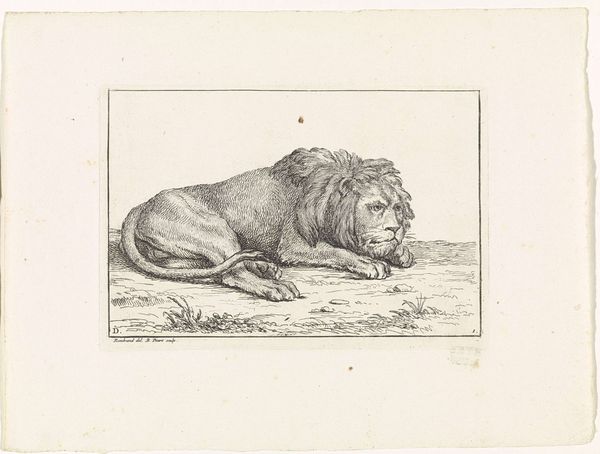
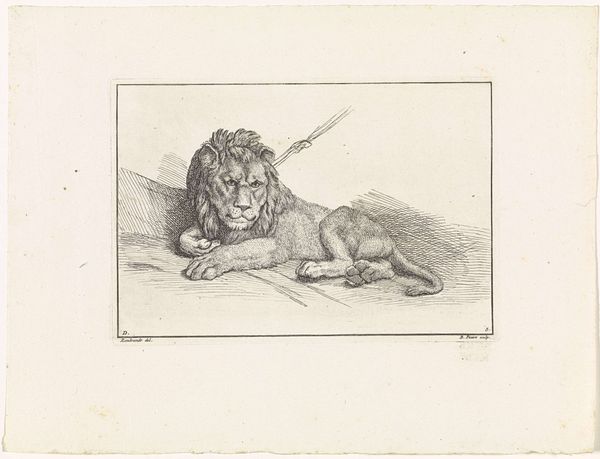
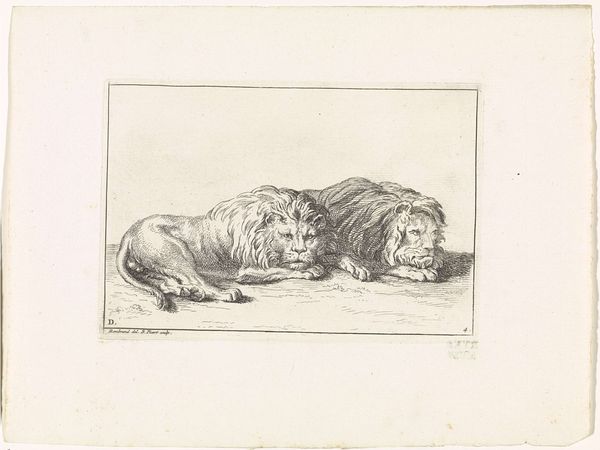
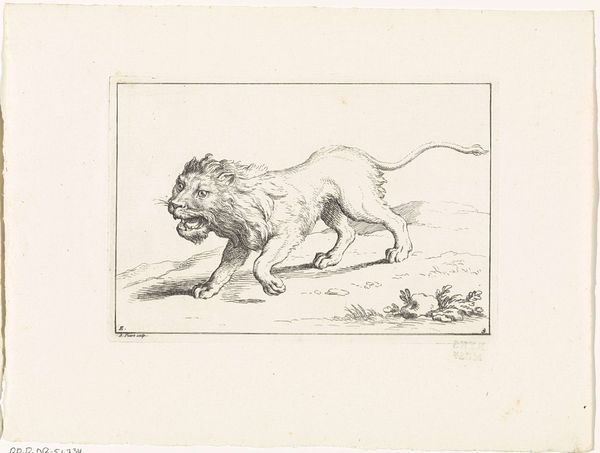
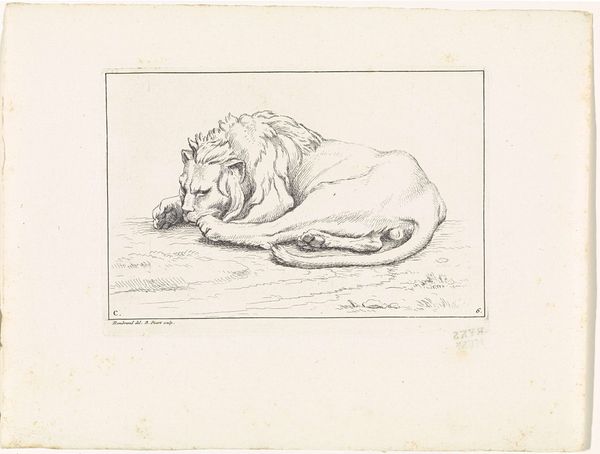
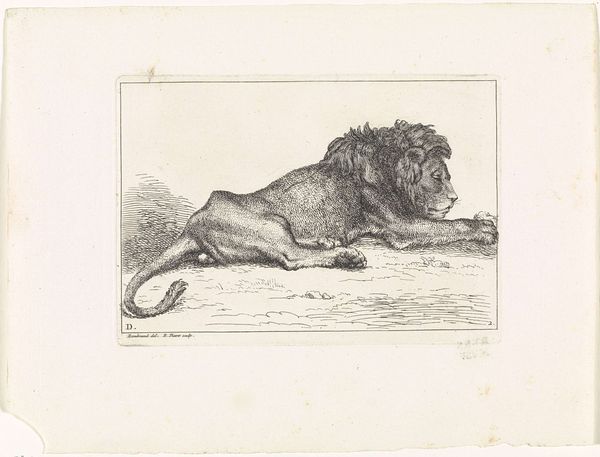
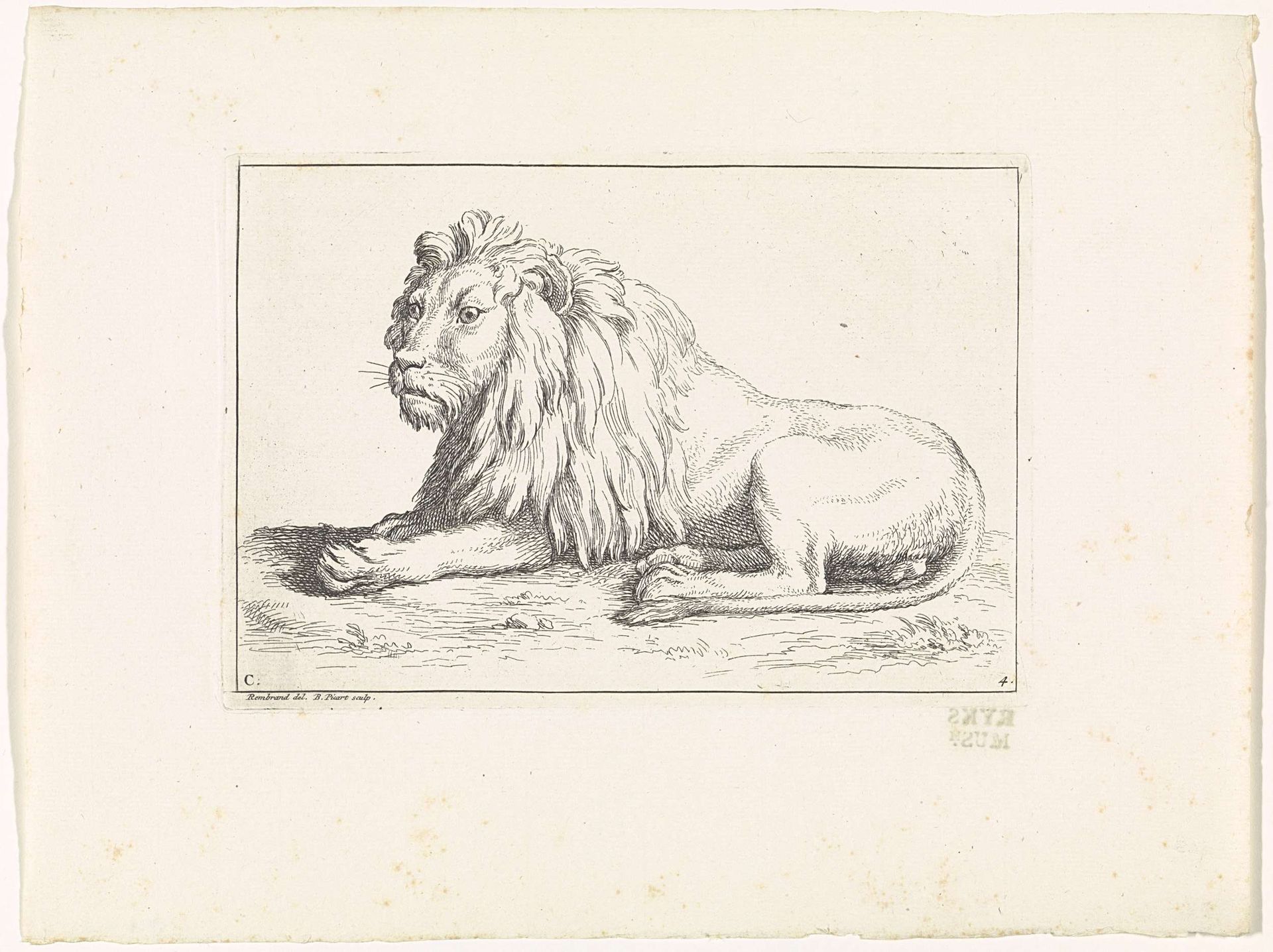
Editor: This is "Leeuw," a pen and ink drawing completed in 1729 by Bernard Picart, currently residing in the Rijksmuseum. What immediately grabs me is the lion's pose—relaxed, but still exuding power. The artist's delicate lines seem to capture that duality perfectly. How would you interpret the artistic elements at play in this drawing? Curator: Indeed, the artistry is evident in the interplay of line and form. Observe how Picart utilizes the varying densities of his linework. In areas denoting shadow, we find hatching, cross-hatching, adding depth. Conversely, the lighter regions of the lion, representing plane changes, are delicately articulated using a thinner line. Editor: So, the texture comes from the controlled application of ink rather than the lion itself? Curator: Precisely. The manipulation of light and shadow by Picart emphasizes form. It's also an interesting approach when thinking of texture and representation. Note, too, how the blank space of the paper actively participates, creating highlights and a sense of volume without literal depiction. Do you see how that technique adds dimensionality? Editor: I do! It’s like he’s sculpted the image with the ink. Also, considering it is a drawing of a lion, the frame appears unusually small. Curator: Good eye! The frame seems to compress the composition; does this affect the reading of the piece? Is the boundary there to isolate the subject, perhaps highlighting its ‘otherness’? It seems worth considering... Editor: It's fascinating to consider how the drawing is made up of simple lines. I also find your explanation about light manipulation and compression very insightful, because those were never obvious to me when I first encountered it. Curator: Likewise, contemplating the subtle intricacies within Picart’s "Leeuw" provides, in turn, new perspectives to interpreting formal decisions of this baroque work.

Artwork details
- Medium
- drawing, ink, engraving
- Dimensions
- height 120 mm, width 174 mm
- Location
- Rijksmuseum
- Copyright
- Rijks Museum: Open Domain
Tags
Comments
Share your thoughts
About this artwork
Editor: This is "Leeuw," a pen and ink drawing completed in 1729 by Bernard Picart, currently residing in the Rijksmuseum. What immediately grabs me is the lion's pose—relaxed, but still exuding power. The artist's delicate lines seem to capture that duality perfectly. How would you interpret the artistic elements at play in this drawing? Curator: Indeed, the artistry is evident in the interplay of line and form. Observe how Picart utilizes the varying densities of his linework. In areas denoting shadow, we find hatching, cross-hatching, adding depth. Conversely, the lighter regions of the lion, representing plane changes, are delicately articulated using a thinner line. Editor: So, the texture comes from the controlled application of ink rather than the lion itself? Curator: Precisely. The manipulation of light and shadow by Picart emphasizes form. It's also an interesting approach when thinking of texture and representation. Note, too, how the blank space of the paper actively participates, creating highlights and a sense of volume without literal depiction. Do you see how that technique adds dimensionality? Editor: I do! It’s like he’s sculpted the image with the ink. Also, considering it is a drawing of a lion, the frame appears unusually small. Curator: Good eye! The frame seems to compress the composition; does this affect the reading of the piece? Is the boundary there to isolate the subject, perhaps highlighting its ‘otherness’? It seems worth considering... Editor: It's fascinating to consider how the drawing is made up of simple lines. I also find your explanation about light manipulation and compression very insightful, because those were never obvious to me when I first encountered it. Curator: Likewise, contemplating the subtle intricacies within Picart’s "Leeuw" provides, in turn, new perspectives to interpreting formal decisions of this baroque work.
Comments
Share your thoughts