About this artwork
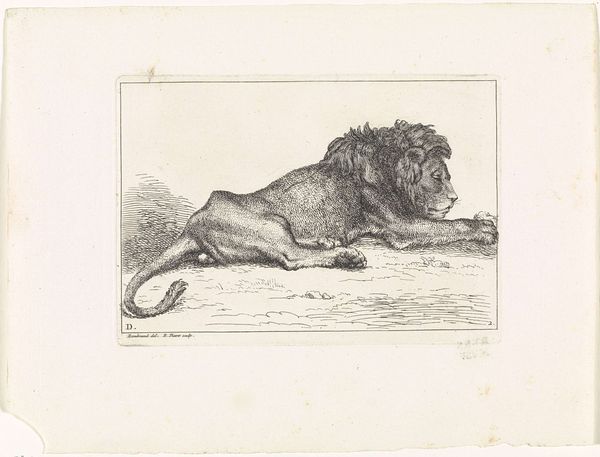
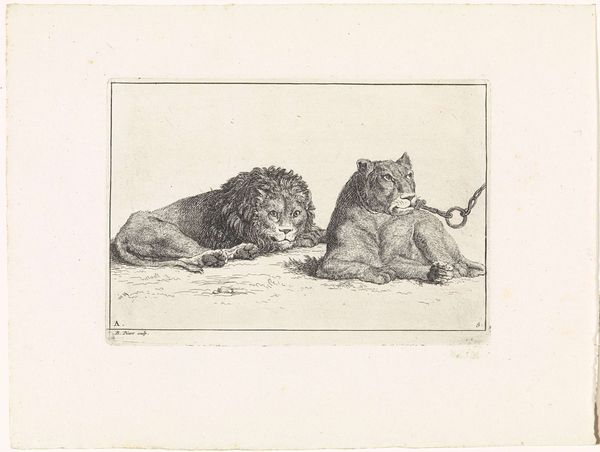
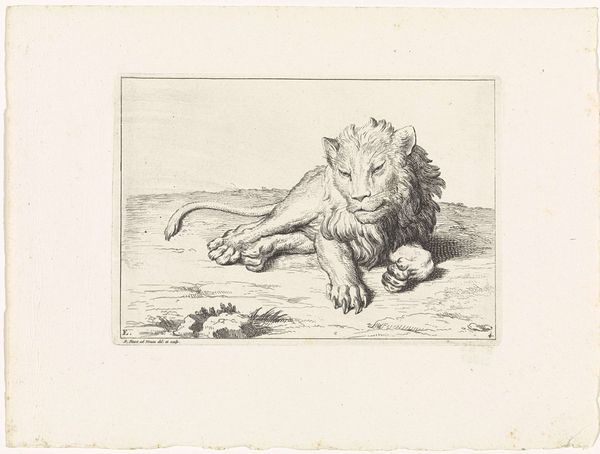
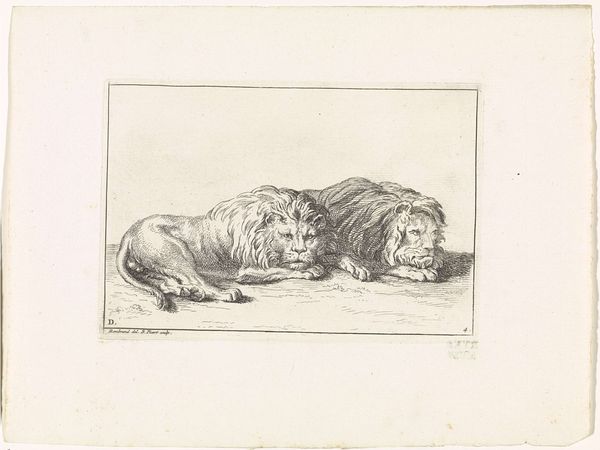
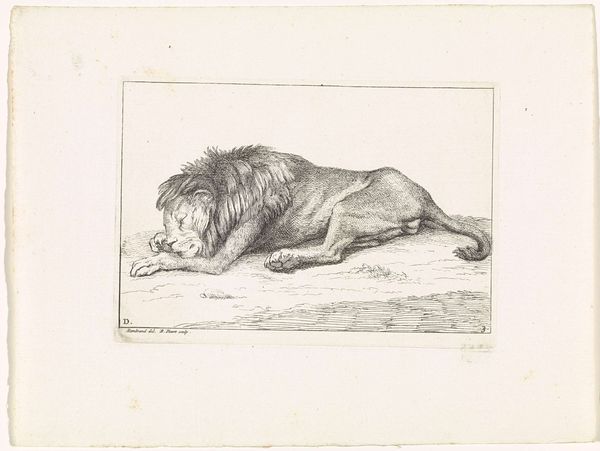
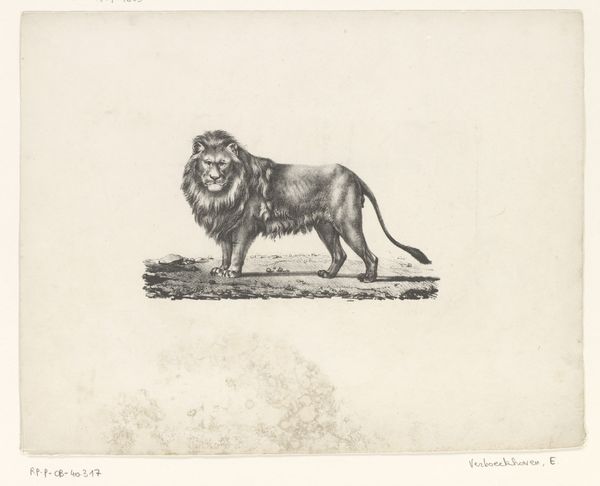
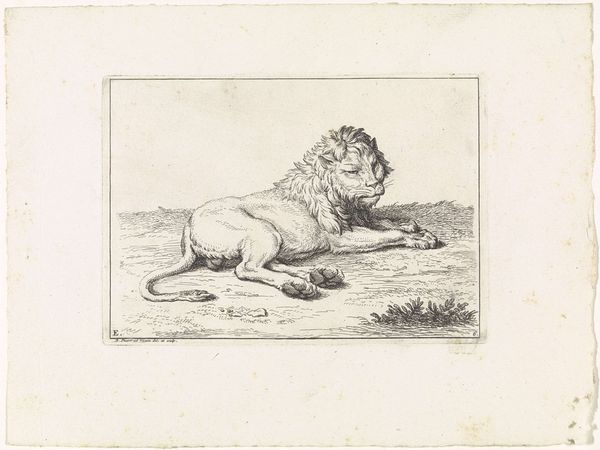
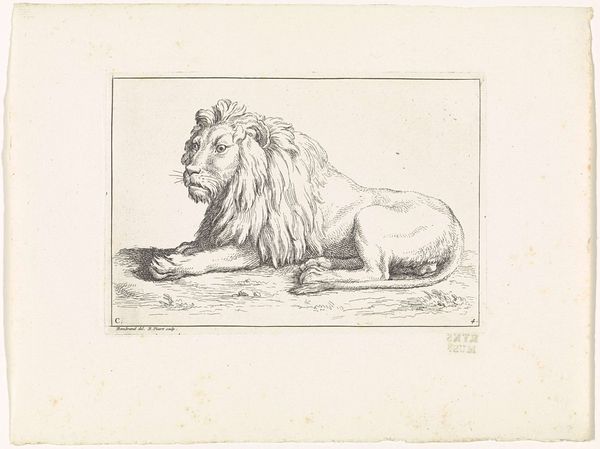
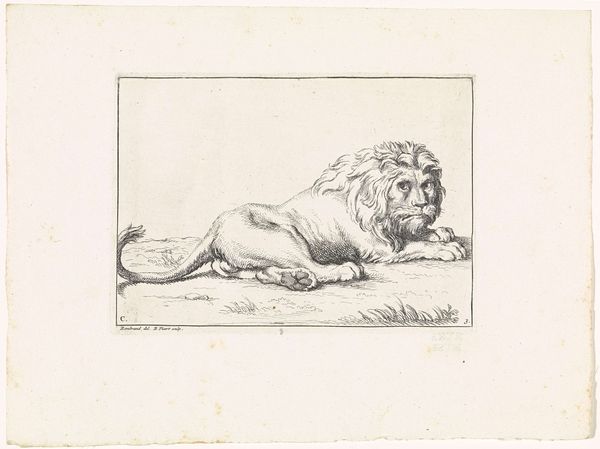
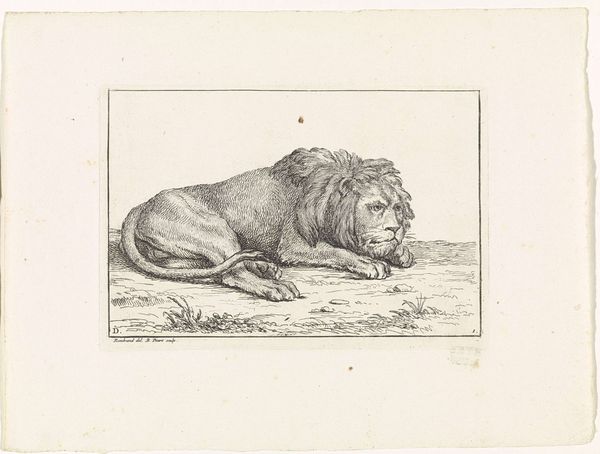
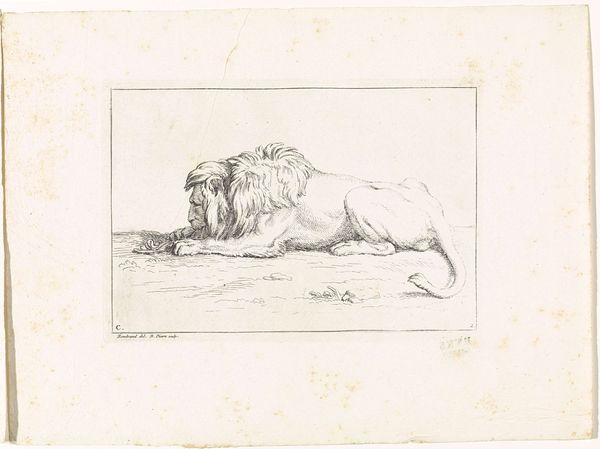
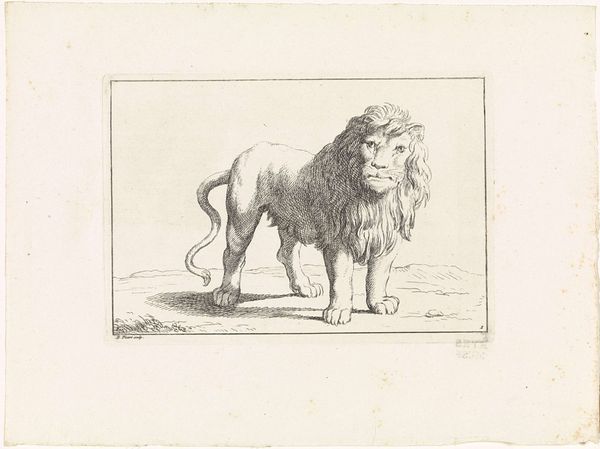
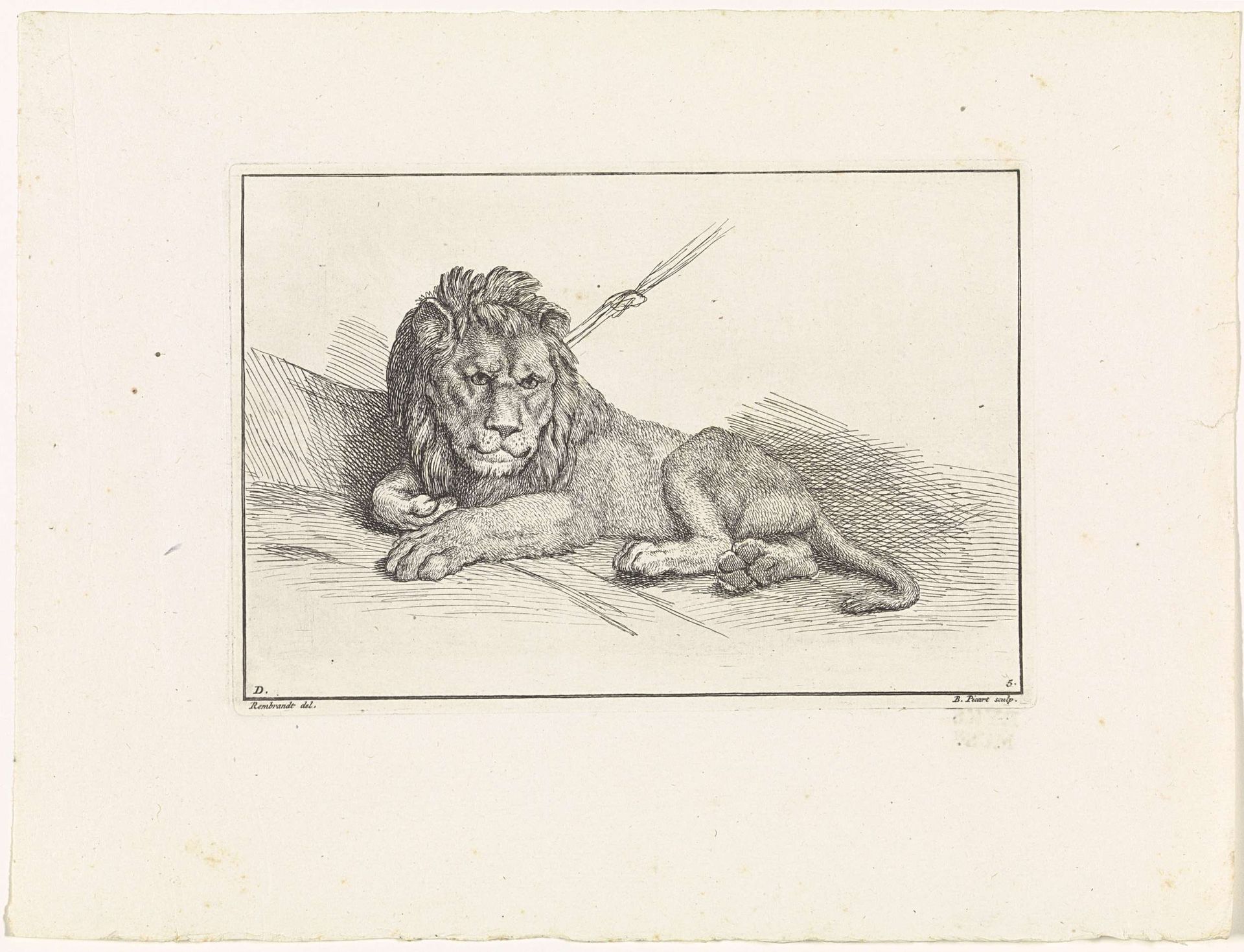
Bernard Picart created this etching of a lion restrained by a rope, now held at the Rijksmuseum, in the early 18th century. During this time, the display of exotic animals, like lions, was common among European elites, symbolizing power and dominion over the natural world. Picart's depiction invites us to consider the complex relationship between humans and animals, domination and subjugation. The lion, though a symbol of strength, is rendered docile, its gaze seemingly resigned. Is this a comment on colonial power? The image also resonates with contemporary discussions about animal rights and ethical treatment. The stark contrast between the lion’s inherent majesty and its bound condition evokes feelings of empathy and discomfort. Through this seemingly simple image, Picart encourages us to reflect on our own roles in systems of control.

Artwork details
- Medium
- drawing, etching, ink, engraving
- Dimensions
- height 120 mm, width 175 mm
- Location
- Rijksmuseum
- Copyright
- Rijks Museum: Open Domain
Tags
Comments
Share your thoughts
About this artwork
Bernard Picart created this etching of a lion restrained by a rope, now held at the Rijksmuseum, in the early 18th century. During this time, the display of exotic animals, like lions, was common among European elites, symbolizing power and dominion over the natural world. Picart's depiction invites us to consider the complex relationship between humans and animals, domination and subjugation. The lion, though a symbol of strength, is rendered docile, its gaze seemingly resigned. Is this a comment on colonial power? The image also resonates with contemporary discussions about animal rights and ethical treatment. The stark contrast between the lion’s inherent majesty and its bound condition evokes feelings of empathy and discomfort. Through this seemingly simple image, Picart encourages us to reflect on our own roles in systems of control.
Comments
Share your thoughts