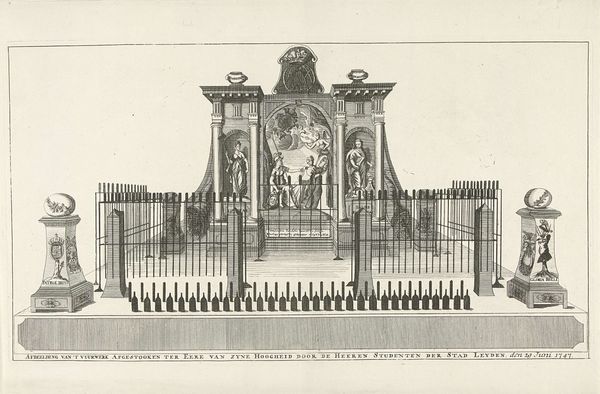
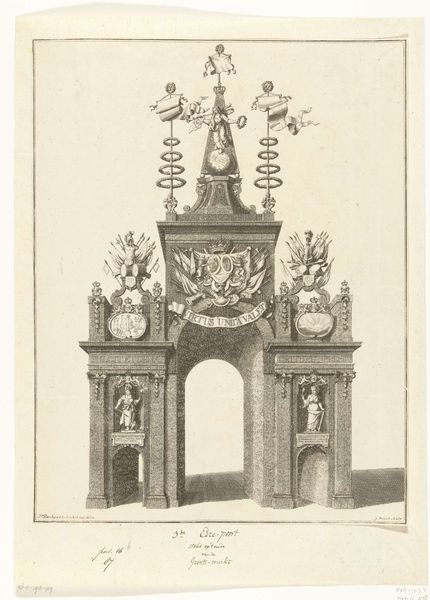
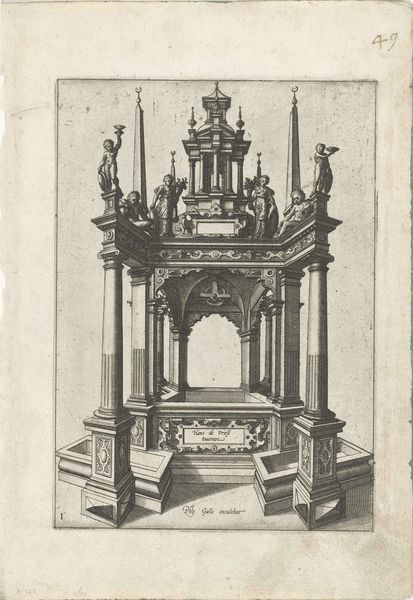
Bouwwerk voor het vuurwerk op de Hofvijver ter ere van de kroning van keizer Frans I Stefan, 1746 1746 - 1747
0:00
0:00

jancasparphilips
Rijksmuseum
print, engraving, architecture
#
baroque
# print
#
old engraving style
#
archive photography
#
historical photography
#
cityscape
#
engraving
#
architecture
Dimensions: height 398 mm, width 273 mm
Copyright: Rijks Museum: Open Domain
This print by Jan Caspar Philips depicts a temporary structure built for a fireworks display on the Hofvijver lake in The Hague, Netherlands, in 1746. It was designed to celebrate the coronation of Emperor Francis I. The print offers a glimpse into the elaborate public rituals used to solidify political power in the 18th century. The architecture combines classical elements with overt displays of imperial authority, like the double-headed eagle at the top. These temporary structures served to impress the public. The fireworks, as ephemeral displays of technical mastery and artistry, aimed to inspire awe. Prints like this played a crucial role in disseminating images of power and constructing a shared visual culture. Understanding such images requires looking into archival sources, such as city records and personal diaries. These help us understand the social function and political meaning of art in its original context.
Comments
No comments
Be the first to comment and join the conversation on the ultimate creative platform.
 Collect
 React
React Comment
More like this