About this artwork
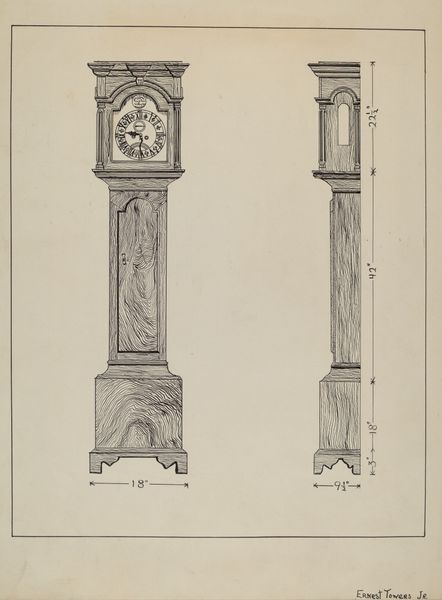
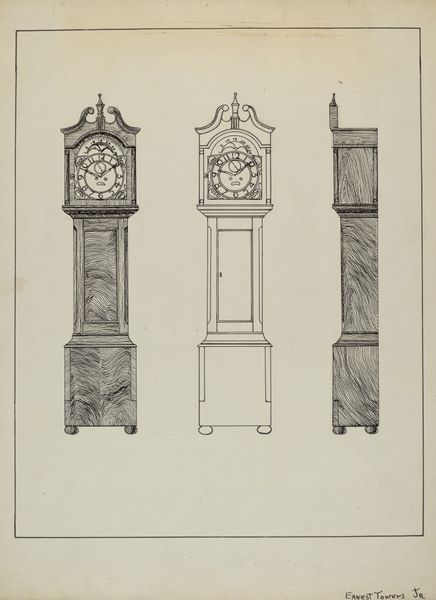
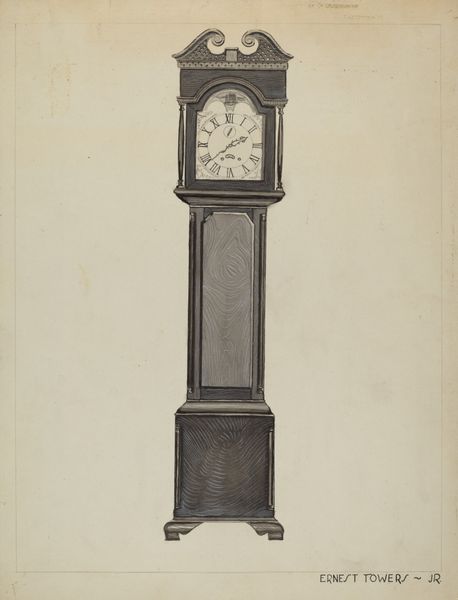
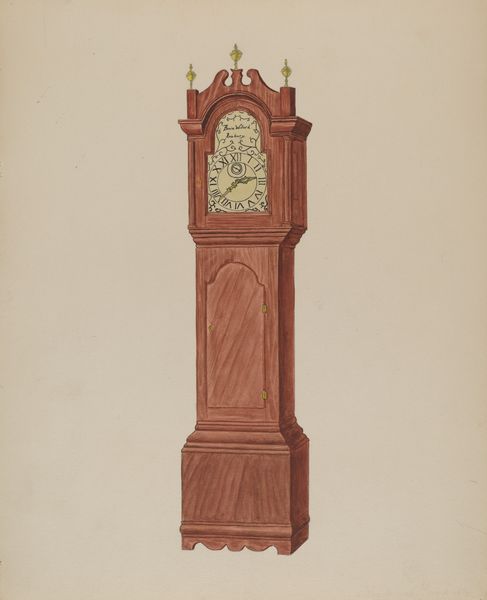
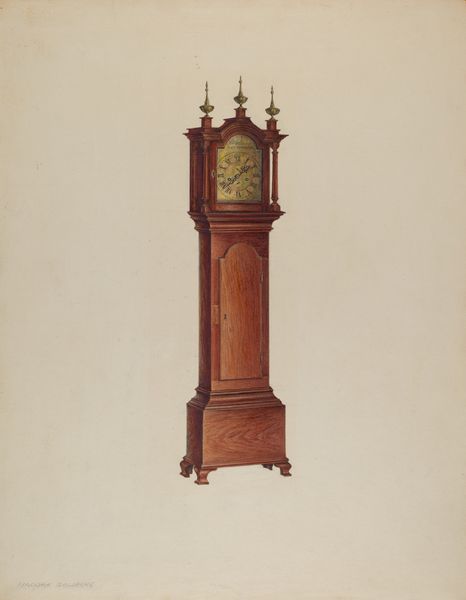
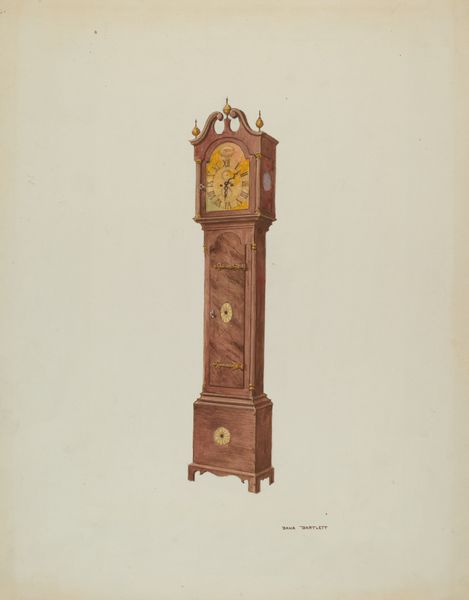
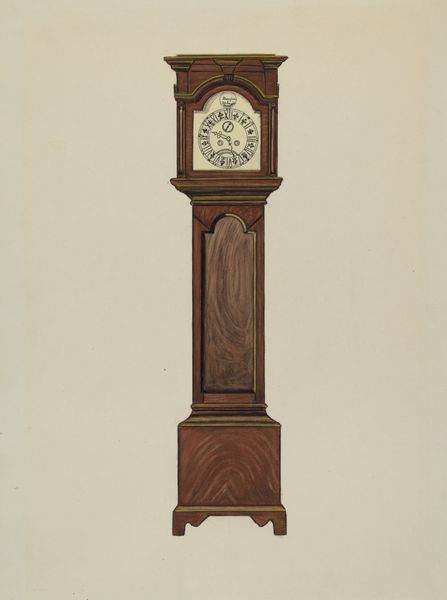
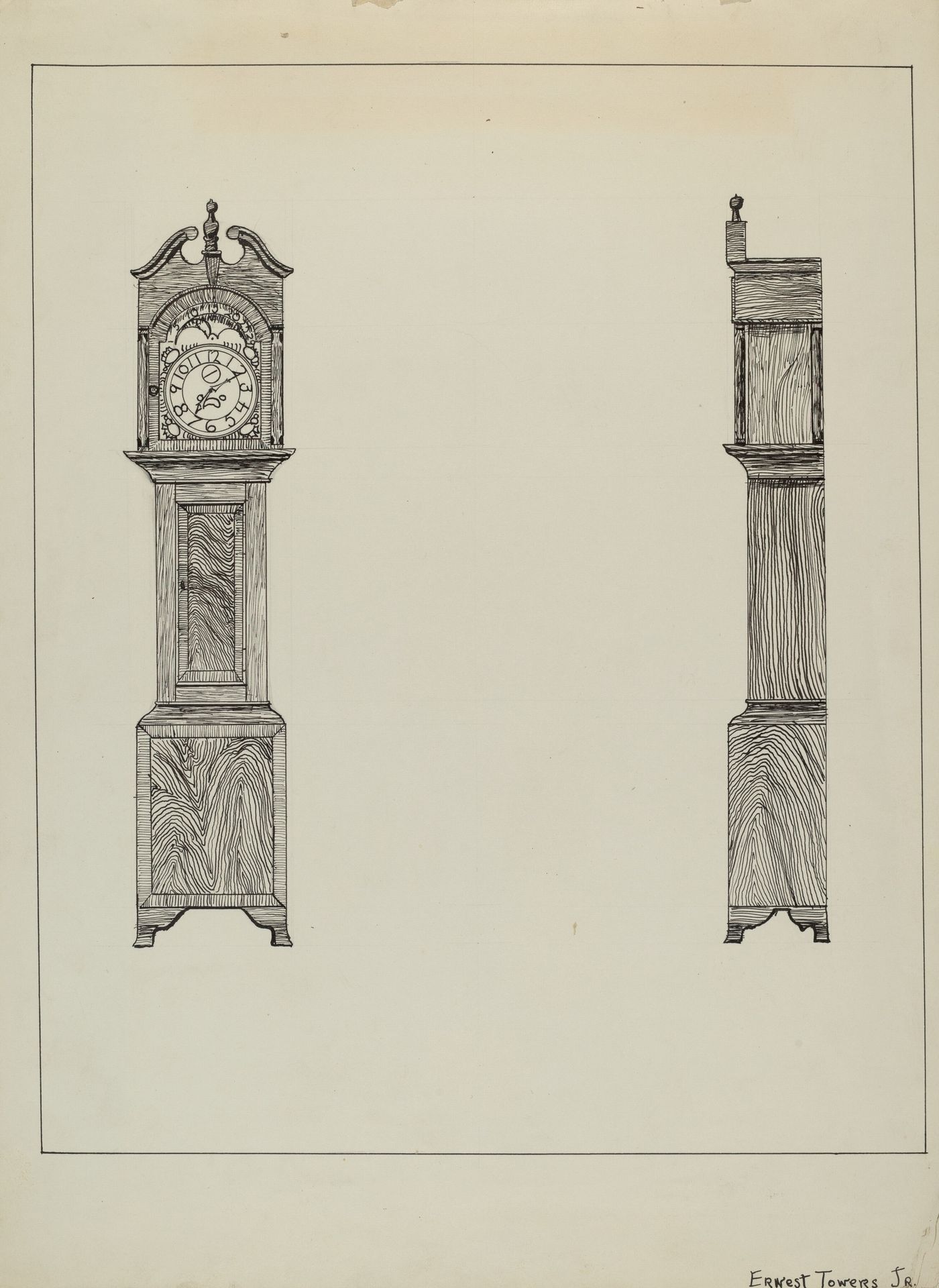
Ernest A. Towers, Jr. made this drawing of a grandfather clock, we don't know when, but look at the lines! It's as if the ink is trying to imitate the very grain of the wood it depicts. Notice how the wood grain morphs and changes in the drawing. There's something so satisfying about how the pen traces those swirling patterns. It’s not just a picture of a clock; it’s a playful exploration of form through the physical act of drawing. The artist seems to be thinking, “How can I make this flat surface feel like it has depth, texture, and time itself?” The way those lines wiggle and curve, it reminds me of some of the graphic explorations by artists like Alfred Jarry. He was a bit of a weirdo, but his approach opened doors to seeing the world in totally new ways. Towers work is a reminder that art isn’t about perfection, it’s about embracing the quirks and the unexpected turns in the creative process.
Grandfather Clock
c. 1936


Artwork details
- Medium
- drawing
- Dimensions
- overall: 35.8 x 26.3 cm (14 1/8 x 10 3/8 in.) Original IAD Object: 89 1/2"; 18 3/4"wide; 10"deep
- Copyright
- National Gallery of Art: CC0 1.0
Tags
Comments
Share your thoughts
About this artwork
Ernest A. Towers, Jr. made this drawing of a grandfather clock, we don't know when, but look at the lines! It's as if the ink is trying to imitate the very grain of the wood it depicts. Notice how the wood grain morphs and changes in the drawing. There's something so satisfying about how the pen traces those swirling patterns. It’s not just a picture of a clock; it’s a playful exploration of form through the physical act of drawing. The artist seems to be thinking, “How can I make this flat surface feel like it has depth, texture, and time itself?” The way those lines wiggle and curve, it reminds me of some of the graphic explorations by artists like Alfred Jarry. He was a bit of a weirdo, but his approach opened doors to seeing the world in totally new ways. Towers work is a reminder that art isn’t about perfection, it’s about embracing the quirks and the unexpected turns in the creative process.
Comments
Share your thoughts