About this artwork
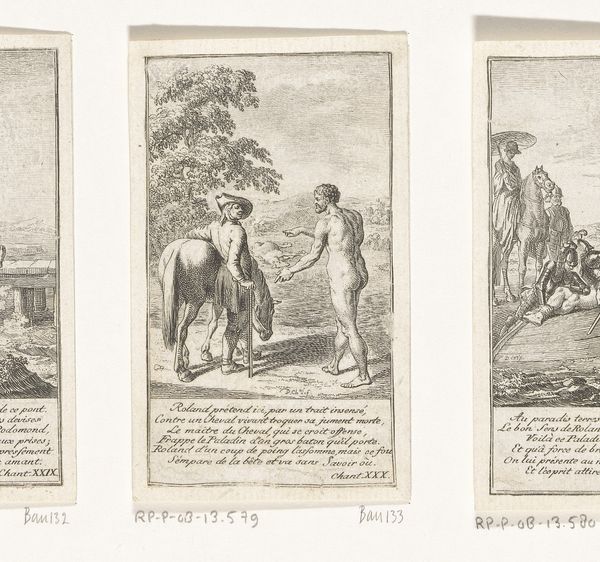
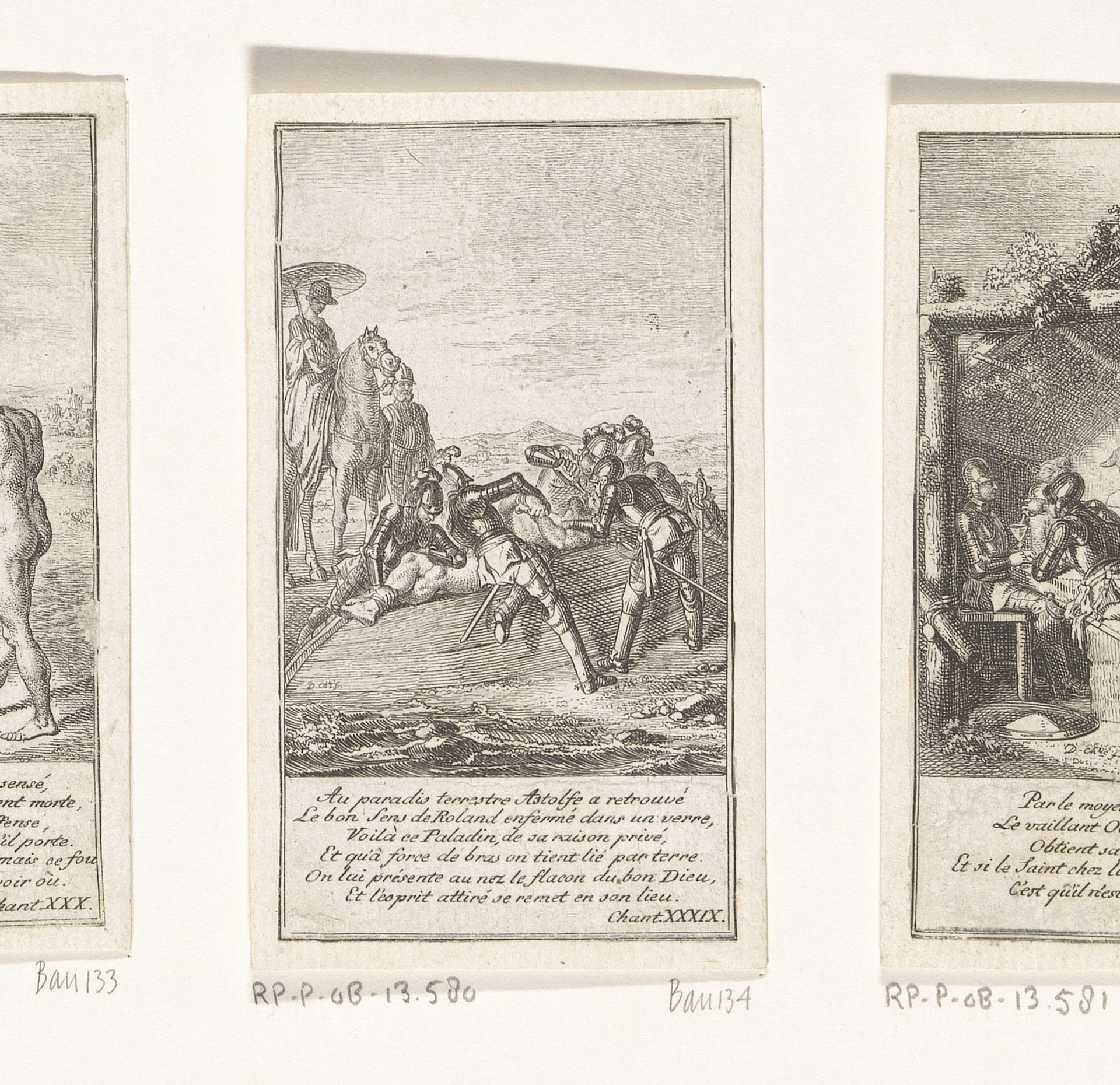
Daniel Nikolaus Chodowiecki created this etching, "Ariosto weer bij zinnen gebracht", illustrating a scene of madness and restoration. The central figures struggle, but it is the glass vial presented to Roland's nose that carries the most symbolic weight. This vial evokes the ancient motif of the vessel as a container of vital essence, a theme echoing through various cultural expressions. Consider the Greek myth of Pandora's box, or the Christian imagery of the Holy Grail – each a vessel holding profound power. Here, the vial contains Roland's sanity, presenting a potent image of psychological fragility and recovery. The act of restoring one's senses through an external object suggests a deeper cultural anxiety about the self. Is our reason something intrinsic, or can it be influenced, even restored, by external forces? This image, with its roots in classical and religious symbolism, invites us to reflect on the delicate balance between our inner selves and the world around us. The cyclical nature of madness and recovery reminds us that these themes continuously resurface, shaped by the anxieties and hopes of each new era.
Ariosto weer bij zinnen gebracht
1771

Daniel Nikolaus Chodowiecki
1726 - 1801Location
RijksmuseumArtwork details
- Dimensions
- height 95 mm, width 56 mm
- Location
- Rijksmuseum
- Copyright
- Rijks Museum: Open Domain
Comments
Share your thoughts
About this artwork
Daniel Nikolaus Chodowiecki created this etching, "Ariosto weer bij zinnen gebracht", illustrating a scene of madness and restoration. The central figures struggle, but it is the glass vial presented to Roland's nose that carries the most symbolic weight. This vial evokes the ancient motif of the vessel as a container of vital essence, a theme echoing through various cultural expressions. Consider the Greek myth of Pandora's box, or the Christian imagery of the Holy Grail – each a vessel holding profound power. Here, the vial contains Roland's sanity, presenting a potent image of psychological fragility and recovery. The act of restoring one's senses through an external object suggests a deeper cultural anxiety about the self. Is our reason something intrinsic, or can it be influenced, even restored, by external forces? This image, with its roots in classical and religious symbolism, invites us to reflect on the delicate balance between our inner selves and the world around us. The cyclical nature of madness and recovery reminds us that these themes continuously resurface, shaped by the anxieties and hopes of each new era.
Comments
Share your thoughts