About this artwork
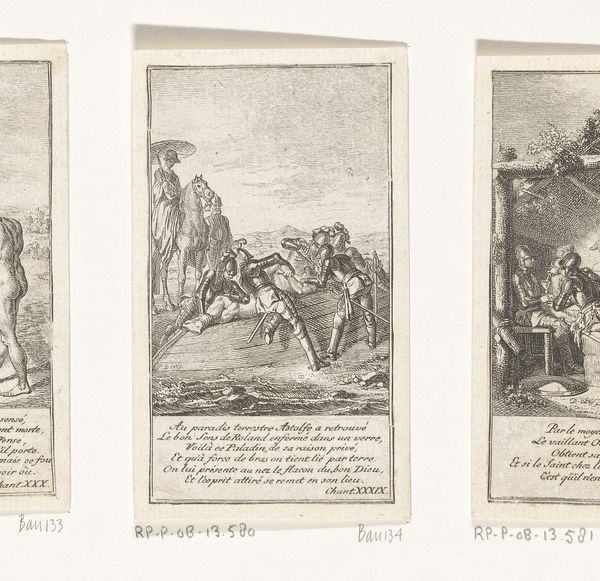
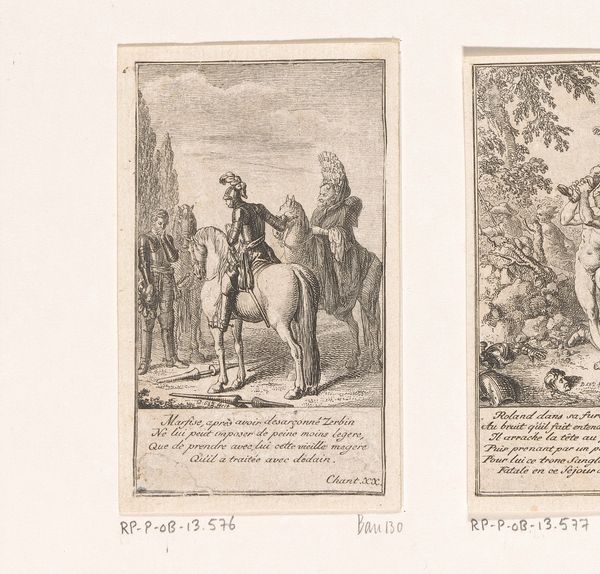
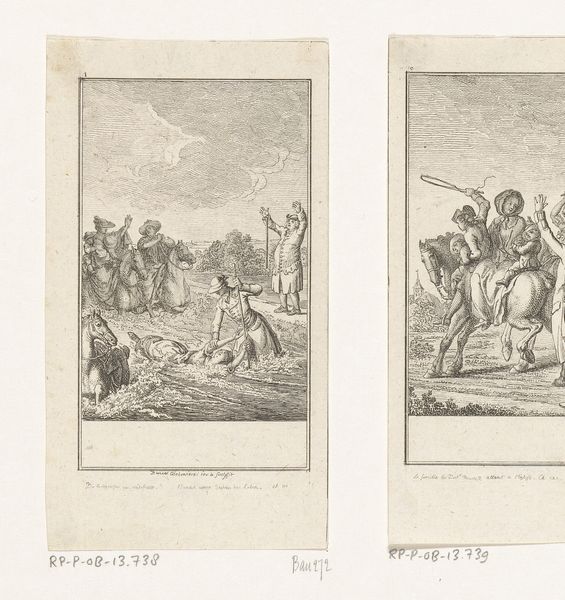
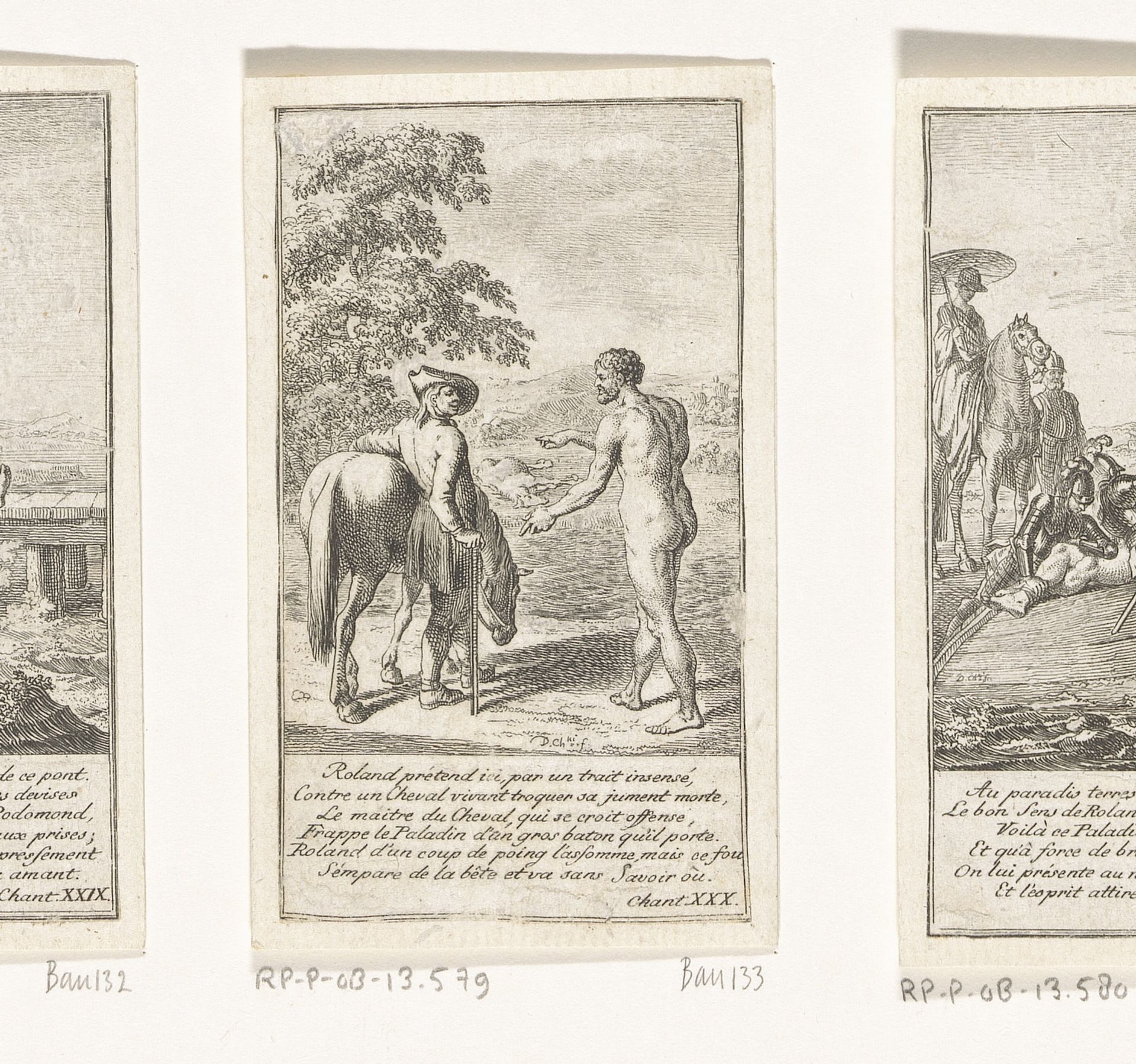
Daniel Nikolaus Chodowiecki created this etching, “Ariosto probeert zijn paard te ruilen,” sometime in the 18th century. A clothed man is seen attempting to trade his horse with a nude man. The horse, an ancient symbol of strength and nobility, is here juxtaposed with the vulnerability of the naked figure. Nudity in art, dating back to antiquity, often represents truth, innocence, or a return to nature. Consider, for example, the classical sculptures of antiquity, where nudity embodies idealized forms and moral virtues. Here, the contrast creates a psychological tension; the clothed man's attempt to barter with the nude man hints at underlying themes of deceit and exploitation. Such scenes evoke a sense of primal exchange. These images echo through time, resurfacing in various forms, each iteration colored by its own historical and cultural nuances. In each appearance, they tap into our collective memory, reminding us of the ongoing interplay between civilization and our most basic human drives.
Ariosto probeert zijn paard te ruilen
1771

Daniel Nikolaus Chodowiecki
1726 - 1801Location
RijksmuseumArtwork details
- Dimensions
- height 93 mm, width 56 mm
- Location
- Rijksmuseum
- Copyright
- Rijks Museum: Open Domain
Comments
Share your thoughts
About this artwork
Daniel Nikolaus Chodowiecki created this etching, “Ariosto probeert zijn paard te ruilen,” sometime in the 18th century. A clothed man is seen attempting to trade his horse with a nude man. The horse, an ancient symbol of strength and nobility, is here juxtaposed with the vulnerability of the naked figure. Nudity in art, dating back to antiquity, often represents truth, innocence, or a return to nature. Consider, for example, the classical sculptures of antiquity, where nudity embodies idealized forms and moral virtues. Here, the contrast creates a psychological tension; the clothed man's attempt to barter with the nude man hints at underlying themes of deceit and exploitation. Such scenes evoke a sense of primal exchange. These images echo through time, resurfacing in various forms, each iteration colored by its own historical and cultural nuances. In each appearance, they tap into our collective memory, reminding us of the ongoing interplay between civilization and our most basic human drives.
Comments
Share your thoughts