c. 1936
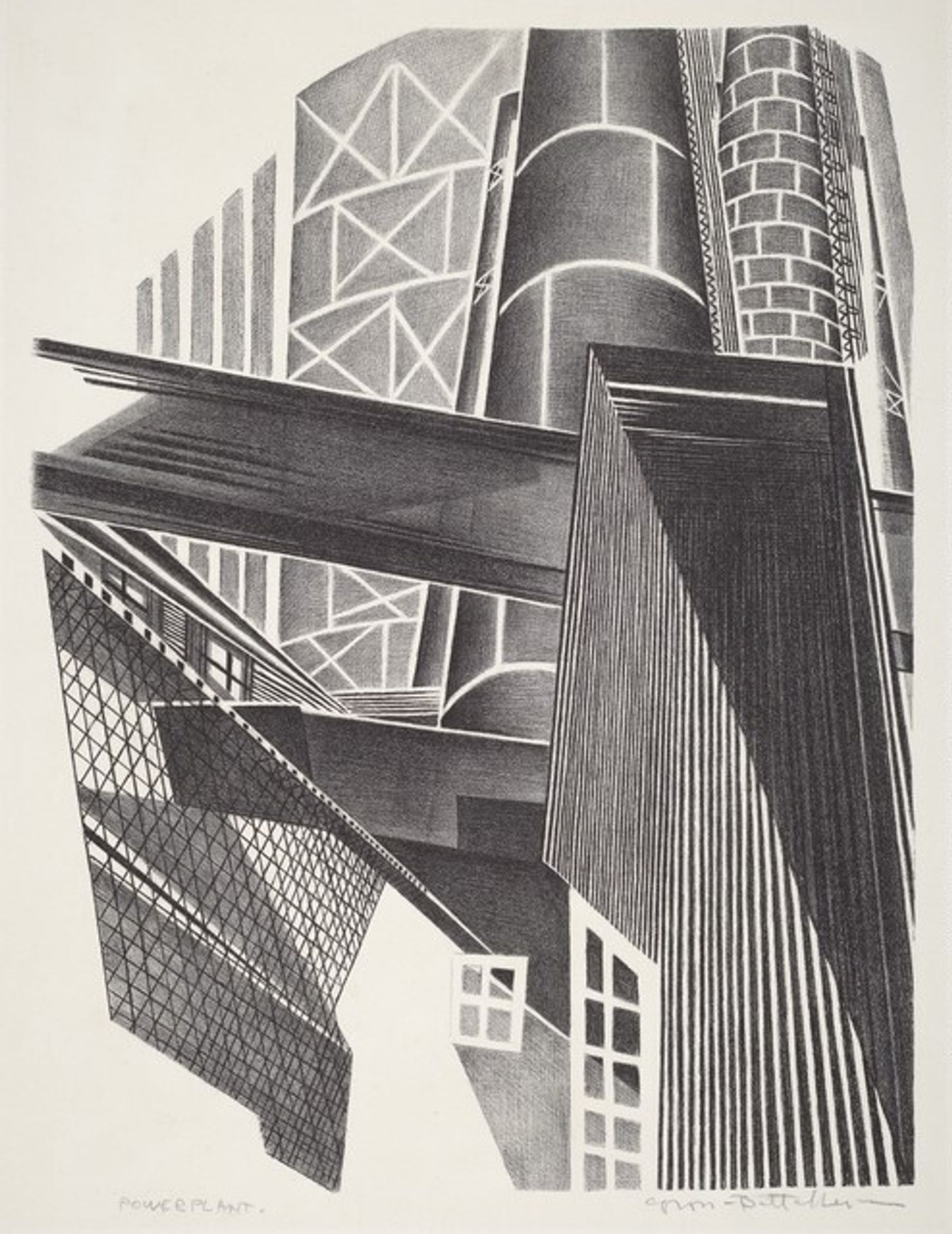
Powerplant


Listen to curator's interpretation
Curatorial notes
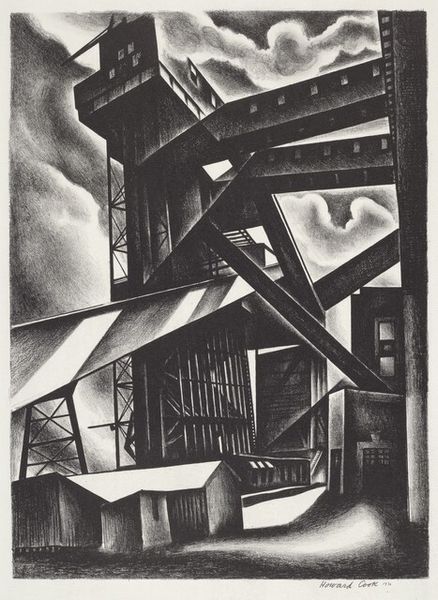
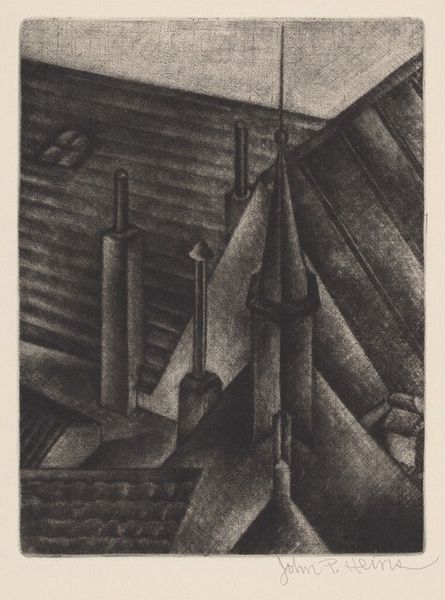
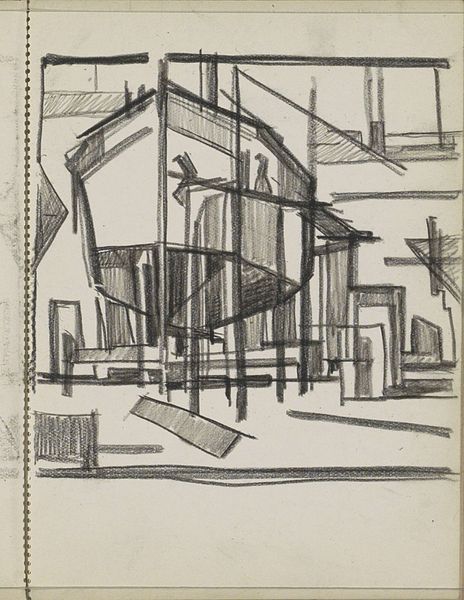
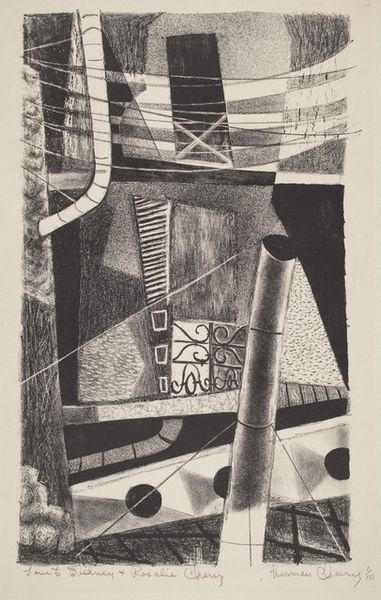
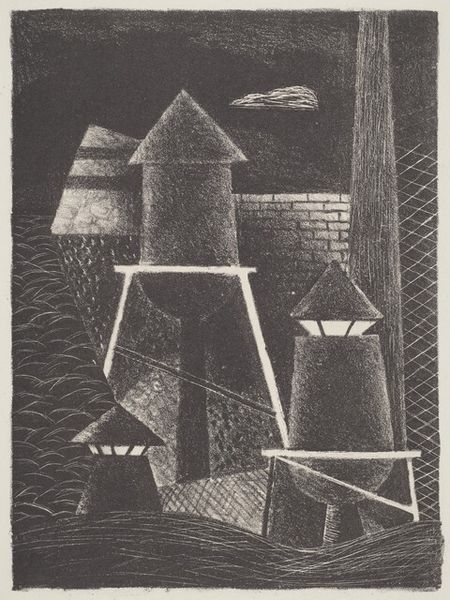
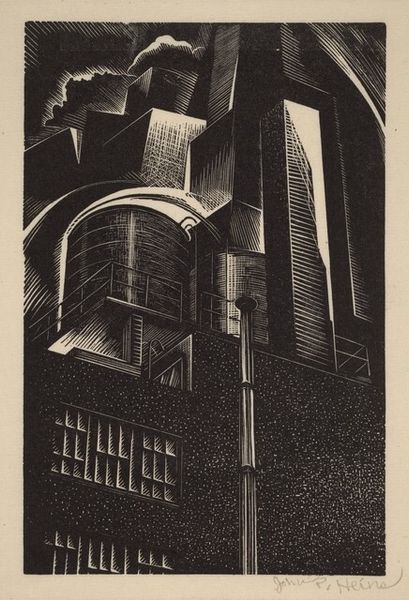
Curator: Immediately striking. The angular lines, the dominating geometric forms... there's a mechanical, almost unsettling beauty here. Editor: Yes, quite! We're looking at "Powerplant," a print and drawing created around 1936 by Jolán Gross-Bettelheim. A cityscape rendered in graphite. What narratives can we extract from this singular work? Curator: The dominance of industry, undoubtedly. That looming structure immediately brings to mind narratives of power and the socio-political implications of modernization, especially given the historical context of the 1930s. It reflects an almost brutalist vision of urban space. Editor: Absolutely. Observe how the visual language pulls from the history of representing power through architecture – ziggurats, pyramids, the Tower of Babel – all condensed and reconfigured through a modern, industrial lens. These forms elicit cultural associations beyond their immediate representation. Curator: Exactly. The gendered aspects as well; the patriarchal symbolism inherent in towering structures reflecting dominance. I'd say this also reflects on Gross-Bettelheim’s own identity as a woman navigating this rapidly transforming, male-dominated sphere of industry and urban development. Was she celebrating the dawn of industry or critically assessing its social cost? Editor: Consider also the window. Framed so precisely and dwarfed, of course, by this vast structure. It creates a sense of confinement, suggesting, perhaps, that human scale is diminishing under the sheer weight of industrial progress. It becomes a window not to the outside world, but to the experience of modernity itself. Curator: A powerful suggestion. I wonder how the artist viewed their place in this system – complicit or critical, empowered or diminished? It feels like all of these contradictory impulses are present in the work. Editor: And isn’t that the beauty of visual symbols? How they transcend the boundaries of time and context to whisper echoes of a collective memory into our present awareness? Curator: It is, undeniably, the complexity that makes this a resonant and thought-provoking piece. One that forces us to consider not only what was but what still *is* in our relationships with industrial power and our lived environment. Editor: Indeed, a stark visual reminder that the architectural and industrial choices we make become part of the ongoing narrative we create for ourselves.