About this artwork
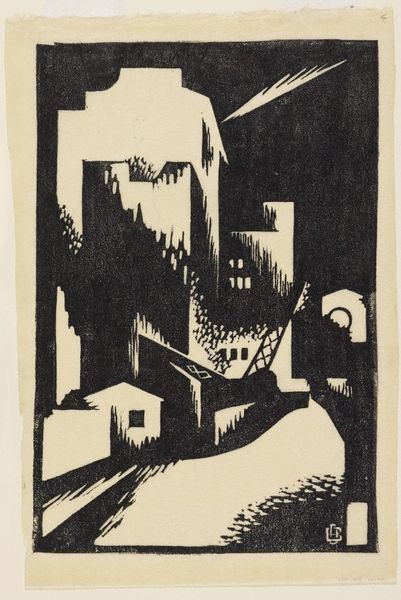
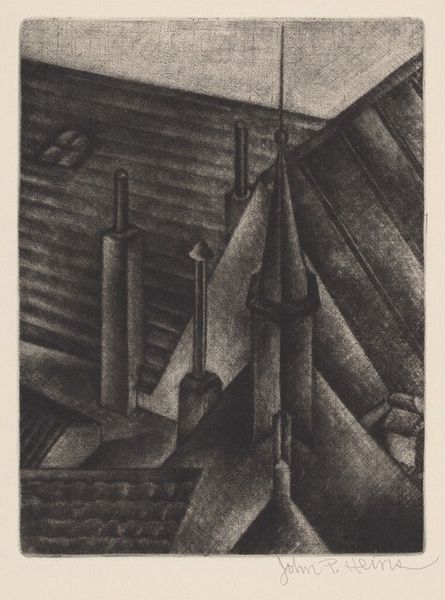
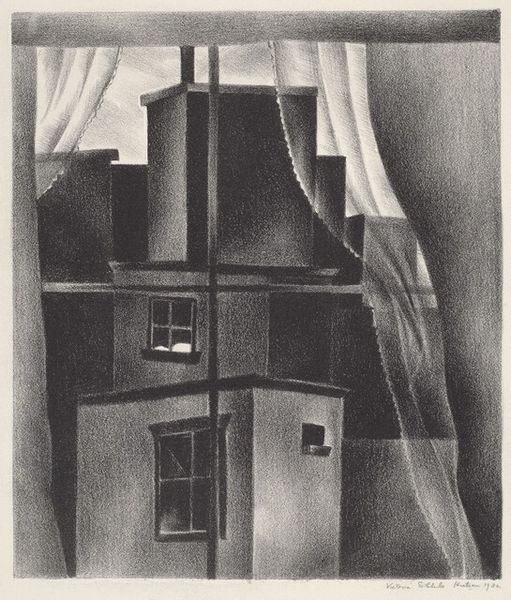
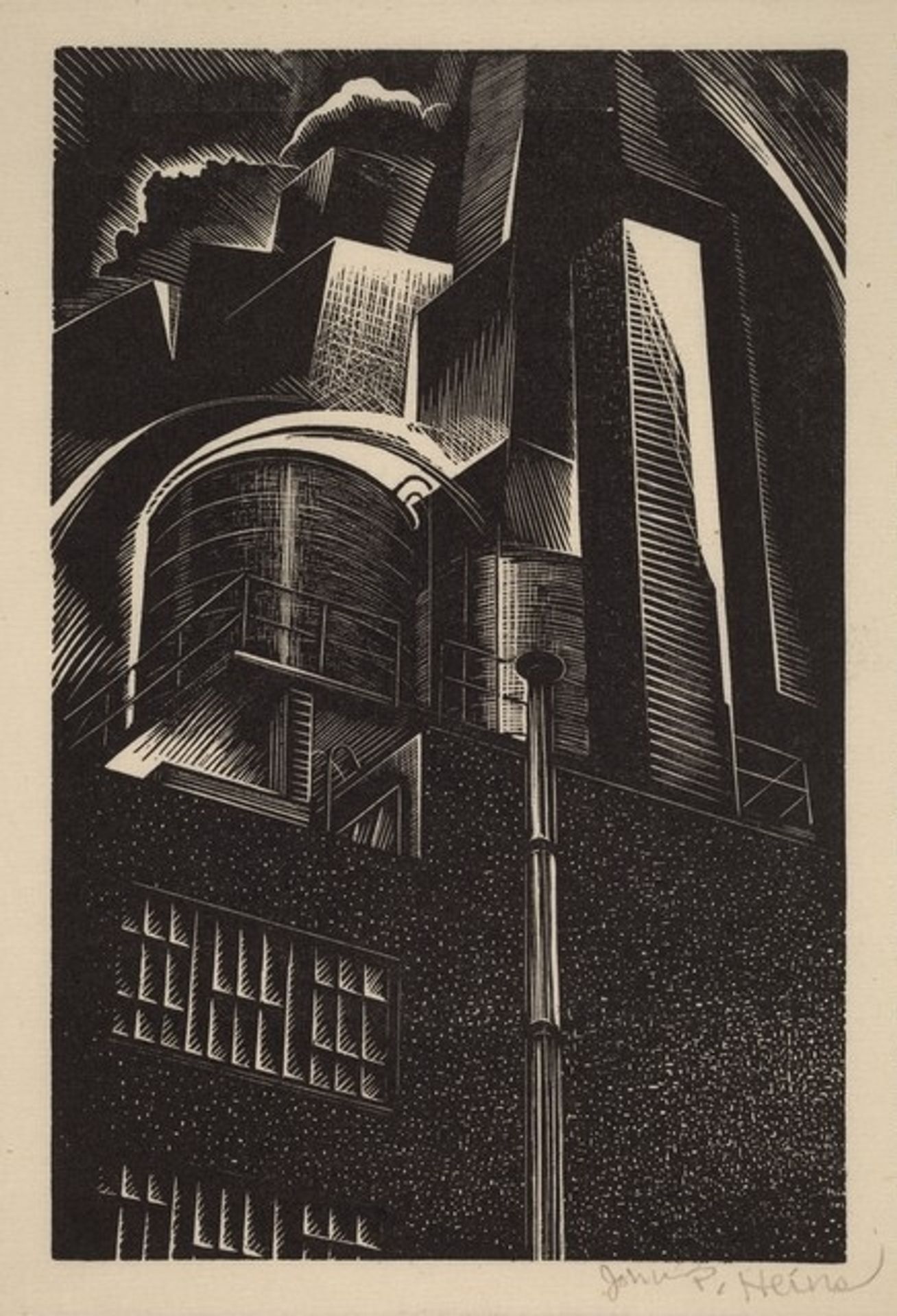
John P. Heins made this black ink wood engraving, called ‘Rooftops,’ sometime in the mid-20th century. Heins’s angular cityscape evokes the monumental, often isolating, architecture of urban life. We see the windows of what could be a factory, smokestacks in the background. The artist lived through immense cultural shifts, including the Great Depression and two World Wars, all of which radically reshaped the American landscape, both physically and socially. There's a sense of anxiety in the sharp lines and imposing industrial forms that dominate the frame, almost like a stage set for an existential drama. As you look, consider the lives of those who lived and worked in such environments. How did the industrial revolution transform not only the landscape but also the rhythms and experiences of daily life? The stark contrast between light and shadow captures the complex relationship between progress and alienation, echoing sentiments expressed by many during this transformative era.


Artwork details
- Medium
- print, engraving
- Dimensions
- block: 150 x 99 mm sheet: 201 x 147 mm
- Copyright
- National Gallery of Art: CC0 1.0
Tags
art-deco
cityscape
engraving
modernism
Comments
Be the first to share your thoughts about this work.
About this artwork
John P. Heins made this black ink wood engraving, called ‘Rooftops,’ sometime in the mid-20th century. Heins’s angular cityscape evokes the monumental, often isolating, architecture of urban life. We see the windows of what could be a factory, smokestacks in the background. The artist lived through immense cultural shifts, including the Great Depression and two World Wars, all of which radically reshaped the American landscape, both physically and socially. There's a sense of anxiety in the sharp lines and imposing industrial forms that dominate the frame, almost like a stage set for an existential drama. As you look, consider the lives of those who lived and worked in such environments. How did the industrial revolution transform not only the landscape but also the rhythms and experiences of daily life? The stark contrast between light and shadow captures the complex relationship between progress and alienation, echoing sentiments expressed by many during this transformative era.
Comments
Be the first to share your thoughts about this work.