1830 - 1832
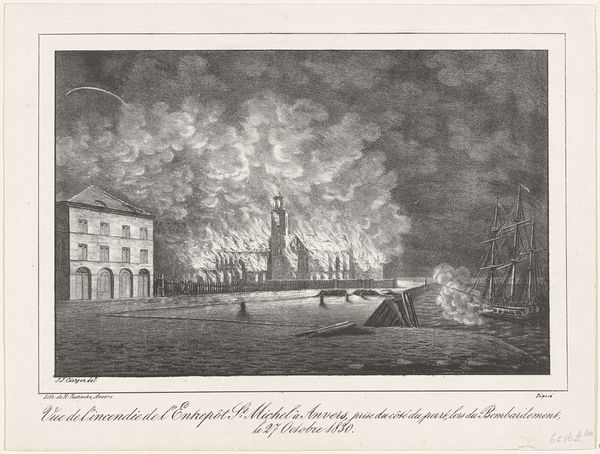
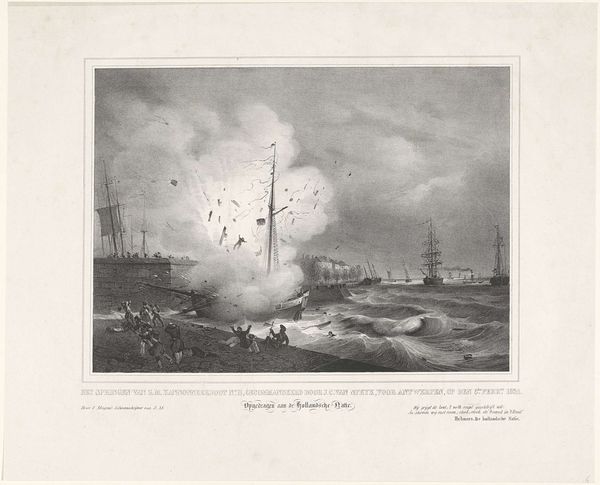
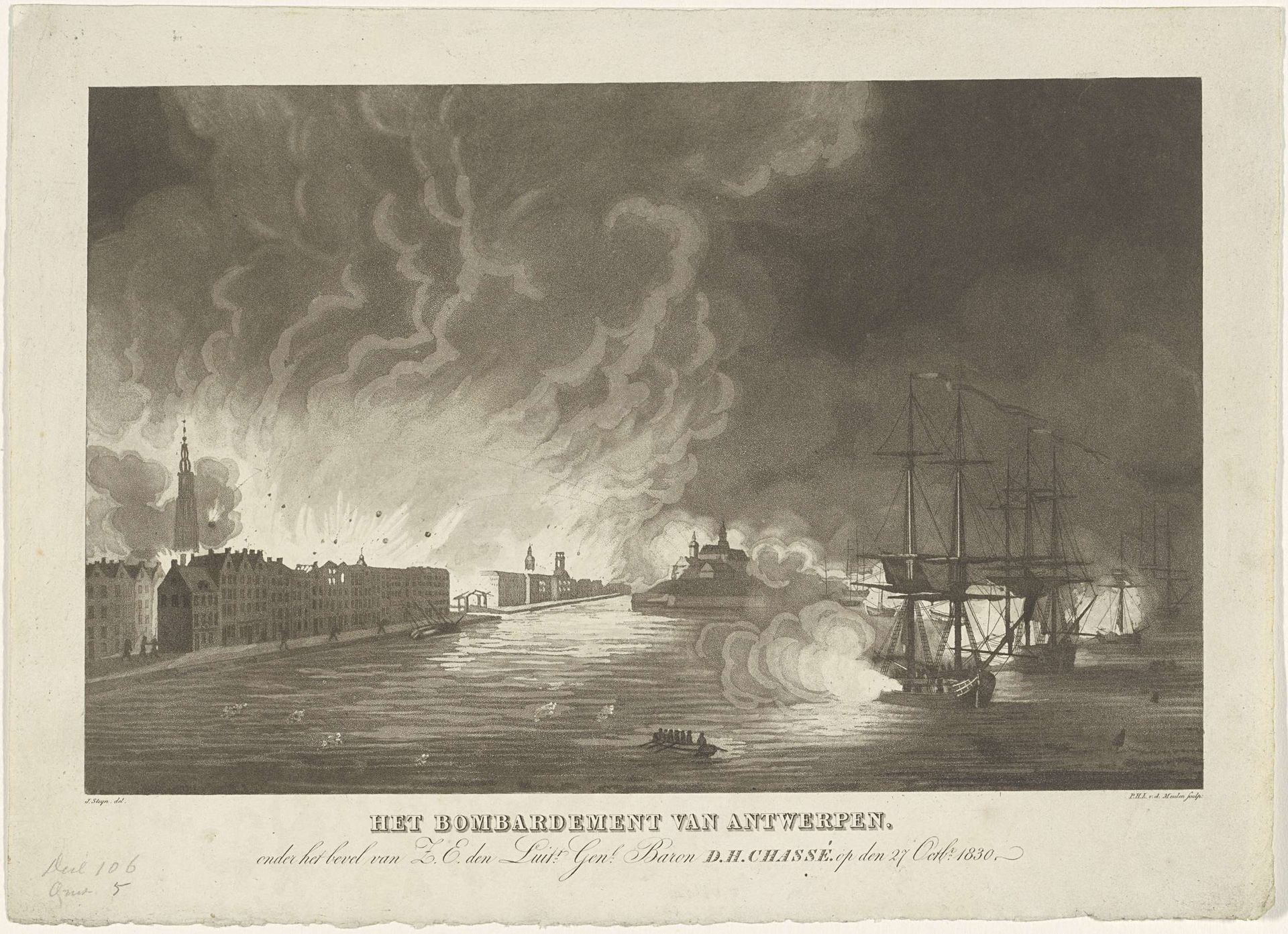
Bombardement van Antwerpen, 1830

Pieter van der Meulen
1780 - 1858Location
RijksmuseumListen to curator's interpretation
Curatorial notes
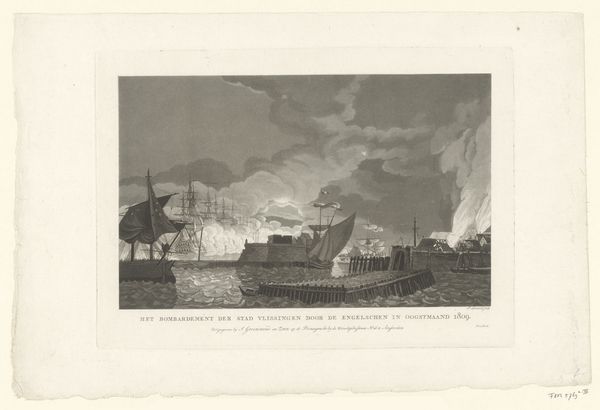
Editor: This engraving, "Bombardement van Antwerpen, 1830" by Pieter van der Meulen, shows a city under siege. The smoky sky and dark water create an ominous mood, emphasizing the chaos of war. What historical context is important to understanding the print's significance? Curator: The print documents the bombardment of Antwerp during the Belgian Revolution. Its power lies in its public role as a visual record shaped by political circumstances. How do you think prints like these functioned within 19th-century society? Editor: It feels like it's aiming to document and inform. Perhaps like a very early form of photojournalism, reaching a wider audience through printmaking. Would that be accurate? Curator: Precisely. This wasn't neutral documentation; engravings like this could reinforce national sentiment or criticize military action. The depiction of the event, its distribution through print, becomes a political act. Notice the composition; the plumes of smoke dwarf the buildings, almost theatrical. Does this affect how we perceive the conflict? Editor: Definitely. It amplifies the scale of the destruction and, potentially, evokes more sympathy for the city being bombarded. Were these prints widely circulated, influencing public opinion? Curator: Yes, and think about where they might have been displayed— coffee houses, homes, print shops. The act of seeing it collectively, debating its merits – this fuels the narrative around the revolution. Editor: It’s fascinating to think of this image shaping public consciousness back then, in a similar way that photographs and videos do today. Curator: Absolutely. Visual culture always plays a part in political discourse. Reflecting on this, I’m reminded how the power of imagery can mobilize public sentiment.