About this artwork
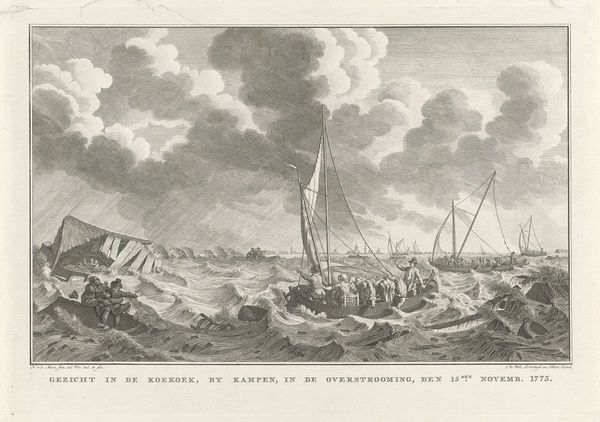
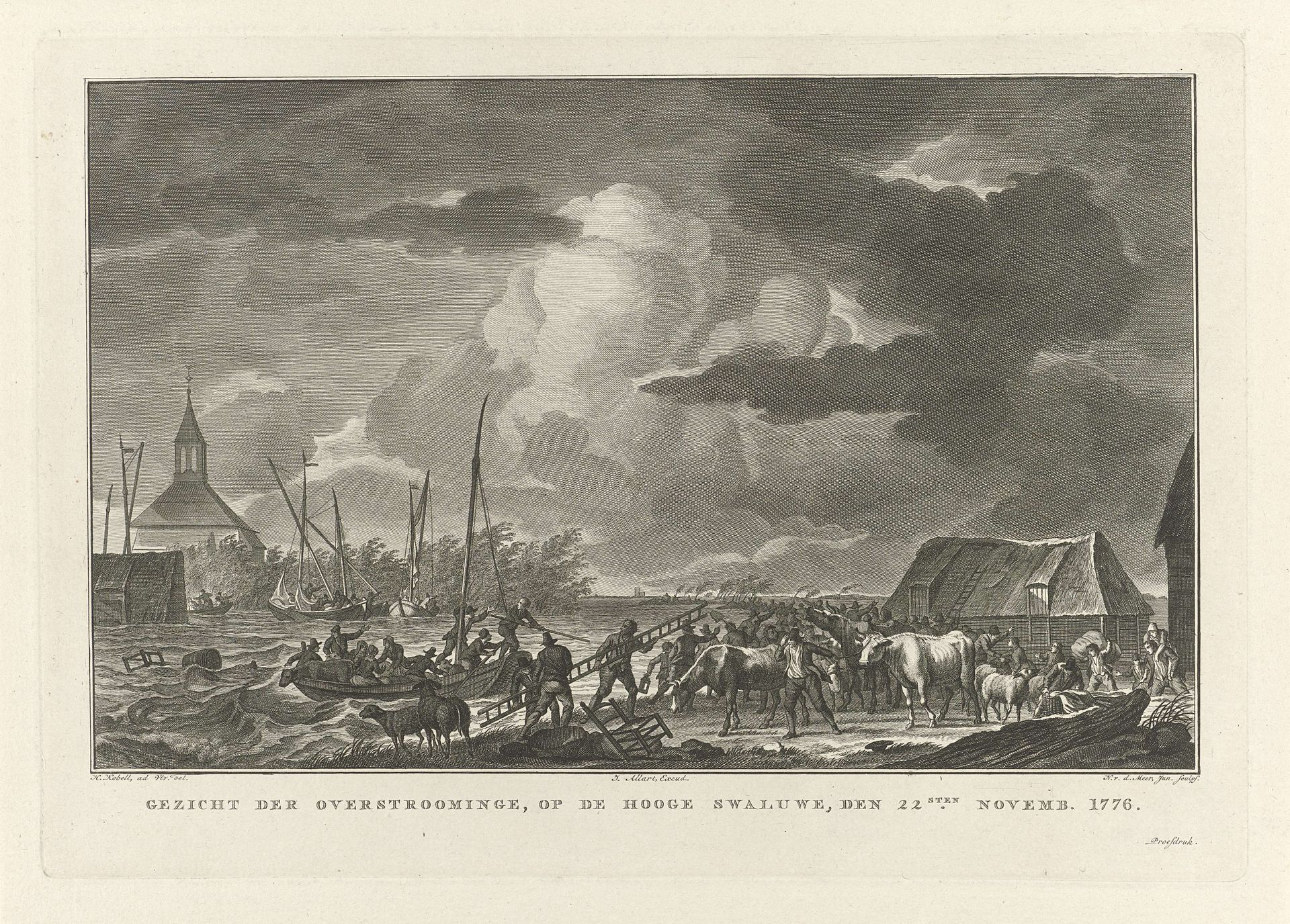
Noach van der Meer II created this etching in 1776, depicting the flooding at Hooge Zwaluwe. Notice the stark contrast between the imposing, turbulent sky and the frantic activity on the ground. The figures struggle to save livestock. The presence of the church, partially submerged, introduces a religious element. The flood motif has appeared across cultures, from the Babylonian Epic of Gilgamesh to the biblical story of Noah's Ark, symbolizing both destruction and rebirth. Here, the flood carries echoes of divine punishment. It also serves as a stark reminder of humanity's vulnerability in the face of nature's power. This imagery, etched into our collective memory, taps into primal fears and anxieties, resonating with us on a subconscious level. The symbols of deluge, sacrifice, and salvation reveal the cyclical nature of history, where ancient myths resurface, and evolve.
Overstroming bij Hooge Zwaluwe, 1776
1778

Noach van der (II) Meer
1741 - 1822Location
RijksmuseumArtwork details
- Dimensions
- height 215 mm, width 308 mm
- Location
- Rijksmuseum
- Copyright
- Rijks Museum: Open Domain
Comments
Share your thoughts
About this artwork
Noach van der Meer II created this etching in 1776, depicting the flooding at Hooge Zwaluwe. Notice the stark contrast between the imposing, turbulent sky and the frantic activity on the ground. The figures struggle to save livestock. The presence of the church, partially submerged, introduces a religious element. The flood motif has appeared across cultures, from the Babylonian Epic of Gilgamesh to the biblical story of Noah's Ark, symbolizing both destruction and rebirth. Here, the flood carries echoes of divine punishment. It also serves as a stark reminder of humanity's vulnerability in the face of nature's power. This imagery, etched into our collective memory, taps into primal fears and anxieties, resonating with us on a subconscious level. The symbols of deluge, sacrifice, and salvation reveal the cyclical nature of history, where ancient myths resurface, and evolve.
Comments
Share your thoughts