About this artwork
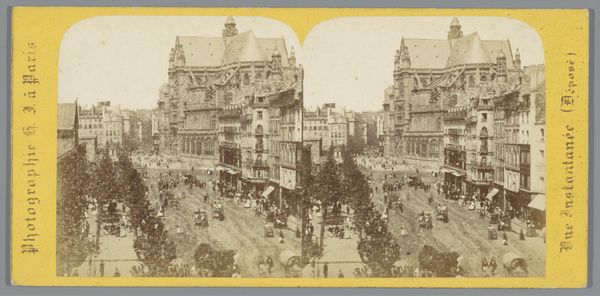
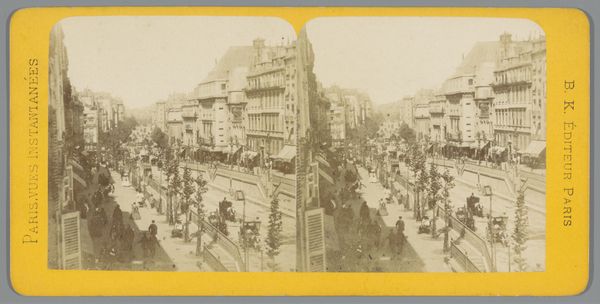
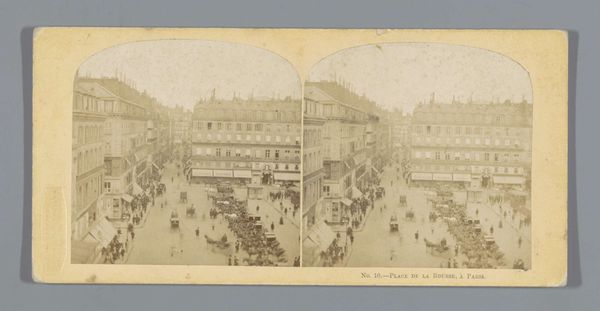
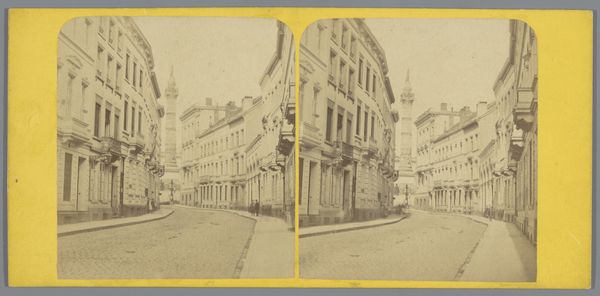
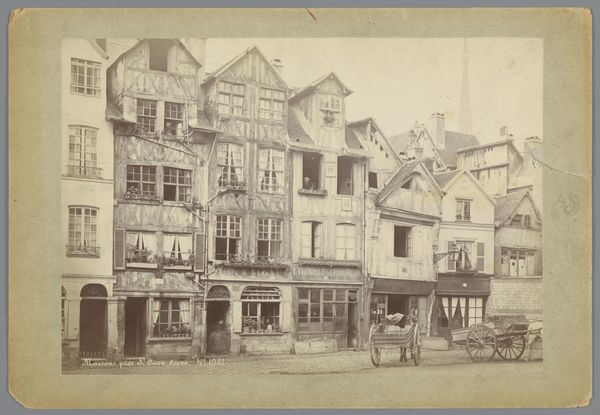
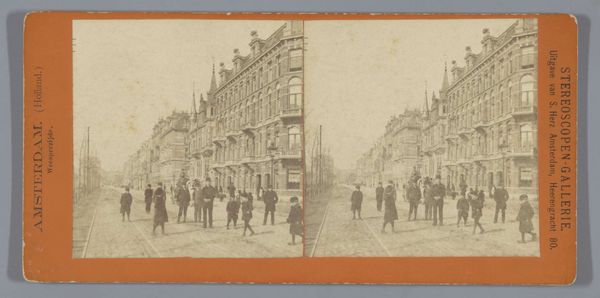
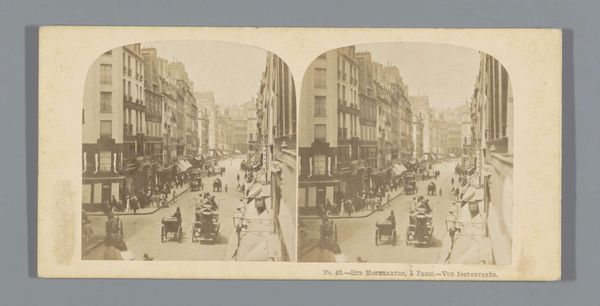
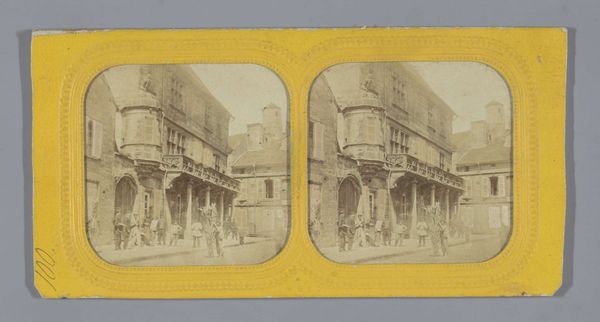
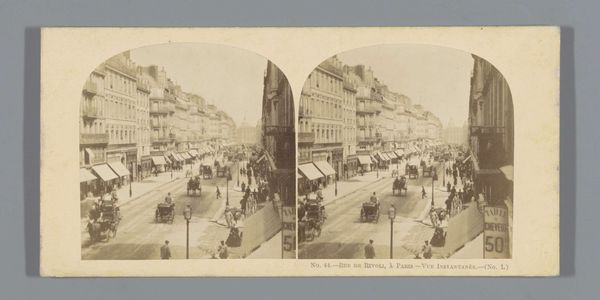
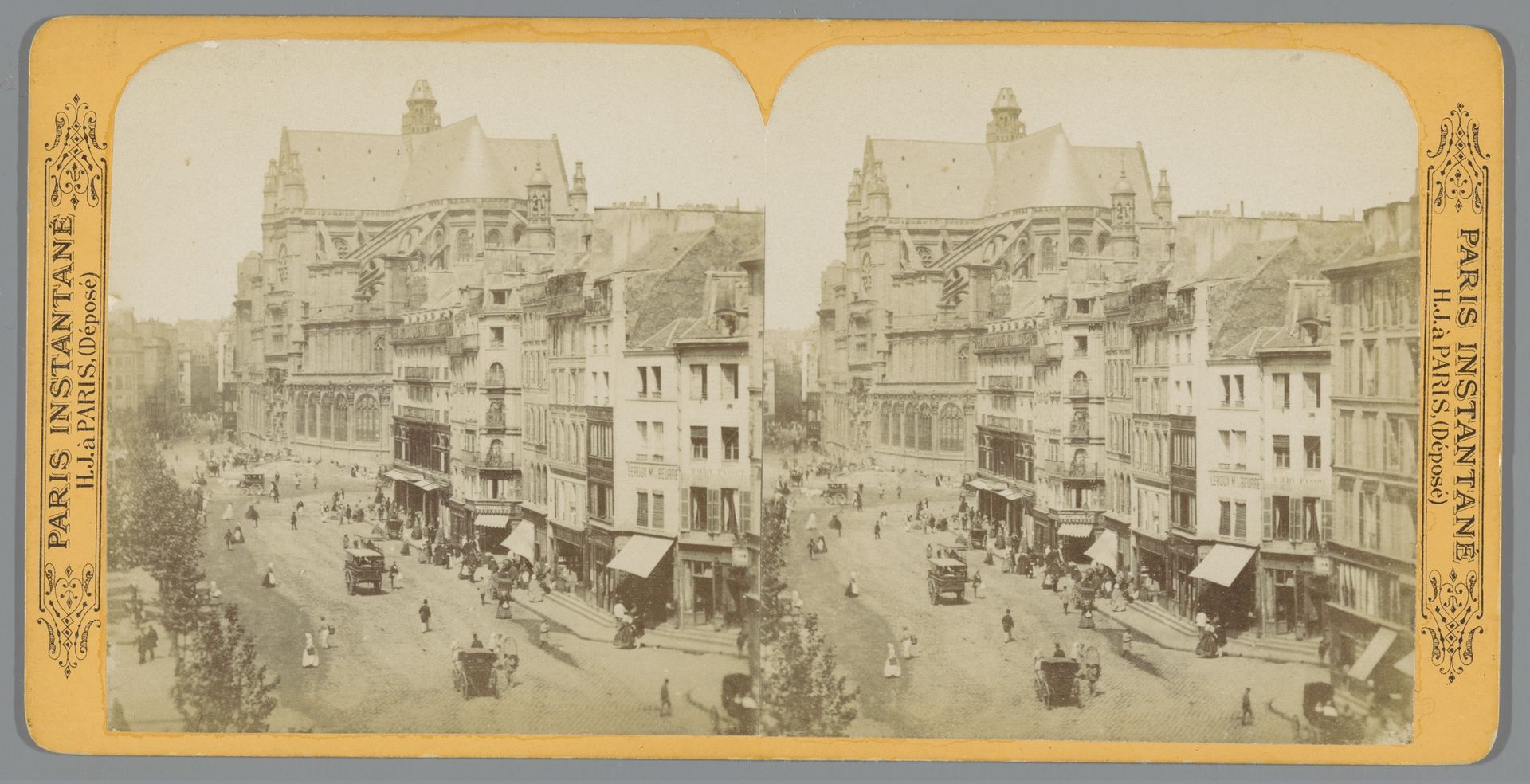
This is Hippolyte Jouvin’s stereoscopic view of the Église Saint-Eustache and possibly the Rue Rambuteau in Paris. Jouvin was active during a time of immense social change in France, particularly during the Second Empire under Napoleon III, who was authoritarian but was dedicated to modernizing Paris. The image presents a slice of Parisian life, but it’s worth considering who is seen, and who isn’t. The wide avenue, bustling with activity, suggests a city open to all, yet access to this new Paris was largely dictated by class. The grand boulevards were often built at the expense of working-class neighborhoods. This image captures the beauty and progress of the era, but also hints at the social stratifications that defined Parisian society. The choice of a stereoscopic format also speaks to the desires of the time, inviting viewers to immerse themselves in the scene, to almost step into this carefully constructed vision of Parisian modernity.
Gezicht op de Église Saint-Eustache en vermoedelijk de Rue Rambuteau in Parijs
c. 1850 - 1880

Artwork details
- Medium
- daguerreotype, photography
- Dimensions
- height 88 mm, width 176 mm
- Copyright
- Rijks Museum: Open Domain
Tags
16_19th-century
daguerreotype
street-photography
photography
cityscape
street
watercolor
realism
Comments
Be the first to share your thoughts about this work.
About this artwork
This is Hippolyte Jouvin’s stereoscopic view of the Église Saint-Eustache and possibly the Rue Rambuteau in Paris. Jouvin was active during a time of immense social change in France, particularly during the Second Empire under Napoleon III, who was authoritarian but was dedicated to modernizing Paris. The image presents a slice of Parisian life, but it’s worth considering who is seen, and who isn’t. The wide avenue, bustling with activity, suggests a city open to all, yet access to this new Paris was largely dictated by class. The grand boulevards were often built at the expense of working-class neighborhoods. This image captures the beauty and progress of the era, but also hints at the social stratifications that defined Parisian society. The choice of a stereoscopic format also speaks to the desires of the time, inviting viewers to immerse themselves in the scene, to almost step into this carefully constructed vision of Parisian modernity.
Comments
Be the first to share your thoughts about this work.