About this artwork
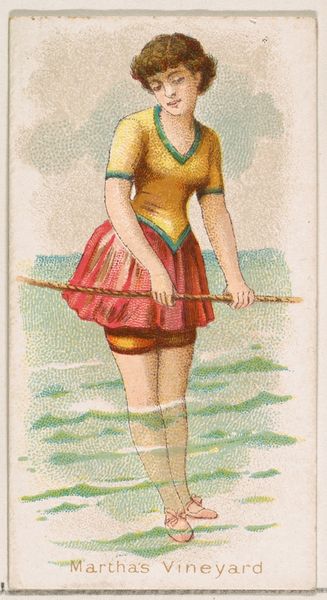
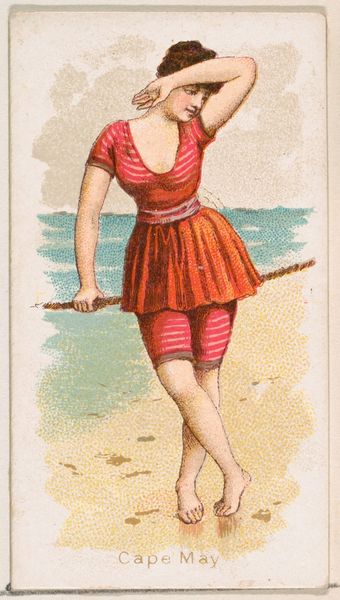
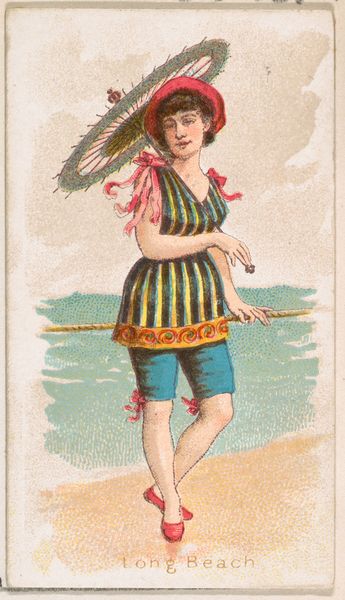
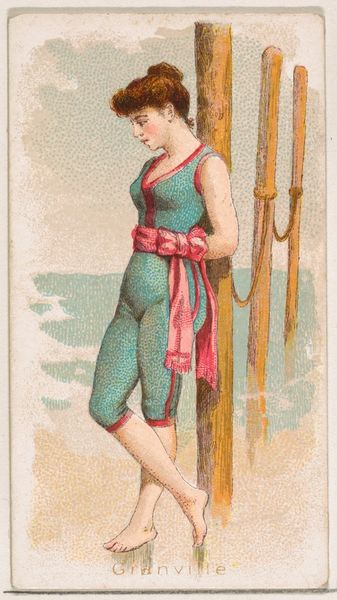
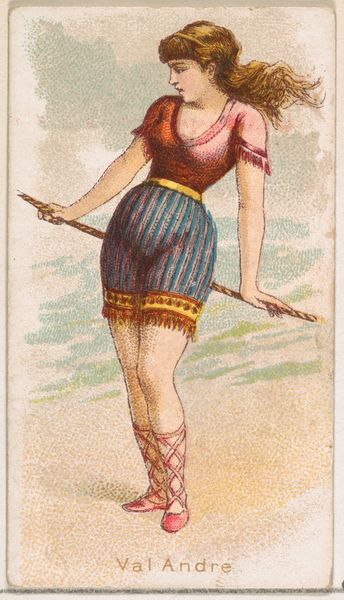
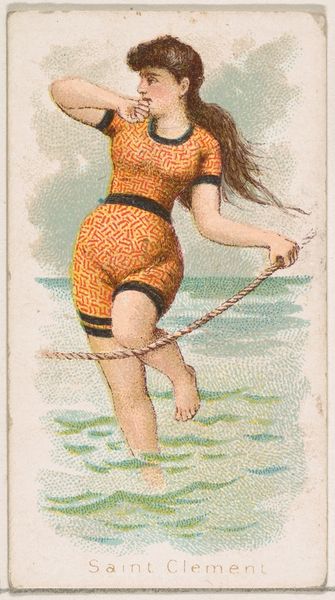
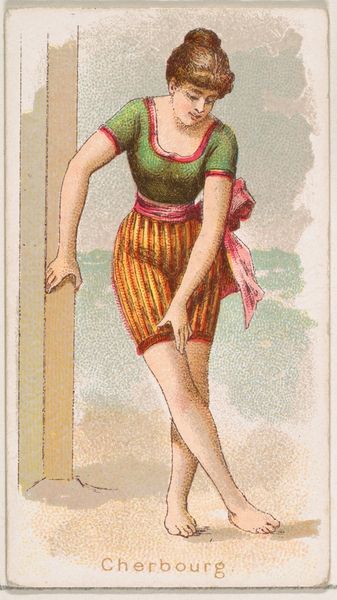
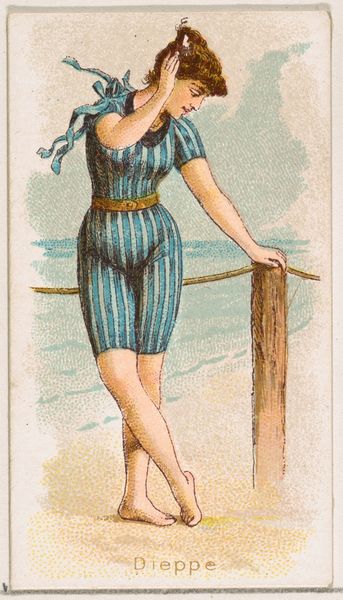
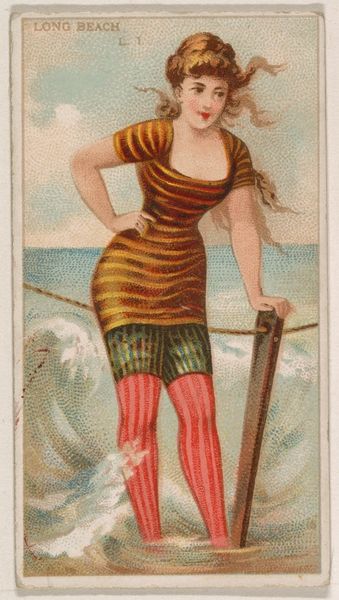
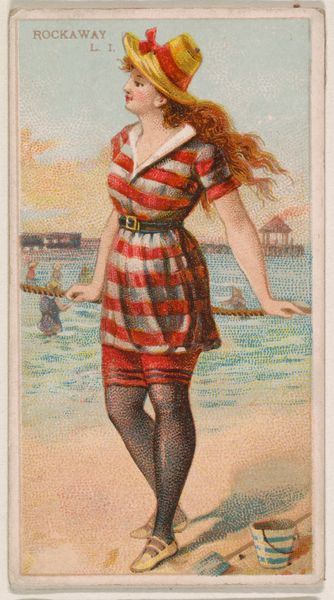
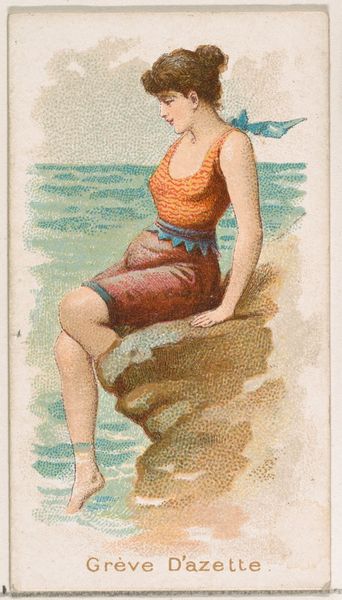
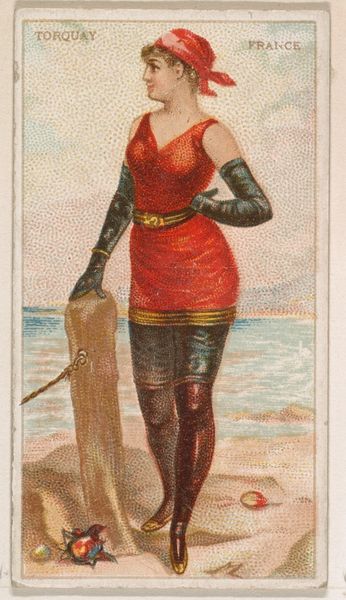
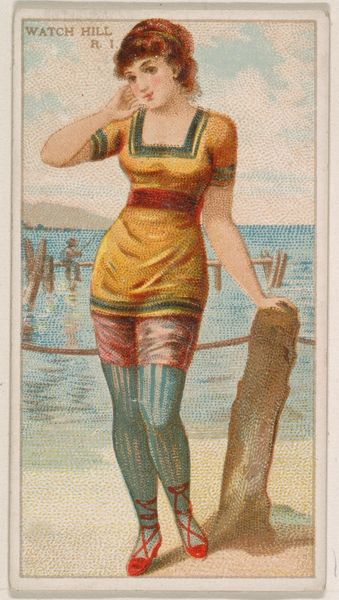
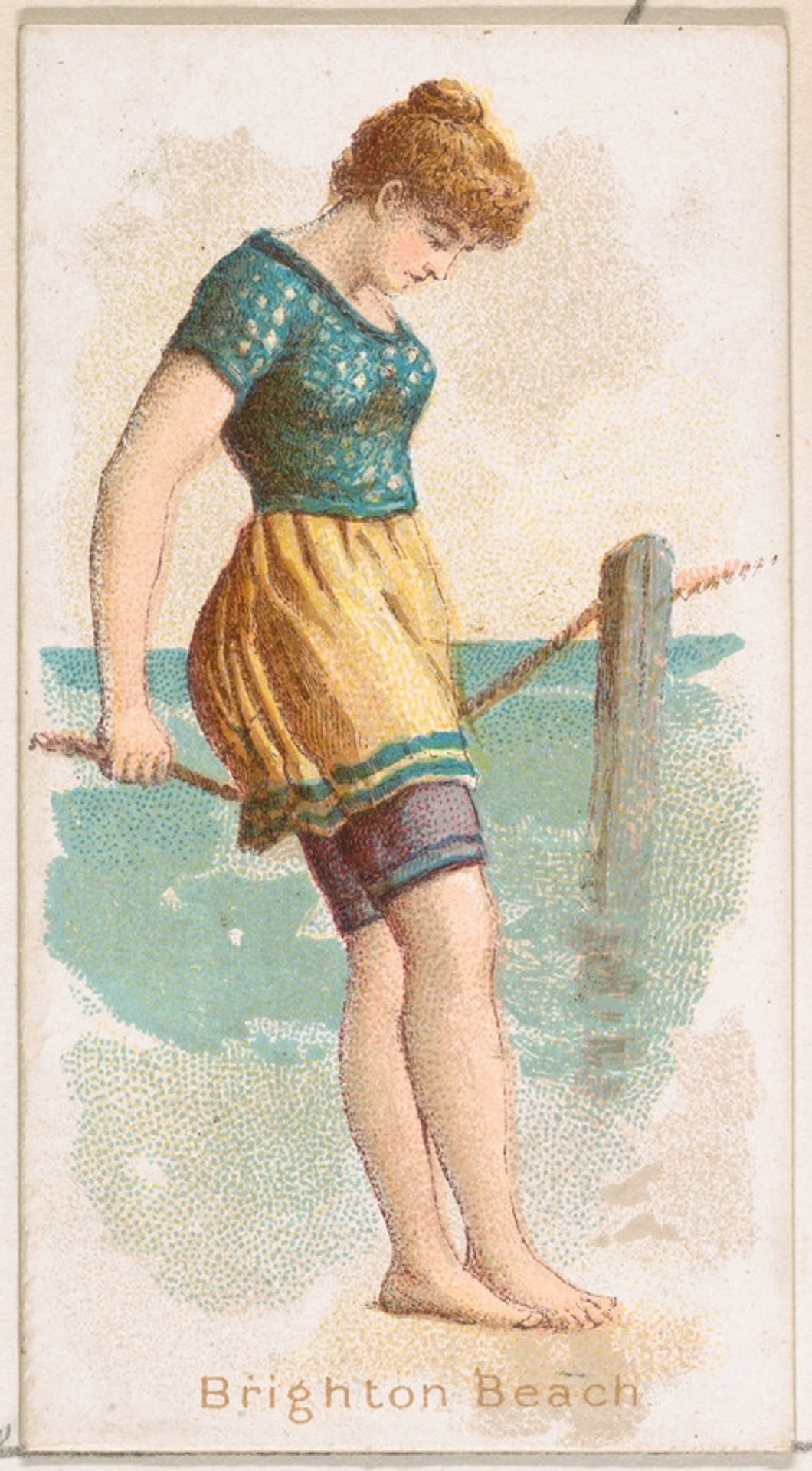
This small chromolithograph titled 'Brighton Beach' comes from a series of "Fancy Bathers" created by the Wm. S. Kimball & Co., a tobacco company. These cards, distributed with tobacco products, offer a glimpse into the societal norms and cultural values of the late 19th century. The image presents a woman in a bathing costume, demurely posed by the water. Consider what it meant for women to occupy public spaces like the beach during this era. The attire, while modest by today's standards, reflects a negotiation between societal expectations and emerging freedoms. The gaze of the figure is cast downward which reflects the period's emphasis on female modesty and decorum. Small cards like this reveal the evolving roles of women in society and highlight the intersection of commerce, leisure, and representation. The image might evoke feelings of nostalgia for a bygone era, but also prompts reflection on the constraints and expectations placed upon women.
Brighton Beach, from the Fancy Bathers series (N187) issued by Wm. S. Kimball & Co. 1889

William S. Kimball & Company
@williamskimballcompany
The Metropolitan Museum of Art
Metropolitan Museum of Art, New York, NYArtwork details
- Medium
- drawing, coloured-pencil, print
- Dimensions
- Sheet: 2 11/16 × 1 1/2 in. (6.9 × 3.8 cm)
- Location
- Metropolitan Museum of Art, New York, NY
- Copyright
- Public Domain
Tags
portrait
drawing
coloured-pencil
coloured pencil
orientalism
genre-painting
academic-art
Comments
No comments
About this artwork
This small chromolithograph titled 'Brighton Beach' comes from a series of "Fancy Bathers" created by the Wm. S. Kimball & Co., a tobacco company. These cards, distributed with tobacco products, offer a glimpse into the societal norms and cultural values of the late 19th century. The image presents a woman in a bathing costume, demurely posed by the water. Consider what it meant for women to occupy public spaces like the beach during this era. The attire, while modest by today's standards, reflects a negotiation between societal expectations and emerging freedoms. The gaze of the figure is cast downward which reflects the period's emphasis on female modesty and decorum. Small cards like this reveal the evolving roles of women in society and highlight the intersection of commerce, leisure, and representation. The image might evoke feelings of nostalgia for a bygone era, but also prompts reflection on the constraints and expectations placed upon women.
Comments
No comments