About this artwork
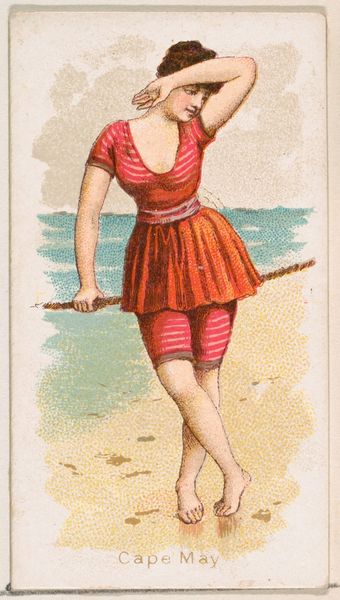
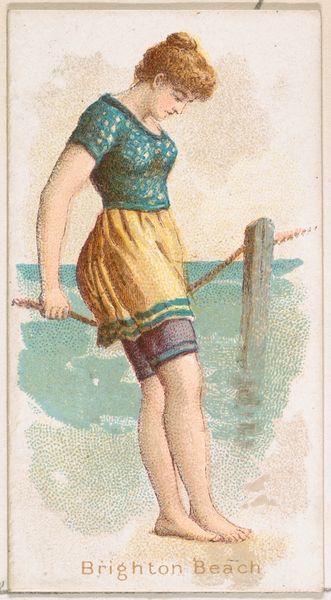
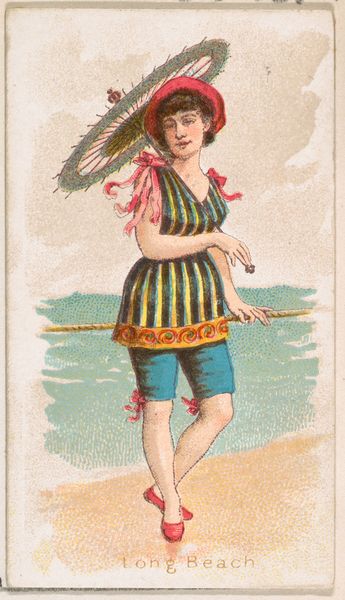
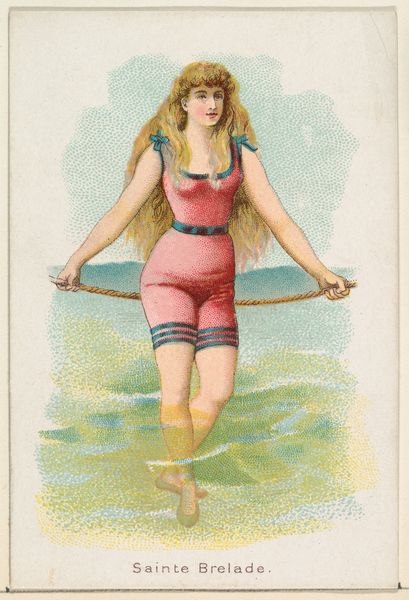
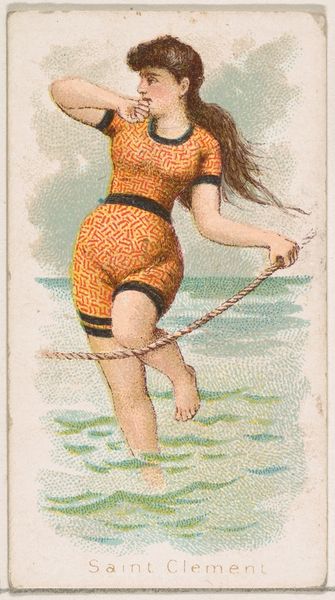
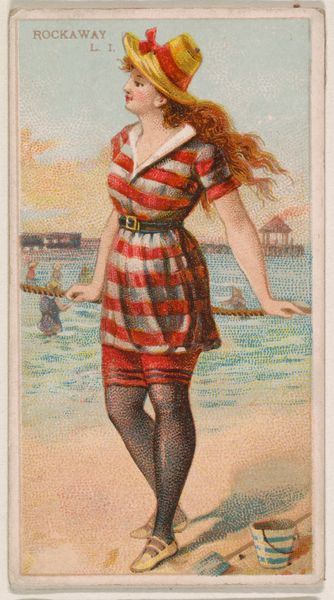
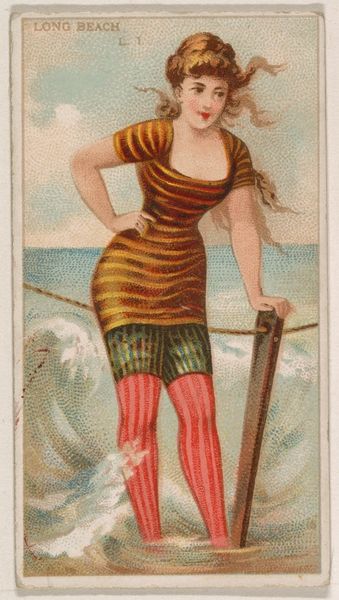
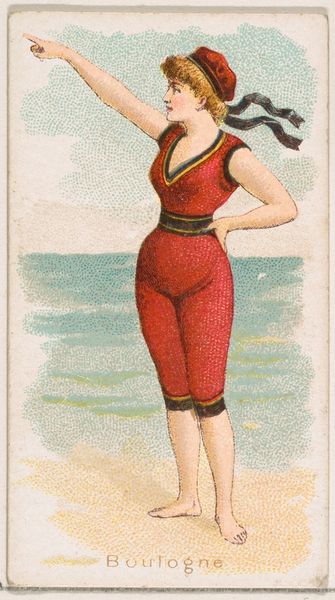
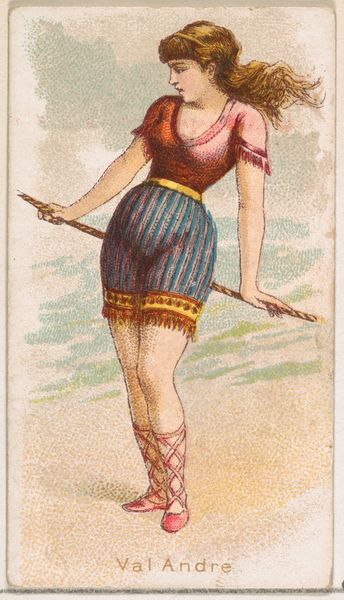
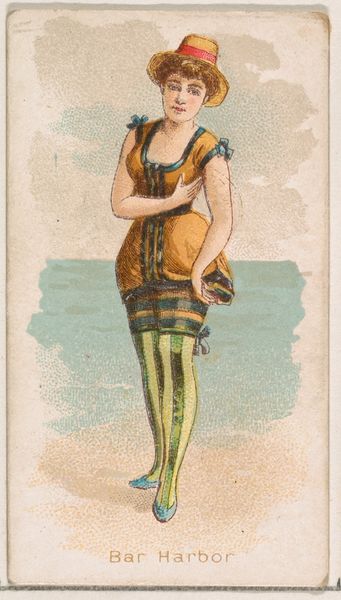
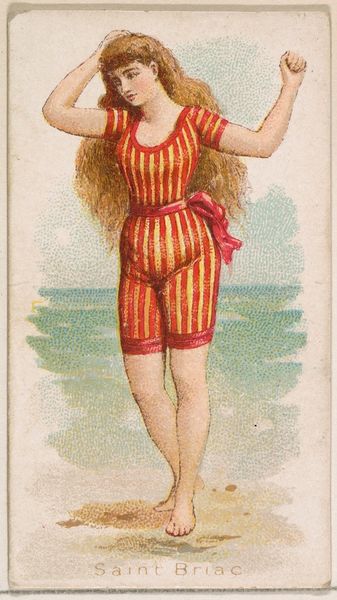
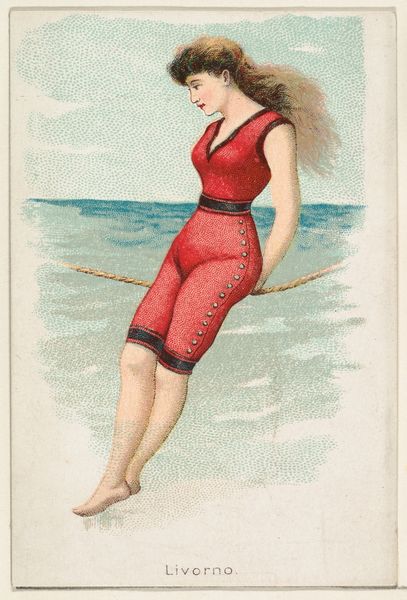
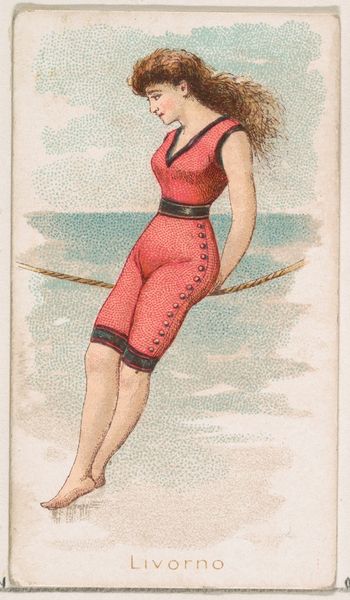
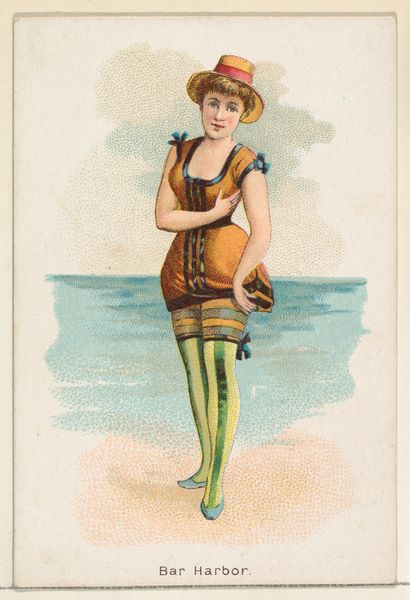
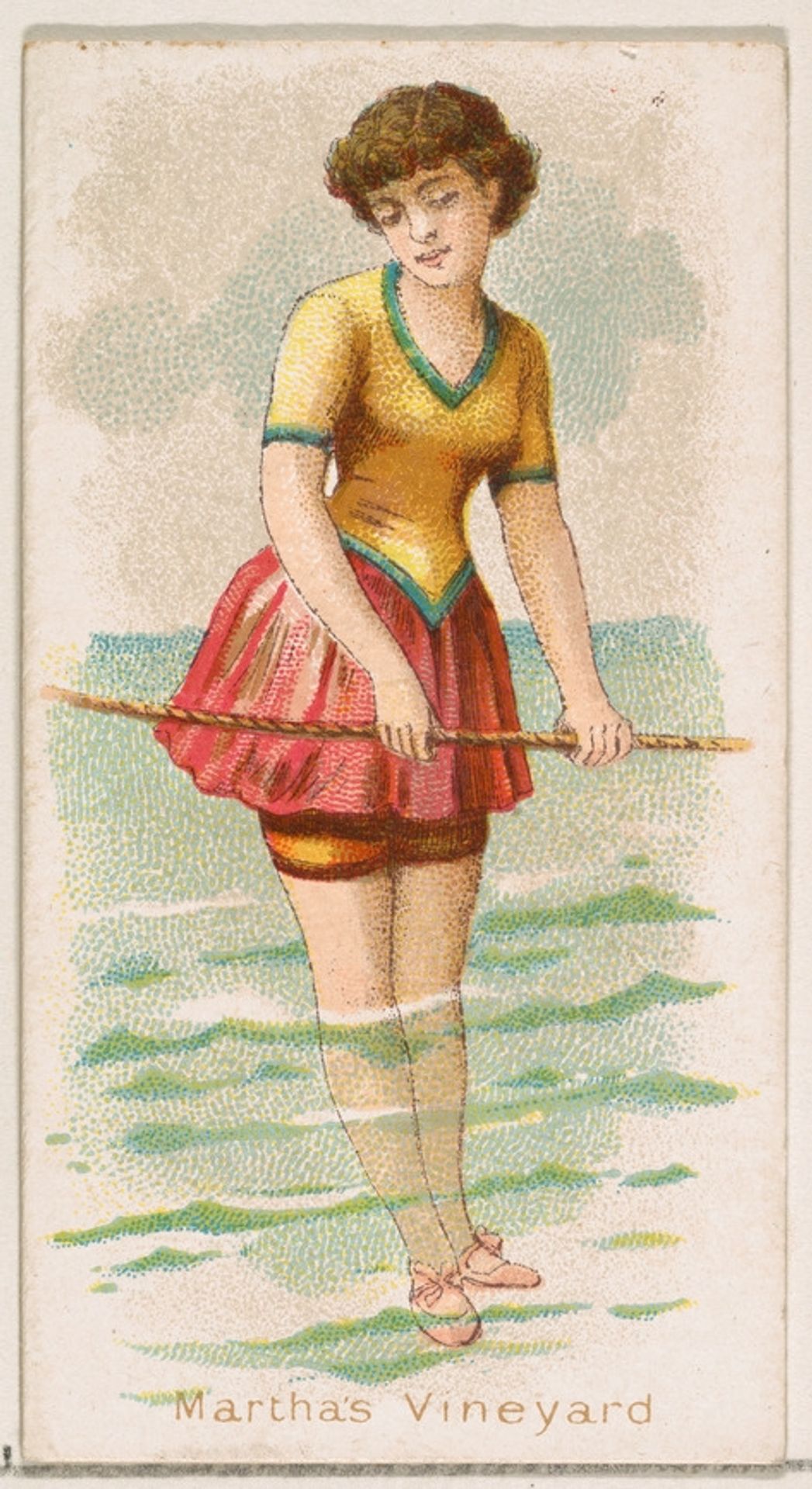
This small card was printed by the Wm. S. Kimball & Co., likely in the late 19th century, as part of a series called "Fancy Bathers." It’s made of paper, printed with chromolithography, a color printing technique that relies on the precise alignment of multiple lithographic stones, one for each color. The resulting image depicts a woman in a bathing costume, standing in the water near Martha's Vineyard. Notice how the chromolithographic process lends a soft, almost dreamy quality to the scene. The subtle gradations of color in the water and sky are achieved through careful layering of inks. But what does this card, issued by a tobacco company, tell us about the culture of the time? These cards were essentially promotional items, designed to be collected and traded. They reflect the rise of consumer culture and the increasing importance of branding and advertising. The image of the "fancy bather" speaks to the growing popularity of leisure activities and the evolving role of women in society. This small piece of commercial ephemera offers a glimpse into a bygone era, reminding us that even the most mass-produced objects can be rich with social and cultural meaning.
Martha's Vineyard, from the Fancy Bathers series (N187) issued by Wm. S. Kimball & Co.
1889

William S. Kimball & Company
@williamskimballcompany
The Metropolitan Museum of Art
Metropolitan Museum of Art, New York, NYArtwork details
- Dimensions
- Sheet: 2 11/16 × 1 1/2 in. (6.9 × 3.8 cm)
- Location
- Metropolitan Museum of Art, New York, NY
- Copyright
- Public Domain
Comments
Share your thoughts
About this artwork
This small card was printed by the Wm. S. Kimball & Co., likely in the late 19th century, as part of a series called "Fancy Bathers." It’s made of paper, printed with chromolithography, a color printing technique that relies on the precise alignment of multiple lithographic stones, one for each color. The resulting image depicts a woman in a bathing costume, standing in the water near Martha's Vineyard. Notice how the chromolithographic process lends a soft, almost dreamy quality to the scene. The subtle gradations of color in the water and sky are achieved through careful layering of inks. But what does this card, issued by a tobacco company, tell us about the culture of the time? These cards were essentially promotional items, designed to be collected and traded. They reflect the rise of consumer culture and the increasing importance of branding and advertising. The image of the "fancy bather" speaks to the growing popularity of leisure activities and the evolving role of women in society. This small piece of commercial ephemera offers a glimpse into a bygone era, reminding us that even the most mass-produced objects can be rich with social and cultural meaning.
Comments
Share your thoughts