
Curatorial notes
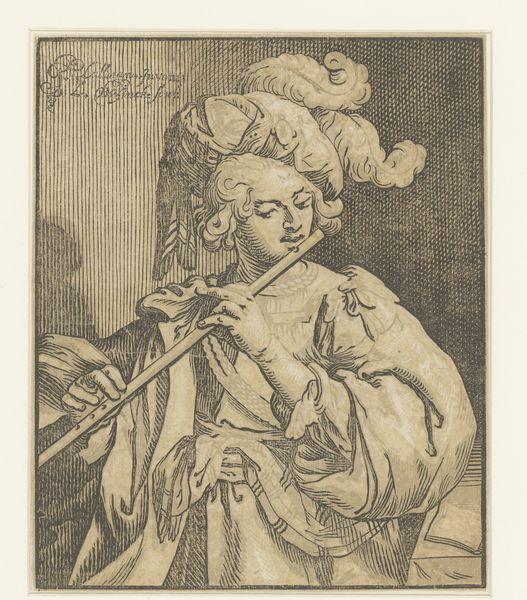
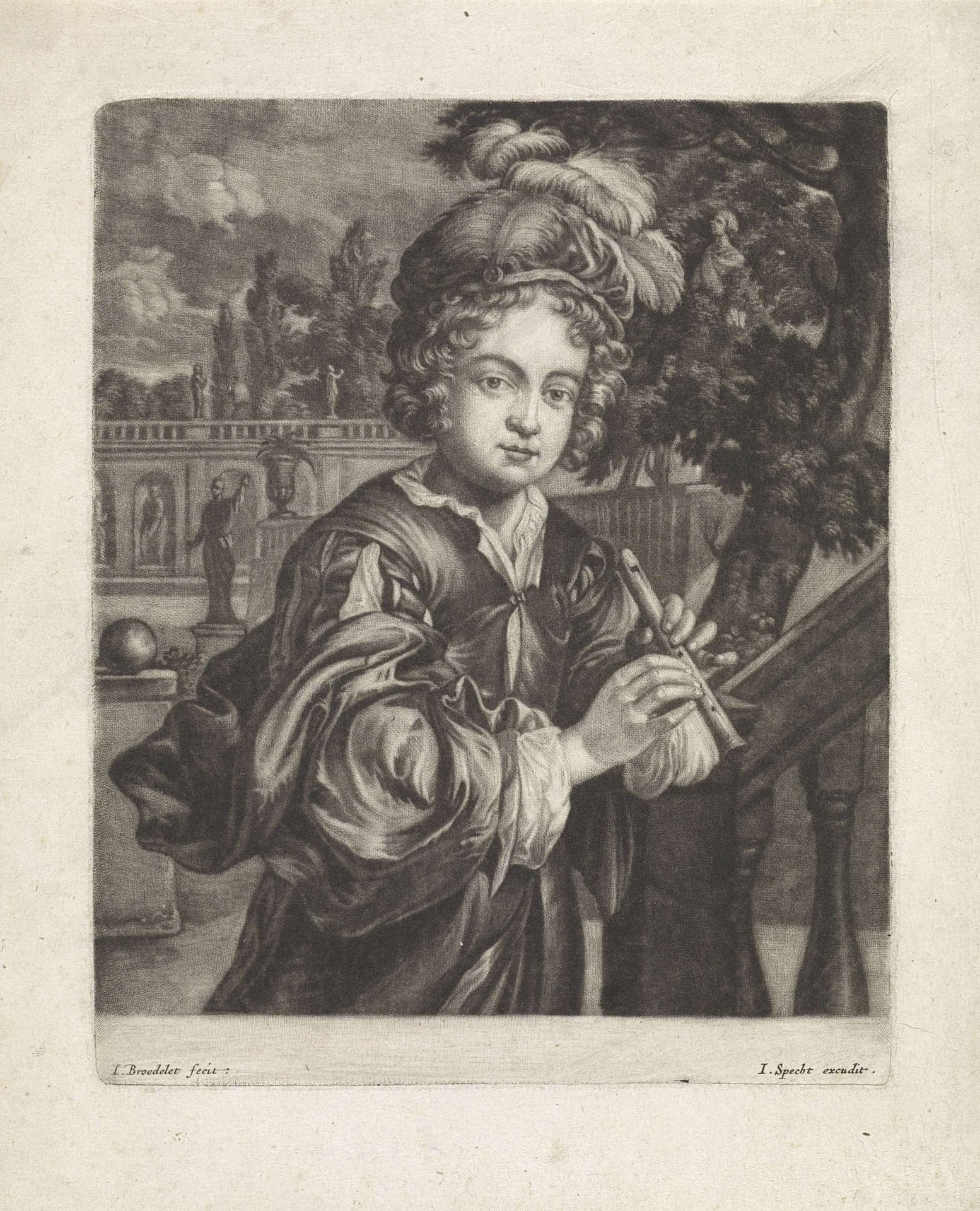
Editor: Here we have "Fluitspeler," or "Flute Player," an engraving from sometime between 1690 and 1700 by Jan Broedelet. There's a rather wistful mood to this finely rendered portrait. What do you see in this piece? Curator: The flute itself carries potent symbolism. Consider its association with pastoral settings, a Golden Age vision where shepherds charm nature with music. The youth's ornate clothing, juxtaposed with the simple flute, creates tension. Is he a shepherd in disguise, or someone affecting an image? What might that image evoke for viewers of the time? Editor: That tension you mention is interesting. I hadn’t considered the social implications. What else contributes to that sense of unease? Curator: The landscape in the background, rendered in miniature, is important. Look closely – are those classical sculptures? Why are they included? Consider how those idealized forms contribute to the overall sense of longing or aspiration. Editor: It's like he's yearning for a different world, a lost ideal. So the flute is not just an instrument, but a key to understanding a collective yearning? Curator: Precisely! Images such as this acted as conduits for cultural memory. The enduring appeal of such artworks demonstrates the long reach of cultural symbols, even across centuries. Editor: This has completely reshaped my view of the artwork. It's much more complex than I initially thought. Thanks! Curator: Indeed, a flute can be much more than a flute.