About this artwork
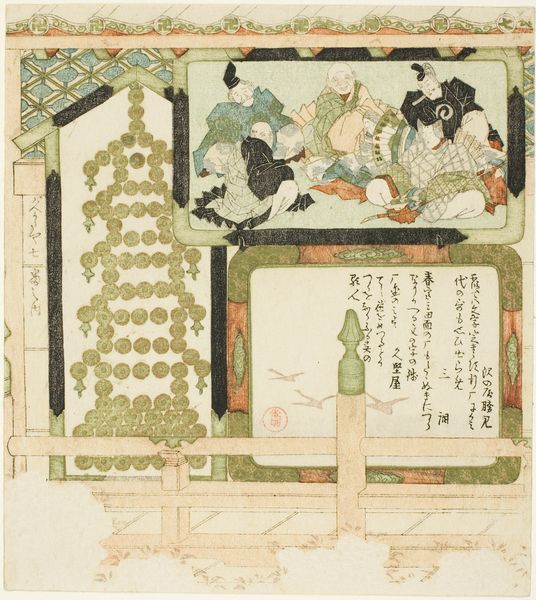
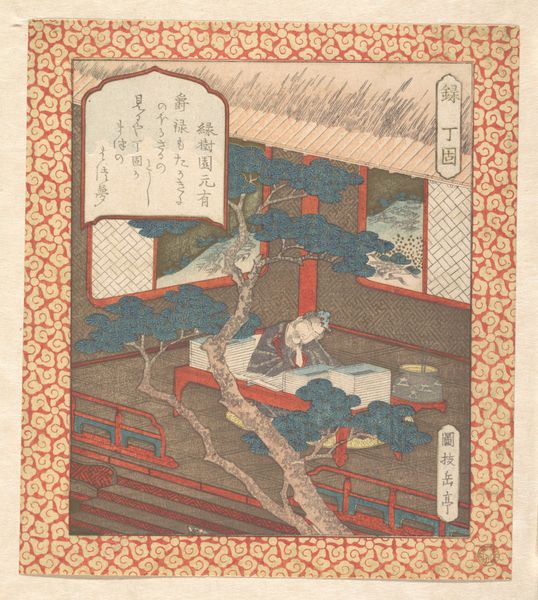
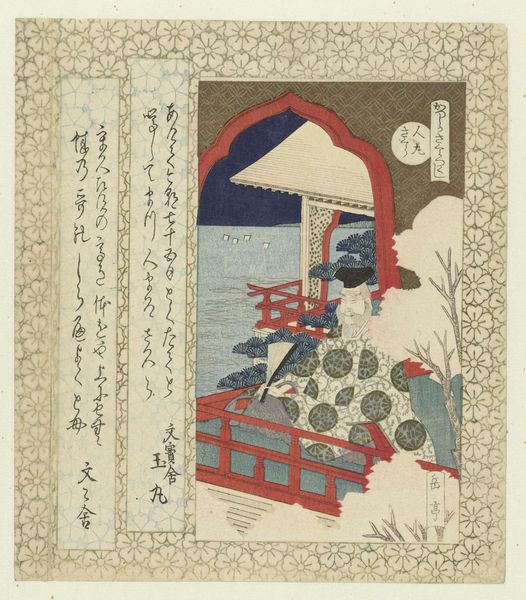
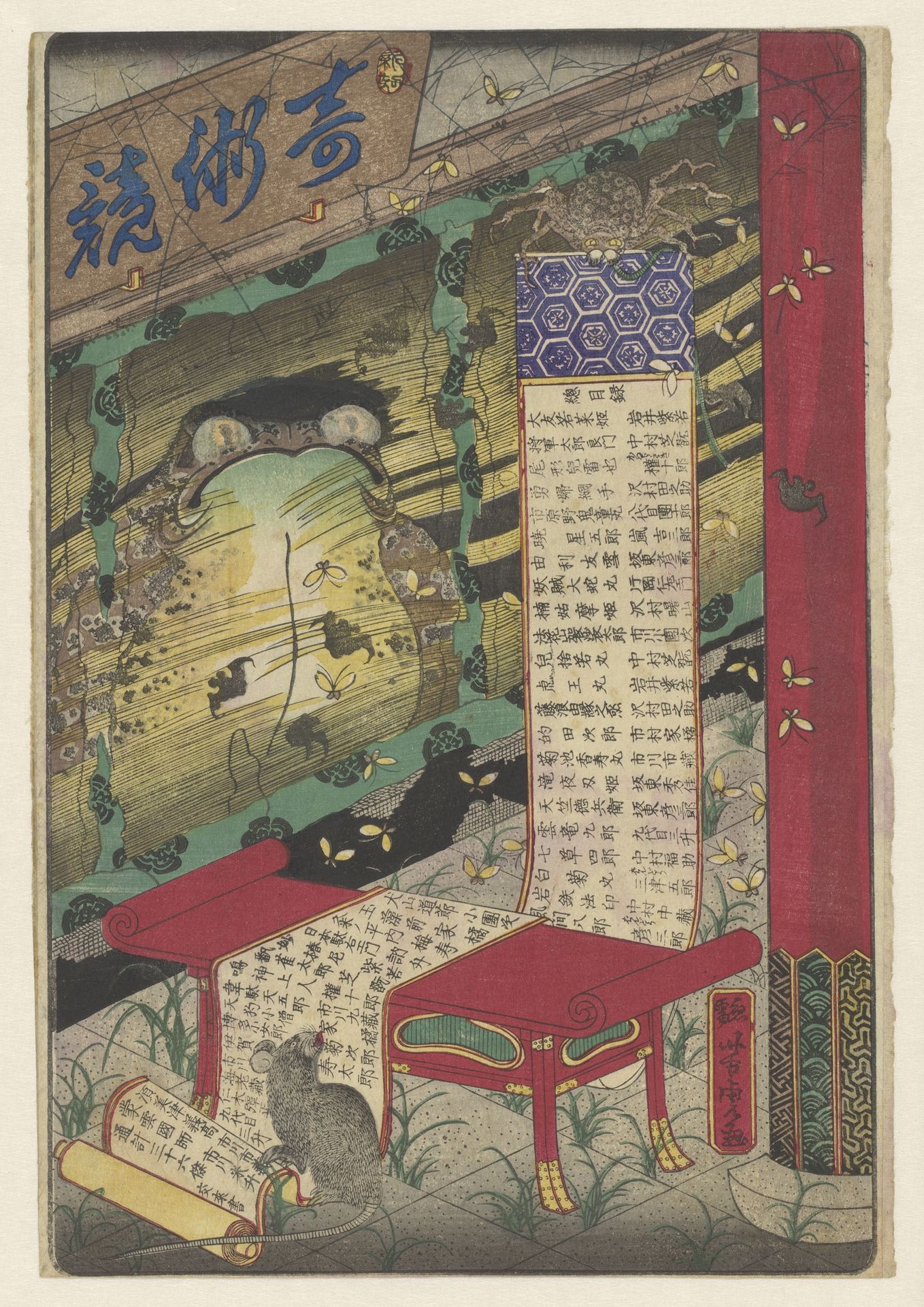
Utagawa Yoshikazu created this print, "Makimono uitgerold over een tafeltje," sometime in the mid-19th century. The print offers a glimpse into a world of knowledge and storytelling during a period of significant social and cultural change in Japan. Consider how the image features a mouse amidst scrolls and tables laden with texts. Mice often symbolize resourcefulness, but here, in the context of scholarly materials, it could also suggest the nibbling away at tradition or a subtle commentary on the accessibility of knowledge. The elaborate details in the print, from the calligraphy to the room’s decor, reflect a deep appreciation for artistic expression, but also prompts a reflection on who had access to such refined cultural experiences. Yoshikazu’s work invites us to consider our relationship with history. What stories do we choose to preserve, and who gets to tell them? The print serves as a reminder of the ever-present dialogue between the past and the present.
Makimono uitgerold over een tafeltje 1850 - 1870

Utagawa Yoshikazu
1845 - 1870Location
RijksmuseumArtwork details
- Medium
- mixed-media, print, watercolor
- Dimensions
- height 348 mm, width 240 mm
- Location
- Rijksmuseum
- Copyright
- Rijks Museum: Open Domain
Tags
mixed-media
water colours
narrative-art
asian-art
ukiyo-e
watercolor
coloured pencil
genre-painting
mixed media
watercolor
Comments
No comments
About this artwork
Utagawa Yoshikazu created this print, "Makimono uitgerold over een tafeltje," sometime in the mid-19th century. The print offers a glimpse into a world of knowledge and storytelling during a period of significant social and cultural change in Japan. Consider how the image features a mouse amidst scrolls and tables laden with texts. Mice often symbolize resourcefulness, but here, in the context of scholarly materials, it could also suggest the nibbling away at tradition or a subtle commentary on the accessibility of knowledge. The elaborate details in the print, from the calligraphy to the room’s decor, reflect a deep appreciation for artistic expression, but also prompts a reflection on who had access to such refined cultural experiences. Yoshikazu’s work invites us to consider our relationship with history. What stories do we choose to preserve, and who gets to tell them? The print serves as a reminder of the ever-present dialogue between the past and the present.
Comments
No comments