About this artwork
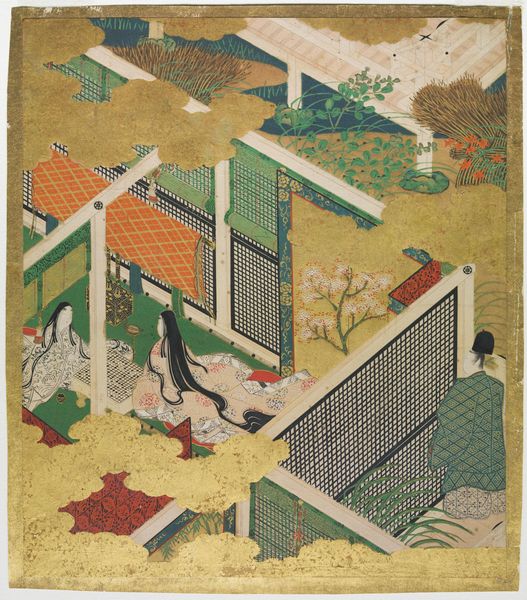
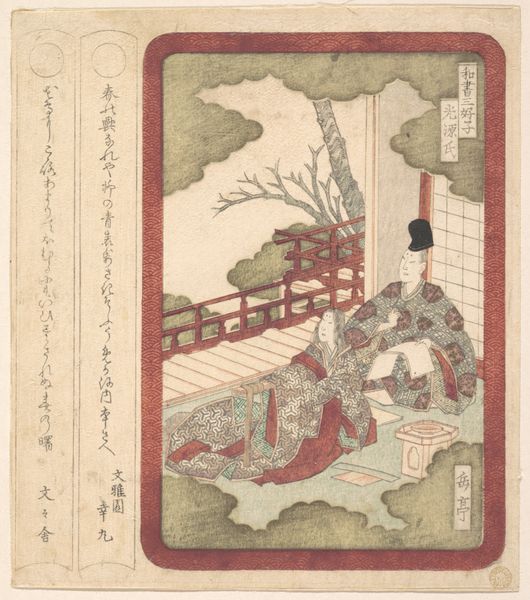
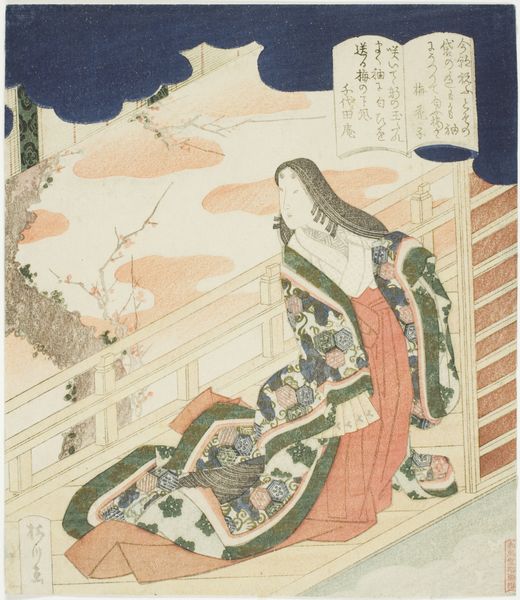
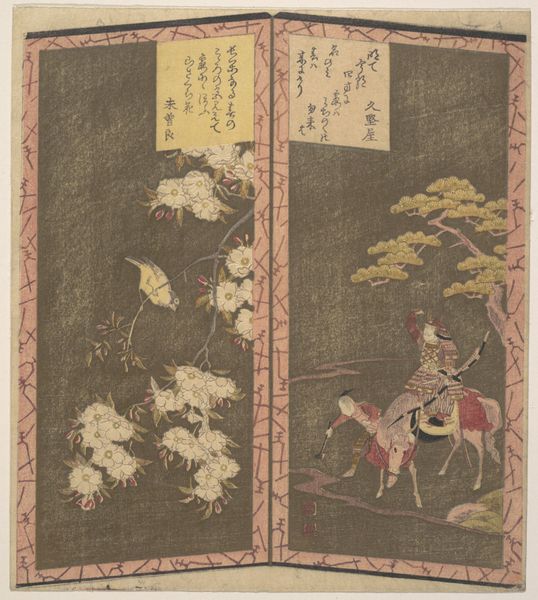
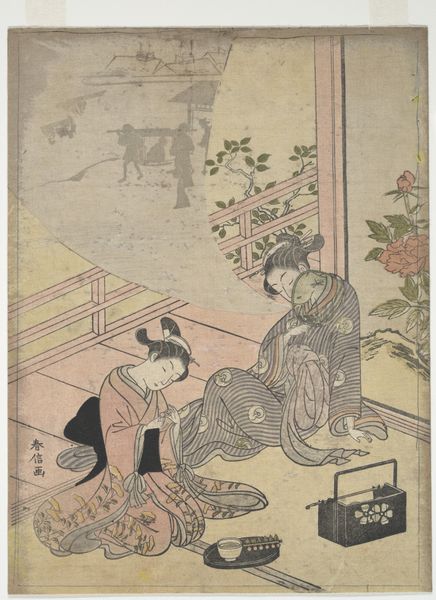
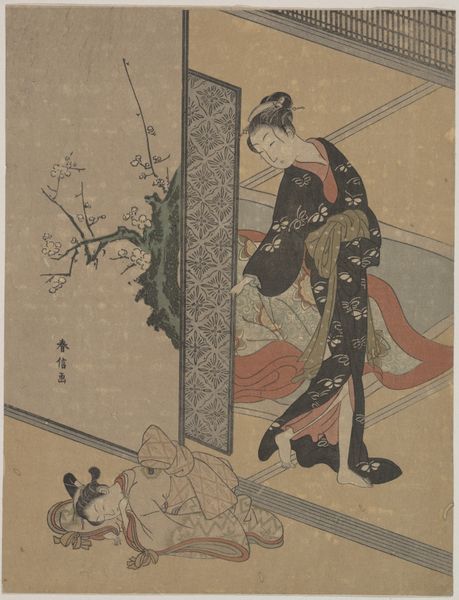
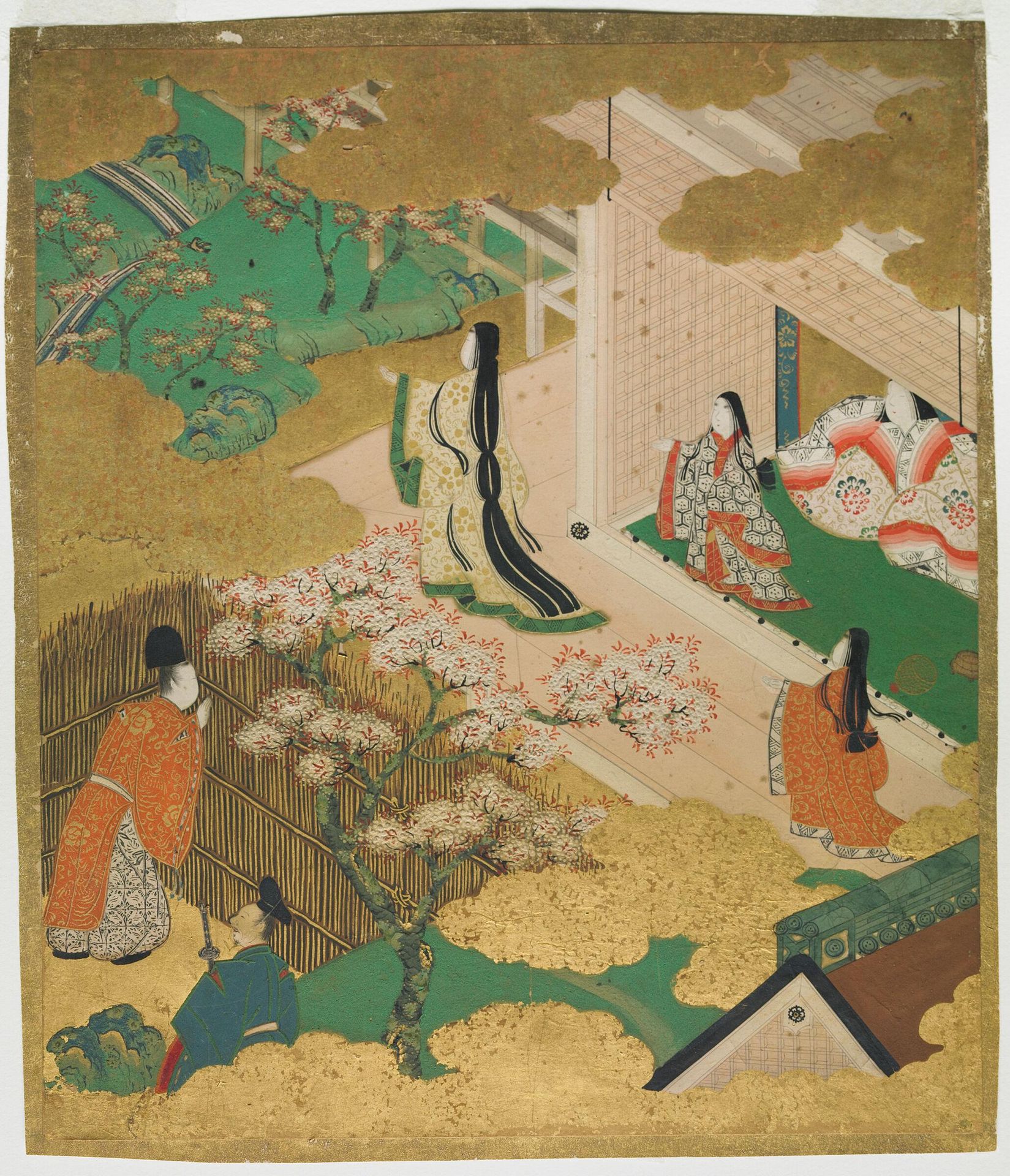
Curator: This illustration, in the manner of Tosa Mitsuyoshi, depicts a scene from the fifth chapter of the Tale of Genji, titled "Young Murasaki". Editor: It's dreamlike, almost a stage set. The figures are elegant but also strangely flattened, existing within these pools of color. Curator: It reflects the conventions of Heian-period painting. The artist captures a moment of encounter, likely referencing Genji's first glimpse of the young Murasaki. Note the composition and the attempt to capture space and depth. Editor: But who gets to be seen, and from what position? The woman walking away from the group feels particularly interesting. Is she leaving, or being excluded? How are gender and power expressed in this controlled setting? Curator: The Tale of Genji is a cornerstone of Japanese literature, and illustrations like these offered a visual narrative for a broader audience. Editor: And who was that audience? Courtly elites, no doubt, whose lives and desires were so explicitly centered. It makes you consider who gets to tell these stories, and who is left out of the frame.
Young Murasaki (Wakamurasaki), Illustration to Chapter 5 of the Tale of Genji (Genji monogatari)
c. mid 17th century

Artwork details
- Dimensions
- image only: H. 24.1 x W. 20.8 cm (9 1/2 x 8 3/16 in.)
- Location
- Harvard Art Museums
- Copyright
- CC0 1.0
Comments
Share your thoughts
About this artwork
Curator: This illustration, in the manner of Tosa Mitsuyoshi, depicts a scene from the fifth chapter of the Tale of Genji, titled "Young Murasaki". Editor: It's dreamlike, almost a stage set. The figures are elegant but also strangely flattened, existing within these pools of color. Curator: It reflects the conventions of Heian-period painting. The artist captures a moment of encounter, likely referencing Genji's first glimpse of the young Murasaki. Note the composition and the attempt to capture space and depth. Editor: But who gets to be seen, and from what position? The woman walking away from the group feels particularly interesting. Is she leaving, or being excluded? How are gender and power expressed in this controlled setting? Curator: The Tale of Genji is a cornerstone of Japanese literature, and illustrations like these offered a visual narrative for a broader audience. Editor: And who was that audience? Courtly elites, no doubt, whose lives and desires were so explicitly centered. It makes you consider who gets to tell these stories, and who is left out of the frame.
Comments
Share your thoughts