About this artwork
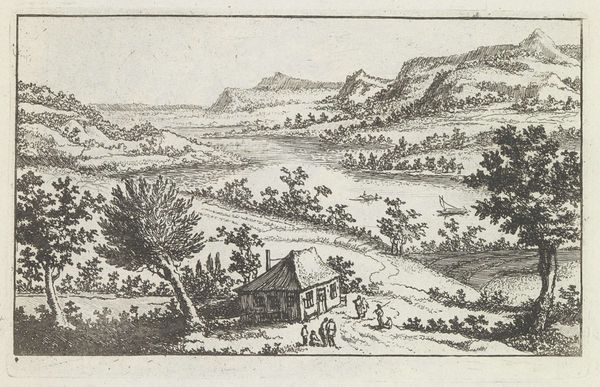
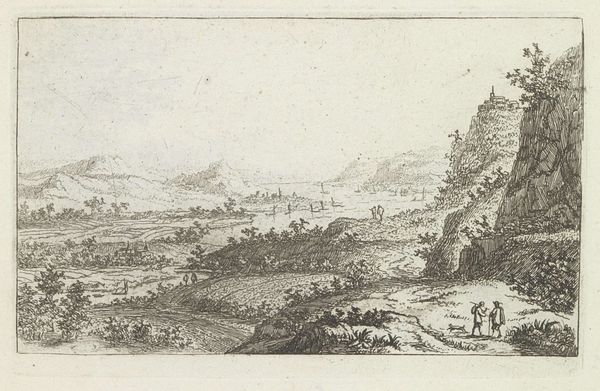
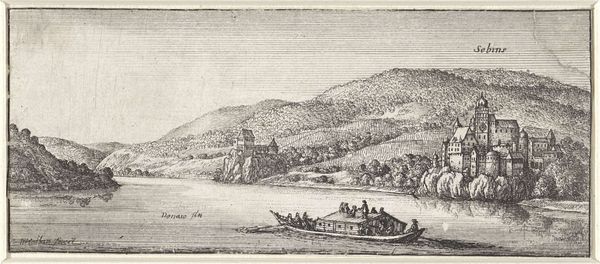
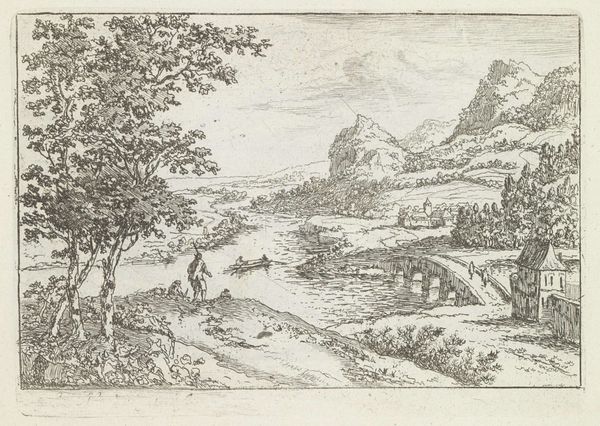
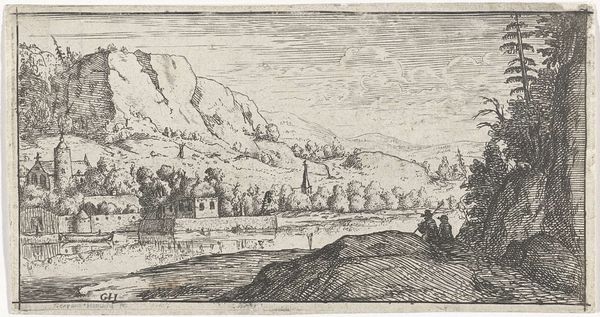
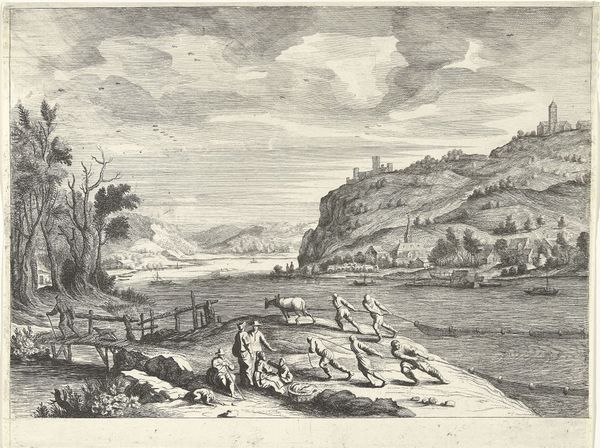
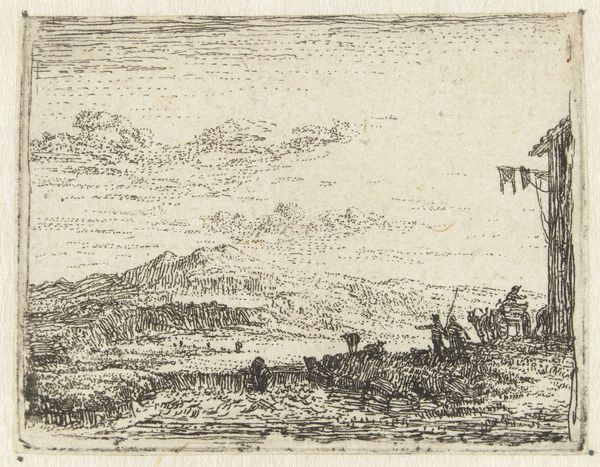
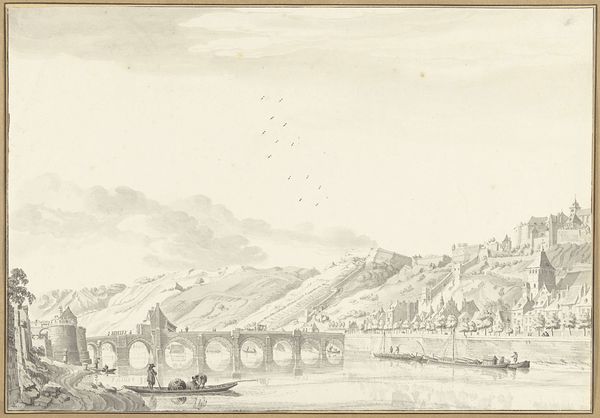
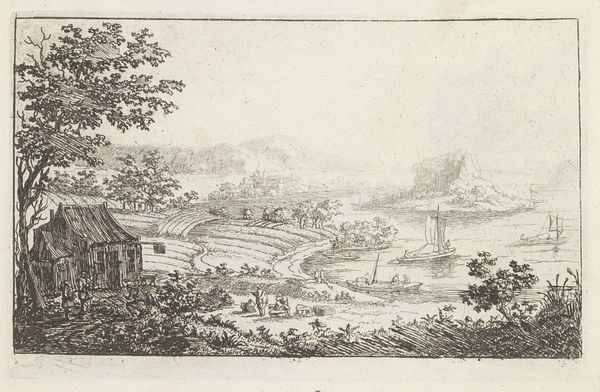
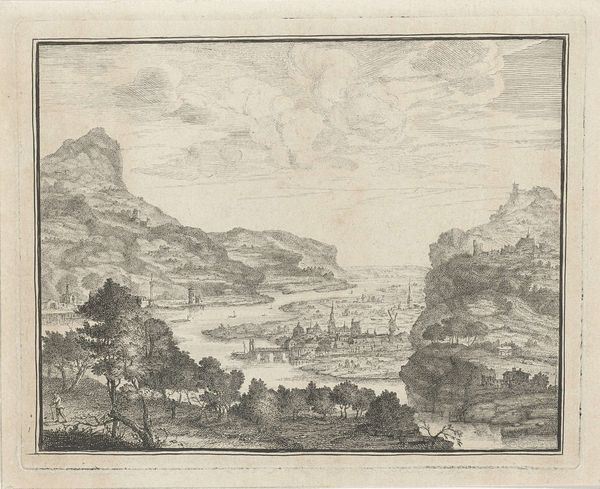
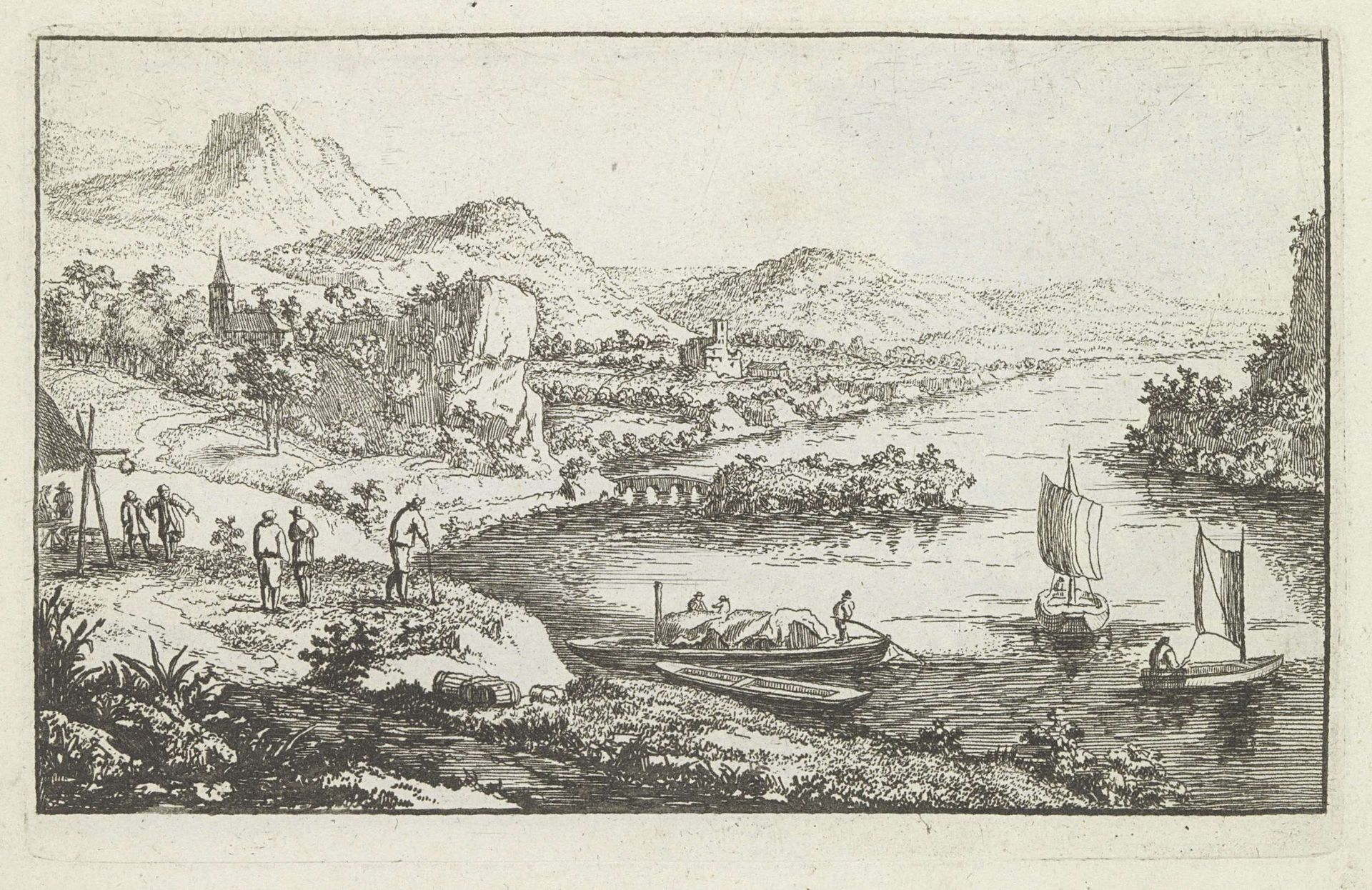
Jan van Almeloveen created this river landscape with bridge and island in the 17th century using etching. The composition presents a panoramic view, meticulously detailed with fine lines that define the landscape’s varied textures. Notice how the artist employs line to structure the scene: from the rough, overgrown banks in the foreground to the distant, soft hills. The river meanders into the background, punctuated by boats and a small island, leading the eye deeper into the pictorial space. The contrast between light and shadow further articulates forms within the landscape. Almeloveen uses a semiotic structure to communicate the various elements of the natural world and human activity, creating a scene that transcends mere representation, inviting contemplation on the relationship between humanity and nature. Consider how Almeloveen challenges our perception of landscape art. By presenting a detailed yet expansive view, he not only captures the likeness of the scene but also engages with broader philosophical ideas about space, nature, and human presence.
Rivierlandschap met brug en eiland
Possibly 1662 - 1833

Jan van Almeloveen
1652 - 1683Location
RijksmuseumArtwork details
- Medium
- drawing, print, etching, ink, engraving
- Dimensions
- height 98 mm, width 153 mm
- Location
- Rijksmuseum
- Copyright
- Rijks Museum: Open Domain
Tags
Comments
Share your thoughts
About this artwork
Jan van Almeloveen created this river landscape with bridge and island in the 17th century using etching. The composition presents a panoramic view, meticulously detailed with fine lines that define the landscape’s varied textures. Notice how the artist employs line to structure the scene: from the rough, overgrown banks in the foreground to the distant, soft hills. The river meanders into the background, punctuated by boats and a small island, leading the eye deeper into the pictorial space. The contrast between light and shadow further articulates forms within the landscape. Almeloveen uses a semiotic structure to communicate the various elements of the natural world and human activity, creating a scene that transcends mere representation, inviting contemplation on the relationship between humanity and nature. Consider how Almeloveen challenges our perception of landscape art. By presenting a detailed yet expansive view, he not only captures the likeness of the scene but also engages with broader philosophical ideas about space, nature, and human presence.
Comments
Share your thoughts