About this artwork
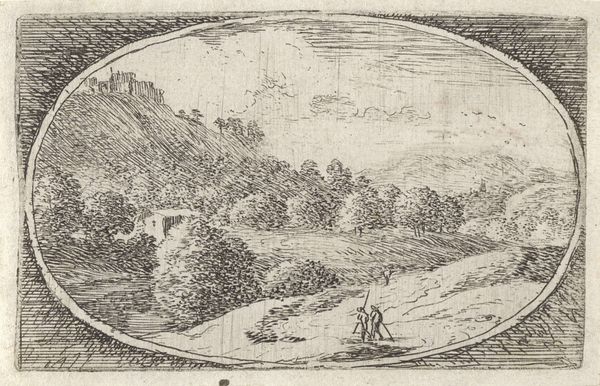
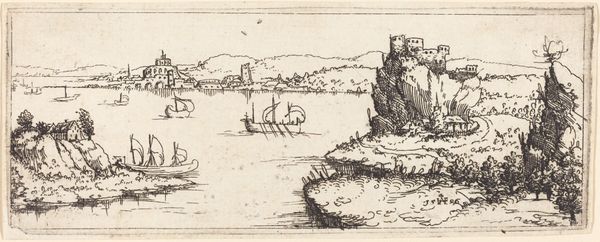
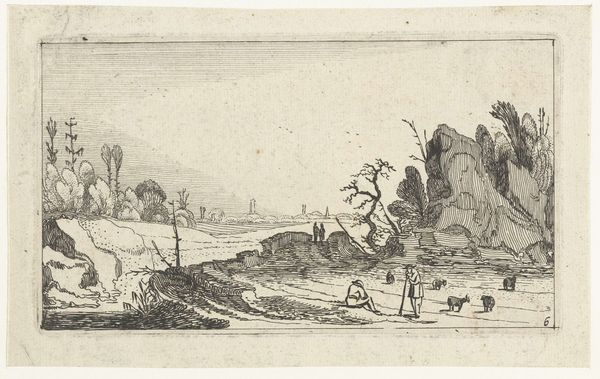
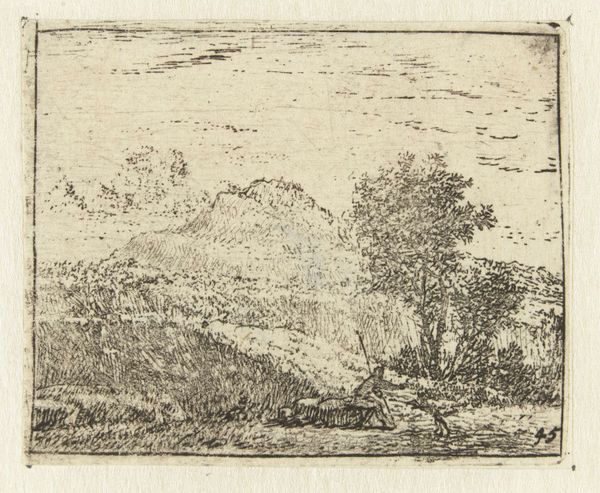
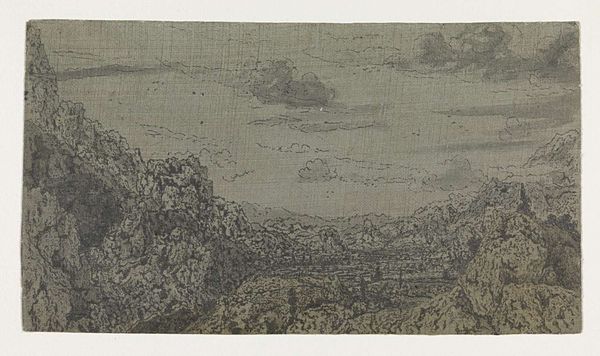
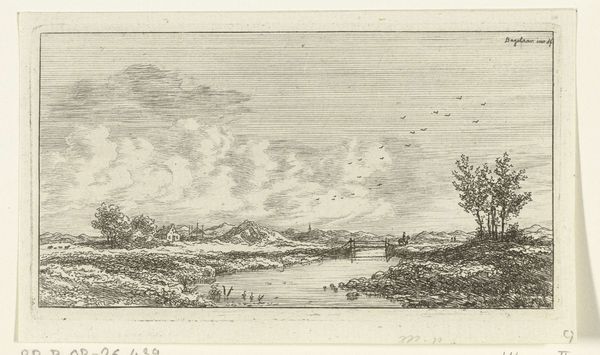
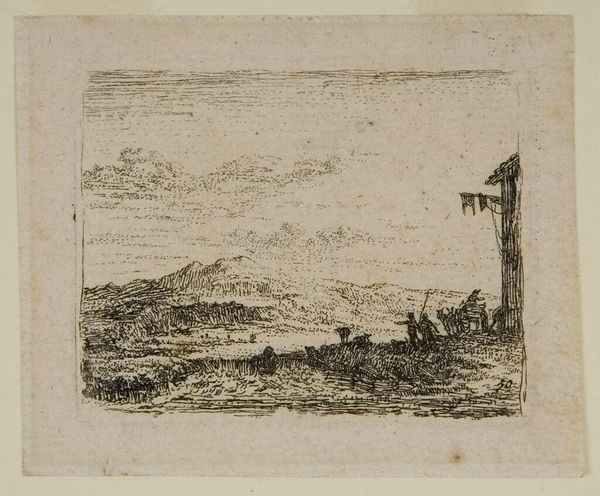
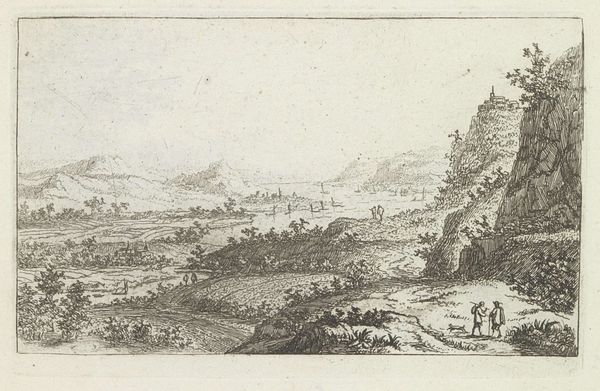
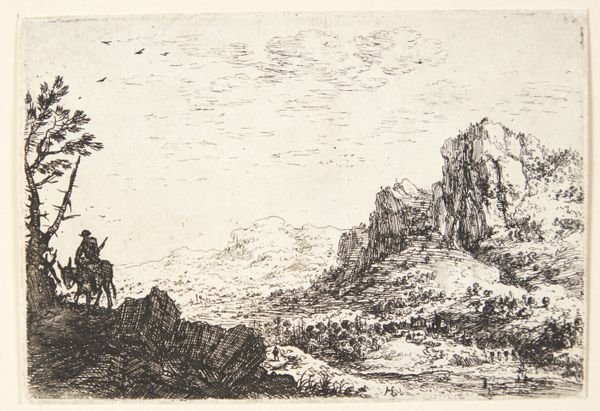
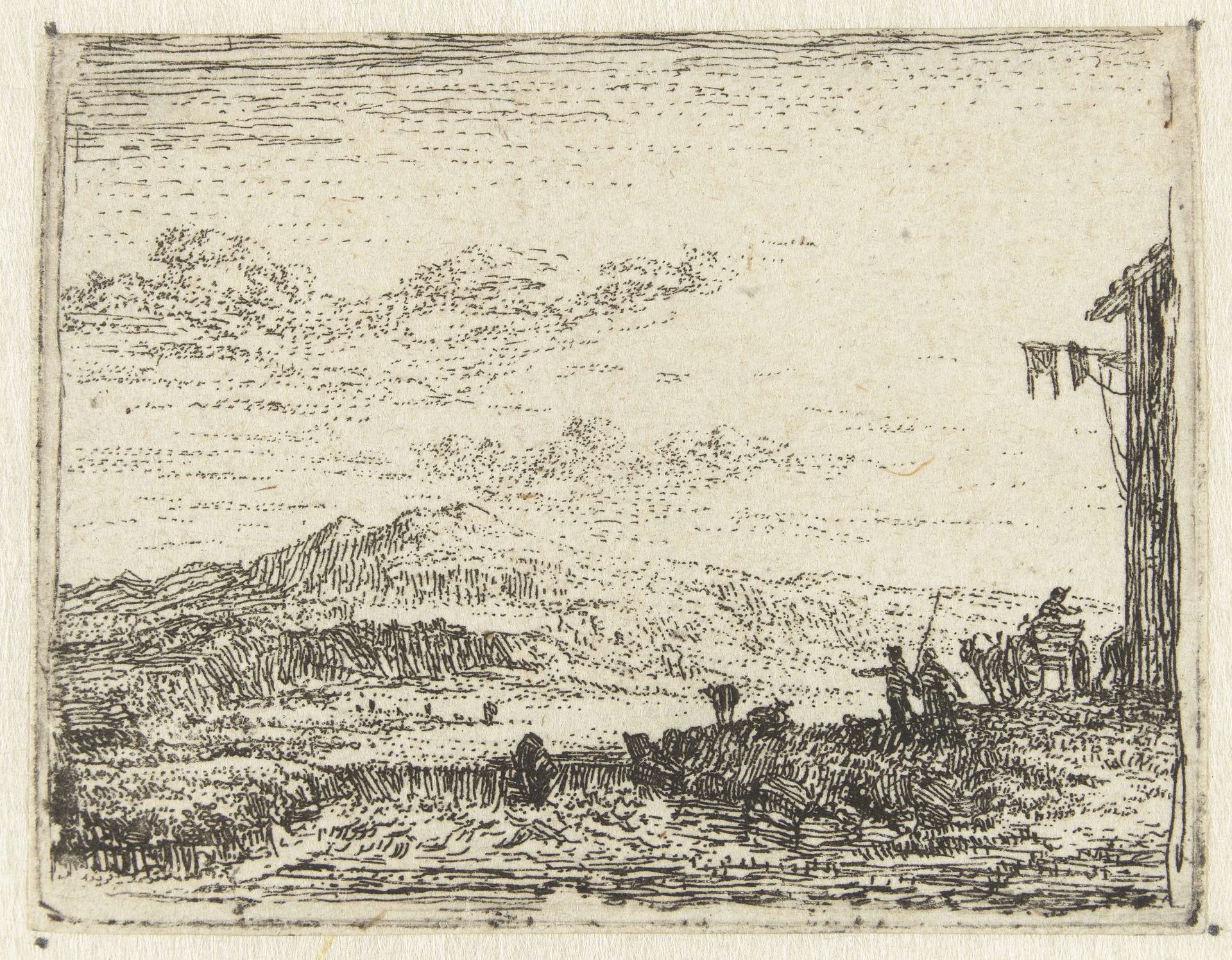
Curator: Let's turn our attention to Karel du Jardin's "Italianiserend landschap met wagen bij herberg," dating from 1652 to 1659. It's an ink and etching piece currently held at the Rijksmuseum. Editor: Oh, look, there's such a dreamy quality. It makes me think of a sunny afternoon, but viewed through slightly aged spectacles. You can almost smell the dust of the road and hear the faint sound of conversation around the inn. Curator: Indeed. What’s intriguing is the artist's method. Using ink and etching, du Jardin recreates this rustic scene. We need to consider the economic and social context: images of the Italian countryside had market value for a Dutch audience. They craved the "Italian light," but mainly through the commerce of images. Editor: Exactly! There's a layer to the landscape itself. I imagine him there, squinting slightly as he sketches. Did he know someone would, centuries later, experience this precise, suspended feeling of sunlight on old paper? Curator: We can see here how prints like this traveled easily. Consider the labor: the skilled hand translating a landscape into a series of lines that can then be reproduced and sold. This removes the exclusive element from high art. How available was it? Editor: That's amazing, imagining how easily this tiny little scene was and continues to be accessible, yet retains that personal feel of his artistic touch. I love the idea of something so intimate going into wide production. It speaks volumes about how artists connected to the world and their patrons in the 17th century. Curator: So, in looking at du Jardin's work here, the question emerges, is it primarily an artwork, a trade commodity, or something of both? Editor: To think this single image, multiplied many times through printmaking, could touch so many people. Beautiful and utilitarian all at once. Thank you for shedding more light!
Italianiserend landschap met wagen bij herberg 1652 - 1659

Karel du Jardin
1626 - 1678Location
RijksmuseumArtwork details
- Medium
- drawing, etching, ink
- Dimensions
- height 46 mm, width 60 mm
- Location
- Rijksmuseum
- Copyright
- Rijks Museum: Open Domain
Tags
pen and ink
drawing
aged paper
baroque
pen sketch
etching
pencil sketch
sketch book
landscape
figuration
personal sketchbook
ink
pen-ink sketch
line
pen work
sketchbook drawing
genre-painting
sketchbook art
Comments
No comments
About this artwork
Curator: Let's turn our attention to Karel du Jardin's "Italianiserend landschap met wagen bij herberg," dating from 1652 to 1659. It's an ink and etching piece currently held at the Rijksmuseum. Editor: Oh, look, there's such a dreamy quality. It makes me think of a sunny afternoon, but viewed through slightly aged spectacles. You can almost smell the dust of the road and hear the faint sound of conversation around the inn. Curator: Indeed. What’s intriguing is the artist's method. Using ink and etching, du Jardin recreates this rustic scene. We need to consider the economic and social context: images of the Italian countryside had market value for a Dutch audience. They craved the "Italian light," but mainly through the commerce of images. Editor: Exactly! There's a layer to the landscape itself. I imagine him there, squinting slightly as he sketches. Did he know someone would, centuries later, experience this precise, suspended feeling of sunlight on old paper? Curator: We can see here how prints like this traveled easily. Consider the labor: the skilled hand translating a landscape into a series of lines that can then be reproduced and sold. This removes the exclusive element from high art. How available was it? Editor: That's amazing, imagining how easily this tiny little scene was and continues to be accessible, yet retains that personal feel of his artistic touch. I love the idea of something so intimate going into wide production. It speaks volumes about how artists connected to the world and their patrons in the 17th century. Curator: So, in looking at du Jardin's work here, the question emerges, is it primarily an artwork, a trade commodity, or something of both? Editor: To think this single image, multiplied many times through printmaking, could touch so many people. Beautiful and utilitarian all at once. Thank you for shedding more light!
Comments
No comments